

How to Maintain Structure and Stimulation Throughout Summer Break: 3 Practical Ideas
School is out for the summer, and you are ready to have some fun!
However, all of the extra hours spent at home with your kids can quickly lead to boredom and unwanted behaviors. Your child’s environment and schedule have changed overnight, and this can be triggering for many children.
So how do you start off the summer on the right foot and manage to keep everyone happy all summer long? I’ve got three practical tips for you!

School is out for the summer, and you are ready to have some fun!
However, all of the extra hours spent at home with your kids can quickly lead to boredom and unwanted behaviors. Your child’s environment and schedule have changed overnight, and this can be triggering for many children.
So how do you start off the summer on the right foot and manage to keep everyone happy all summer long? I’ve got three practical tips for you!
Create a Schedule as a Family
Before summer starts, sit down as a family and set expectations for the summer. Ask your children what they are interested in doing and what events they have scheduled throughout the summer. Let them know what you have planned for the family to do. Communication is key to success here.
Then, outline what a typical day will look like. When will everyone wake up? When will meals be served? What activities will fill all the time in between?
Try to include time for:
Reading - Encourage your children to read fun and educational books. Challenge them to read about a new interest or in a new genre.
Creative Expression - Not all children enjoy arts and crafts to the same extent, but creativity is a valuable skill that needs to be practiced.(1) If you do structured craft activities, try to incorporate your child’s interests into the project to get them more excited about it.
Educational activities - This does not necessarily have to be worksheets! Younger children could practice writing letters with a stick in the dirt outside. Older children could practice counting the change you spend at the restaurant. Opportunities for learning are everywhere!
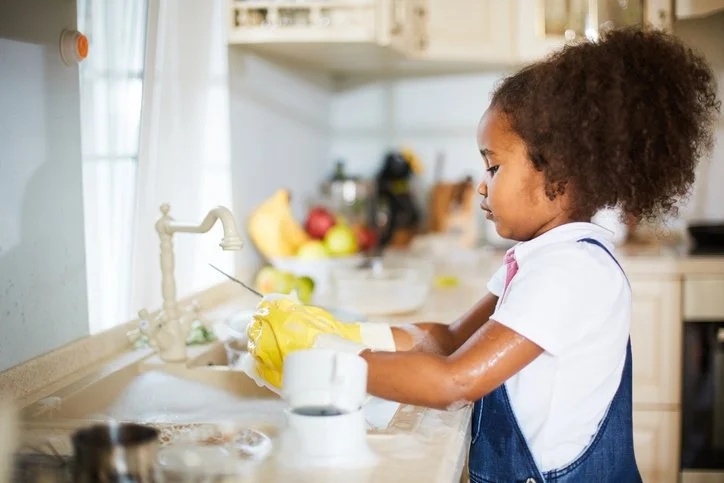
Chores - Make them age-appropriate and consistent to involve your child in the upkeep of their room and home throughout the summer.
Physical exercise(2) - Hopefully, some of this physical exercise can happen outdoors. If the weather where you live does not allow for this, look for gross motor activities they can do at home or search your local area for indoor playgrounds or gyms.
Rest or a nap - Depending on the age of your child, make sure that they are getting enough sleep. Even if they are too old for a nap, try to encourage them to have quiet time each day. This gives them a chance to rest and recharge.
If possible, make it visual. Children do better with transitions and expectations if they can visually see what is expected of them.(3)
Some ideas for a visual include repurposing an old clock to show what activities correspond with each hour of the day. Or you can make a chart that has a box for each activity with the time that it starts and ends.
Try involving your child in the making of this visual aid. If they are younger, they could simply color in the boxes or draw a few doodles in one corner. If they’re a bit older, they could help write the labels or figure out how long will be needed for each activity.
The more involved and included your children feel in making the schedule, the more likely they are to be more willing participants in it.
Stick to Regular Times for Meals and Bed
It’s easy to let all the fun activities and adventures of summer throw off the timing of meals and bed.
While this is fine to do sometimes, it’s best to not make it a regular occurrence. A hungry or tired child can be cranky and irritable; exactly the opposite of what you want on your summer adventures.
When your family is at home, have a set time that everyone wakes up and a set time for bed. Even if your child is awake before that time, let them know that they need to stay in their room and do something quiet. This allows everyone in your home the opportunity to get the sleep they need.(4)
Having set times each day for meals serves two purposes. It helps your child not get overly hungry, but it also prevents excessive snacking. We still want our kids to eat nutritious, well-balanced meals, even when they have access to the kitchen all day long.
Children are used to having a set time to eat at school. Their little bodies will benefit from continued regularity in their eating schedule.
Remember that your schedule does not have to hold your family back from having fun experiences and visiting exciting places even if these adventures can’t logistically fit exactly into your schedule. That’s okay!
If your child’s schedule is going to be thrown off, prepare for it ahead of time. If dinner is going to be served late, bring some snacks along. If bedtime is going to be pushed back an hour, plan for extra rest time the next day.
Get Out and About!
Getting out of the house and exploring can be fun no matter the age of your children! It also gives them the chance to continue to learn through the summer.
Great places to visit could be the zoo or aquarium to learn about animals. You could also visit your local parks so your children can work on their gross motor skills and get some much-needed physical exercise. Wilderness camps or clubs can also be a fun outlet for exercise and to give your child a place for social interaction.
Visit your local library often to keep your kids reading throughout the summer months. Consider encouraging your children to complete a reading challenge like reading 20 books over the summer or reading one book from each major genre. Ask your local librarian if there are story times or reading clubs that your children can participate in.
These are just a few ideas that you and your children might find fun to do together. Check your local newspaper or online to see what other events may be uniquely offered in your community.
Summer should be a time for fun and bonding with our children. With the right structure and expectations in place, this summer will be one your family will never forget!
For more tips on parenting and childhood mental health, subscribe to my newsletter or check out my podcast.
References
https://nido.edu.au/news/why-creative-expression-is-so-important-for-children/
Chaddock-Heyman, L., Hillman, C.H., Cohen, N.J. and Kramer, A.F. (2014), III. THE IMPORTANCE OF PHYSICAL ACTIVITY AND AEROBIC FITNESS FOR COGNITIVE CONTROL AND MEMORY IN CHILDREN. Monographs Society Res Child, 79: 25-50. https://doi.org/10.1111/mono.12129
https://classroom.synonym.com/benefits-visual-aids-5040418.html
Spring Cleaning: Involving Your Children in Maintaining Their Spaces
The smell of fresh spring air can be rejuvenating. The trees are beginning to bloom again and school is in its final stages of the year. With all those signs of the changing seasons, many of us feel an urge to clean our houses from top to bottom.
Spring cleaning, though, can feel like a momentum task when you have children. The mess can seem bigger and harder to tackle. In reality, though, your children can be great helpers to get your house cleaned.
The advantages of children learning how to clean are massive. One study found that children who completed regular household chores had a sense of mastery, self-reliance, and responsibility.(1) The children of this study started doing chores as early as 3 or 4 years old, and they saw lifelong benefits from it. Some of these benefits included good relationships with friends and family and success in academics and later in their careers.

The smell of fresh spring air can be rejuvenating. The trees are beginning to bloom again and school is in its final stages of the year. With all those signs of the changing seasons, many of us feel an urge to clean our houses from top to bottom.
Spring cleaning, though, can feel like a momentum task when you have children. The mess can seem bigger and harder to tackle. In reality, though, your children can be great helpers to get your house cleaned.
The advantages of children learning how to clean are massive. One study found that children who completed regular household chores had a sense of mastery, self-reliance, and responsibility.(1) The children of this study started doing chores as early as 3 or 4 years old, and they saw lifelong benefits from it. Some of these benefits included good relationships with friends and family and success in academics and later in their careers.
It’s easy to know that your child should be doing chores, but how do you actually encourage them to complete cleaning tasks? Don’t worry, I’ve got some tips for you.
Consider What Tasks Are Age-Appropriate
It is important to consider your child’s capabilities when assigning cleaning tasks. Think about their fine and gross motor skills. Think about their cognitive skills and ability to remember and complete a certain number of tasks at one time.
Then, assign tasks that you know they are able to complete on their own or modify tasks so that they are easier to complete. An example of this could be sweeping the kitchen. You could make this task easier for your child to complete by purchasing a small broom that is easier to maneuver. You could also mark out a big square that they need to debris in instead of expecting them to sweep into a dustpan.
Explain the ‘Why’
Explaining why anything is being done is often very useful with children. They don’t always think through the reasons why they might be asked to do a task. When those reasons are explained to them, though, they will often understand and be more willing to participate.
Be careful with your language to make it clear that cleaning is not a punishment. Cleaning is simply something that everyone must do to keep the house functional. You can talk about germs, and how they make us sick but cleaning gets rid of them.
If you’re decluttering as a part of your spring cleaning, explain this as well. Discuss how more toys and clothes mean more cleaning that needs to happen. Talk about how other children could play with the toys that they no longer do. Consider letting them pick where their toys will be donated to. Discuss different charities and what they do. Or you can host a garage sale and let them keep the money they earn from selling their extra things.
Provide Clear Instructions and Expectations
For younger children, be clear with what tasks need to be completed, how those tasks should be done, and how they can know when the task is done. For example, the playroom needs to be picked up. Your child needs to put all the toys back where they belong. They will know the task is done when there are no more toys on the floor.
The level of explanation prevents you from having to send your child back over and over when you don’t think that the task is completed but they do.
Give opportunities for independence where it is appropriate. If possible, let your children have choices. One possibility would be giving them the list of tasks that need completed and letting them pick the order in which they want to complete them.
Break It Into Small Steps
Especially with younger children, you will likely not be able to give a long list of chores that your child will remember. Your child may not even be able to remember the multiple steps that go into a cleaning task. For example, you may explain how to sweep the kitchen and clean up the dirt pile. By the time they finish sweeping, though, they forget what they were supposed to use to clean up the dirt pile.
This is totally normal. Have patience and remember that you are teaching valuable skills that will take time for your child to master. Remind them of the next step in the process if they forget and provide help where necessary.
Clean With Them
Everything is more fun with a friend by your side!
Your child may find it easier to stay on task and enjoy that work that they’re doing if they get to do it with you. This also reinforces the idea that everyone is a team working together to keep the house clean and functional.
You can do this by both doing the same task, like you both vacuuming at the same time, or splitting a task in half so that you have your job and your child has their job. One task that you could do this with is you spraying water on the windows and your child wiping it off.
Make Cleaning Fun
The more fun cleaning feels, the more willing your child is going to be to participate.
Make the chores into a game. You can set a timer and encourage your child to race to finish before the timer goes off; this will work better with shorter tasks. Or you can both pretend to be a detective looking for something, like expired spices in the cabinet or all the lego pieces in the playroom.
Maintain Cleaning Routines Year-Round
Involving your children in cleaning tasks should not be something that happens just once a year. Consistency will help your child hone their cleaning skills and keep your household functioning well.
Some families find it easier to have daily tasks assigned to a certain person that are completed whenever they have time. Other families spend a big chunk of time cleaning together as one unit. Whichever way works best for your family is fine. Maybe you even devise a mixture of both strategies.
Cleaning skills will serve your child for the rest of their life. Starting early sets them up for success.
Subscribe to my newsletter for all the latest updates on my blogs and podcasts!
References