

How Should I Feed My Infant? And Other Common Questions New Parents Have
Feeding your baby can seem incredibly complicated. There are so many breastfeeding and formula feeding charts out there. For something so basic to sustain life — it can seem impossible to keep track of it all!
Know that the first few weeks at home with your baby will likely be a tired haze. But over time, you’ll learn how to tell when your infant needs to eat, sleep, be changed or cuddled. You’ll learn your baby’s cues and settle into a routine together.

Feeding your baby can seem incredibly complicated. There are so many breastfeeding and formula feeding charts out there. For something so basic to sustain life — it can seem impossible to keep track of it all!
Know that the first few weeks at home with your baby will likely be a tired haze. But over time, you’ll learn how to tell when your infant needs to eat, sleep, be changed or cuddled. You’ll learn your baby’s cues and settle into a routine together.
How Do I Know When my Baby Is Hungry?
Contrary to what you may think, crying is actually a late sign of hunger.(1) Other signs, such as licking their lips, sticking their tongue out, rooting, opening their mouth, sucking, putting their hand to their mouth repeatedly, or being fussy will show up first.(2)
So those cute movements your infant is making? Pay close attention to them! They may actually be your baby trying to say — feed me!
Breastfeeding vs. Formula Feeding
You don’t need to have given birth or have ovaries or a uterus to breastfeed.(4) If you want to induce lactation, speak to your healthcare provider or a lactation consultation for information on how to do so. You can look into insurance-covered lactation consultations through The Lactation Network if you’re in the United States.(4)
There are 3 main ways you can feed your child:
Exclusive breastfeeding
Supplemented breastfeeding
Exclusive formula-feeding
Exclusive breastfeeding is not right for everyone. At the end of the day, what matters most is that you’re providing the nourishment your baby needs, however you choose to do so. For more information on safe feeding, visit Fed is Best.
Breastfeeding Benefits
Breastfeeding is generally recommended by pediatricians. Breast milk boosts your baby’s immune system, is easy to digest, and provides the nutrients your child needs to grow.(5) Breast milk helps fight infections because it contains antibodies, proteins, fats, sugars and white blood cells.(5) These all work together to fight infection and nourish your child.(5)
Breastfed babies are less likely to get respiratory infections, gastrointestinal infections up to 12 months, and are slightly less likely to develop SIDS or childhood leukemia.(6)
Exclusive Breastfeeding Isn’t Right for Everyone
Sometimes breastfeeding is not possible or there can be breastfeeding complications.
You may have medical, emotional, or logistical reasons for why breastfeeding isn’t the best choice for you. And you don’t need to explain your choice to anyone.
What’s most important is that your child gets all the nourishment he needs. So supplemental feeding or exclusive formula-feeding may be right for you and your family. And there is no shame in exploring those options!
You have other feeding options:
1. Exclusive formula feeding
This is a great option for parents who can’t or don’t want to breastfeed. Formula is nutritionally complete(27) and nourishing for your child.
2. Supplemented feeding
This entails giving formula in addition to breast milk. Many families choose to do this. Whether because they have low breast milk supply, find breastfeeding distressing, or for convenience when they return to work, etc.(3) There’s no reason to avoid formula supplementation. But there are true consequences of insufficient feeding. Supplementation can be life saving.(6)
3. Pump and feed your breast milk in a bottle
You may not love breastfeeding, and that’s okay. Some women really do, others really… don’t. There’s nothing shameful about feeding your child in a way that keeps you both happy and keeps your child well-fed. This allows you to provide your child with breast milk without having to put them to your breast.
4. Donor breast milk
Many mothers donate their breast milk if they overproduce. To find an accredited milk bank, turn to The Human Milk Banking Association of North America or the United Kingdom Association of Milk Banking.
Casual breast milk donation and sharing can be unsafe, carry infection, or be contaminated with bacteria due to improper handling and storage.(6) So seeking out a screened, accredited milk bank is safest.
Uh oh, my Baby Is Refusing a Bottle
Bottle refusal can be extremely frustrating for both you and your infant.
Believe it or not, taking a bottle is actually a skill your baby needs to learn.(7) So you may want to try introducing a bottle when your baby isn’t super hungry but is more relaxed and calm.(7)
Introduce a bottle slowly over time to ease the transition, and know that feeding-related problems are fairly common. About 25% of parents report having some sort of struggle with this at some point during their child’s development.(8)
If your baby is refusing a bottle, there are a few things you can do.
1. Rub the bottle nipple gently along the baby’s gums and inner cheek
Let them get used to the texture and feeling without the bottle attached. If they don’t like it, try again later. Once your baby seems comfortable with the nipple in her mouth, rub it gently along her tongue to encourage sucking.(7)
2. Use a slow flow nipple
Breastfed babies are used to working — so to speak — to get their food! You don’t want too much milk coming out of the bottle at once. That can make it difficult for them to keep up!
3. Encourage latching
Tickle your baby’s upper lip with the bottle to encourage latching, rather than just putting the bottle in her mouth.(7) Latching should occur at the nipple’s wide base and not just the tip, just like with breastfeeding.
4. Try feeding in different positions
Support their head and have them semi-upright so they can swallow and breathe comfortably.(8)
5. Have someone other than the breastfeeding caregiver bottle-feed them
The baby can tell if the breastfeeding parent is nearby, and will wonder why the breast isn’t being offered!(7)
Interested in Learning More?
Hopefully this blog post gave you some peace of mind about the different ways you can approach infant feeding. But feeding is such a huge topic, there is so much more to cover! Be sure to check out the Genius Little Minds podcast episode on infant feeding for even more bite-sized information to help you on your parenthood journey. Tune in to learn more about how much your baby should eat, when to start introducing solid foods, cluster feeding, and more!
Equip yourself with knowledge and tools to help your child thrive. Genius Little Minds is a podcast dedicated to demystifying infant and childhood mental health.
In each episode, clinical child psychologist and mother of three children, Dr. Madeleine Vieira, unpacks children’s mental health, equipping listeners with actionable strategies to promote mental health and wellness within the family system.
Subscribe here to the Genius Little Minds podcast so you never miss an episode!
References
https://americanpregnancy.org/healthy-pregnancy/breastfeeding/breastfeeding-overview/
https://www.verywellfamily.com/combining-breastfeeding-and-formula-feeding-431930
https://lactationnetwork.com/blog/breastfeeding-faq-for-trans-and-non-binary-parents/
https://lacted.org/iable-breastfeeding-education-handouts/bottle-refusal/
https://www.nhs.uk/conditions/baby/breastfeeding-and-bottle-feeding/bottle-feeding/advice/

Infant Sleep: How to Help Them Fall (and Stay) Asleep
If you’re a first-time parent, you may not know a lot about infants’ sleep needs. In fact, the only thing you may know about sleep is you won’t be getting a lot of it.
If you have questions like…
Can newborns sleep too much?
Should I keep my newborn awake during the day?
Is swaddling safe?
When do I stop swaddling?
How do I sleep train my baby?
Then this article is for you!

If you’re a first-time parent, you may not know a lot about infants’ sleep needs. In fact, the only thing you may know about sleep is you won’t be getting a lot of it.
If you have questions like…
Can newborns sleep too much?
Should I keep my newborn awake during the day?
Is swaddling safe?
When do I stop swaddling?
How do I sleep train my baby?
Then this article is for you!
How Much Should My Infant Sleep?
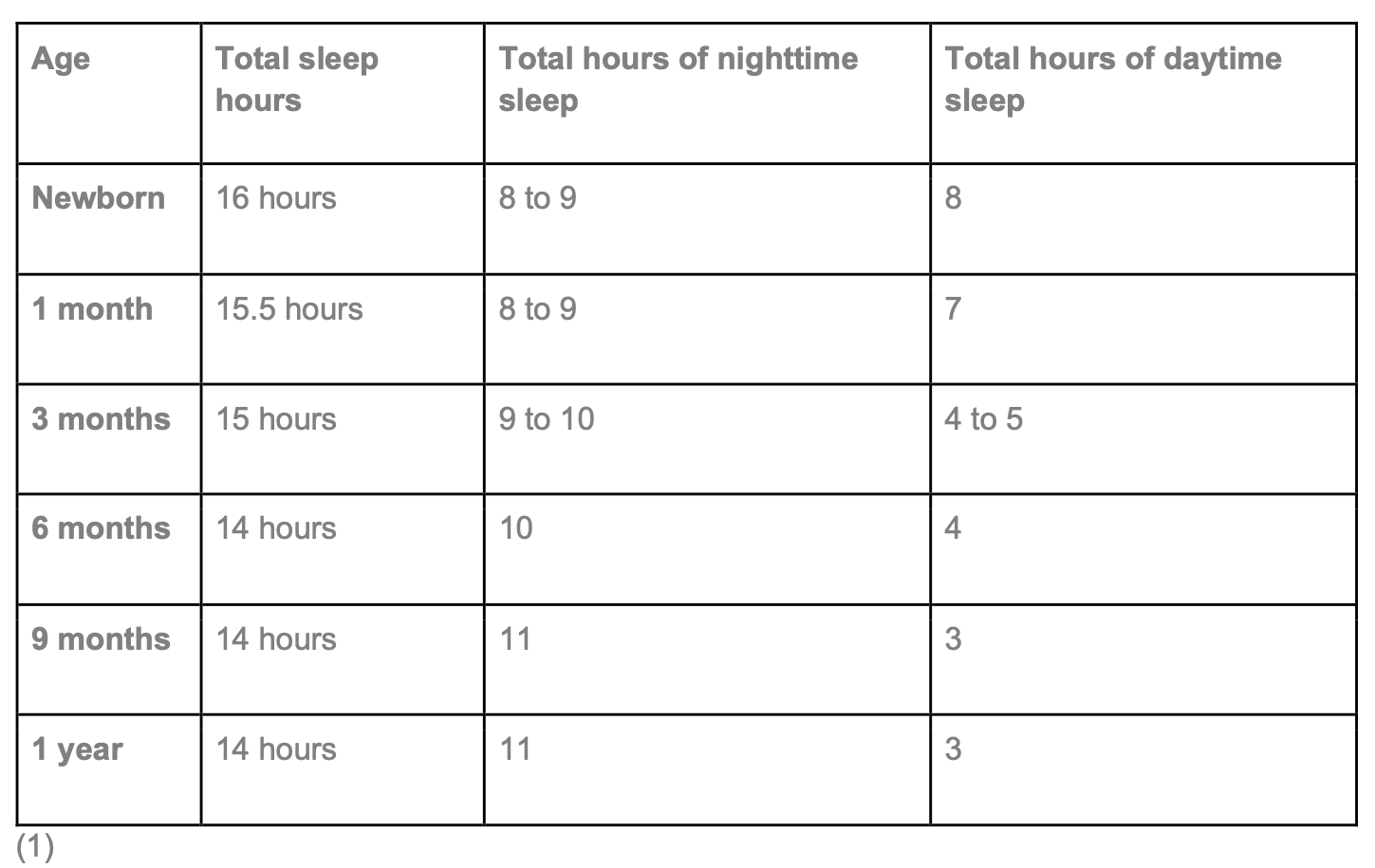
If you have a newborn, you’ve probably noticed—they sleep a lot—but not always when you want them to! Generally, newborns sleep about 16 hours—8 to 9 hours during the day and around 8 hours at night—with repeated wakings for feedings.(1)
Unfortunately, newborns won’t sleep for more than 1 to 2 hours at a time, which is exhausting for parents—waking up several times a night to feed your baby will be common in the first few months after they’re born.
Here is a table that summarizes the amount of sleep infants need from the time they’re born to their first birthday:
How Should My Baby Sleep? 5 Tips for Safe Sleeping
Here are some tips to keep your baby safe and help him get to sleep:
1. On their back
Your baby should be placed on his back to sleep—not on his stomach or side—to reduce the likelihood of SIDS or sudden infant death syndrome.(2) Once your baby learns to safely roll from his stomach to his back it’s okay for him to sleep on his stomach, but don’t put him to sleep this way.(8) It’s safest to always put your baby down to sleep on his back.
2. On a firm surface
A soft, fluffy surface can block an infant’s airway, so make sure the sheets over your infant’s mattress fit snugly and your baby’s crib, bassinet, or other sleeping arrangement meet safety standards.(2)
3. In an empty crib or bassinet
Your baby’s sleeping area should be free of plush toys, pillows, blankets, sheepskins, quilts, or bumper pads.(2) An exception is putting your baby to sleep with a dummy (known as a pacifier in the US) which can help them go to sleep. And if it falls out while your infant is sleeping, don’t sweat it.(2)
4. Swaddled
You’re likely familiar with swaddling, which has been used for thousands of years across many cultures. Swaddling is when you wrap your newborn snugly in a light blanket to recreate the sensation of being in the womb.(3) Many parents find swaddling helps soothe their baby and helps them sleep for longer stretches.(3)
Swaddling is only appropriate for newborns. Once your infant learns to roll over or is showing signs of being able to roll over, stop swaddling your infant for safety reasons.(3)
5. Appropriately dressed so they don’t overheat
Regardless of their age, don’t over bundle your baby when you put them down for bed! Dress them appropriately for sleep in the climate you live in so they don’t overheat during the night.(2)
How You Can Help Your Baby Fall Asleep
Babies aren’t born with fully developed circadian rhythms. You can help them establish one by making sure they get plenty of stimulation during the day and enough exposure to daylight.(4) However, you don’t want to keep your infant awake during the day in the hopes she’ll sleep more at night. Babies who are overtired actually have more trouble falling asleep than those who’ve had enough naps during the day!(5)
Setting up a routine for your baby to associate with sleeping. Taking a bath, getting sung to, getting changed into pyjamas in a quiet environment, and dimming the lights, can all be helpful.(4) Try to teach your baby to associate the crib with being soothed and calm.(6)
Your baby may not feel safe falling asleep on their own at first. Putting your baby to bed while they’re still awake can help them practice falling asleep without you.(4) Sleep training is another great resource for parents who want to get more than one hour of shut eye a night.
What Is Sleep Training? 5 Sleep Training Methods (4 to Try, 1 to Avoid)
There are a number of different sleep training methods out there and we’ll go over five of them so you can make an informed choice for your family.
Sleep training teaches your baby to self-soothe and go to sleep—or fall back asleep—independently. It’s usually appropriate to start when your baby is between four and six months old, as this is typically the age at which infants can learn to soothe themselves.
Here’s a brief overview of 5 sleep training methods so you can make an informed decision for yourself and your infant:
1. The Cry-It-Out Method
This method is controversial, though it was quite popular in the late 19th and early 20th century(7) it’s now seen as rather out of date and perhaps even harmful. Essentially you leave your infant to cry—alone—until he falls asleep. Parents and caregivers don’t respond to baby’s cries throughout the night or soothe them when they’re fussy.(7)
2. The Ferber Method
A less extreme method, the Ferber Method involves checking in on your baby at predetermined times and briefly comforting them. The amount of time between these intervals increases gradually, and you continue with them until your baby falls asleep on their own.(7) Comforting should only last a minute or two and involves gentle touch or speaking to your infant in a calming voice — it does not involve feeding, picking them up, or turning on the light.(8)
3. The Chair Method
The chair method involves sitting in a chair close to your baby’s crib and comforting them as needed until they fall asleep.(9) You move the chair further and further from the crib until you’re able to remove it entirely.(9) If your baby wakes up during the night, you soothe them with gentle reassurance as needed (from wherever the chair is in the process) until they fall back asleep.(9)
4. The Pick Up Put Down Method
The Pick Up Put Down Method is exactly what it sounds like! You put your baby down in their crib and if they cry or fuss, you pick them up and hold them for a bit until they calm down.(10) Once calm, you return your baby to their crib. This is repeated until your baby falls asleep.(10)
5. The Bedtime Fading Method
This method involves not putting your infant to bed at the time you deem correct, but rather tuning into your infant’s sleep cues and putting them down when they show signs of tiredness.(11) Cues such as yawning, fussing, rubbing their eyes, fluttering their eyelids, pulling their ears, etc. can all indicate your infant is sleepy.(11) When they show their sleep cues, put them to bed, and offer comfort as needed throughout the night. Then shift their bedtime by 15 minutes every few nights until it’s at your desired time.(11)
If you’re still having a hard time getting your baby to sleep through the night, it may be a good idea to consult a sleep trainer.
Interested in Learning More?
Check out the Genius Little Minds podcast episode on infant sleep! You’ll learn all about infant sleep cycles and how they differ from adults’, fascinating cultural differences in approaches to sleep and nap time, and hear parent questions on co-sleeping vs. room-sharing, the cry-it-out method, and whether pacifiers are appropriate sleep aids.
Equip yourself with knowledge and tools to help your child thrive. Subscribe here to the Genius Little Minds podcast so you never miss an episode!
References
https://www.stanfordchildrens.org/en/topic/default?id=infant-sleep-90-P02237
https://www.parents.com/baby/sleep/issues/why-the-cry-it-out-method-is-so-controversial/
https://www.parents.com/baby/sleep/basics/the-ferber-method-explained/
https://www.whattoexpect.com/first-year/sleep/chair-method-sleep-training/
https://www.whattoexpect.com/first-year/sleep/pick-up-put-down-method-sleep-training/
https://www.whattoexpect.com/first-year/sleep/fading-sleep-training-method/