
Celebrating World Mental Health Day: Plus 10 Mental Health Tips
October is here and with its arrival comes World Mental Health Day on October 10th.
Have you been curious about where to get resources for World Mental Health Day for your home or classroom? Or are you just looking for tips on how to support your child’s mental well-being?
You’re in the right place! I’ve outlined great answers to both questions below.

October is here and with its arrival comes World Mental Health Day on October 10th.
Have you been curious about where to get resources for World Mental Health Day for your home or classroom? Or are you just looking for tips on how to support your child’s mental well-being?
You’re in the right place! I’ve outlined great answers to both questions below.
What Is World Mental Health Day?
Organizations around the world recognize that meeting mental health needs is just as important as any other need. It’s just as important as food, water, clothing, and shelter. While you can’t always see a child’s poor mental health, it impacts their life in monumental ways.
Because of the magnitude of importance about this topic, there is not just one organization that sponsors events and provides resources for World Mental Health Day. There are a variety to choose from.
Some organizations that you can check out are the United Nations, the Mental Health Foundation, the World Health Organization, and the World Federation For Mental Health. The theme that was chosen this year by the World Federation for Mental Health is ‘Make Mental Health & Well-Being for All a Global Priority.’ It is widely recognized that especially after the COVID-19 pandemic, many people need more mental health support.
Many of these websites provide printable and digital resources that educate on mental health. Some will have guest speakers or will host community events around the globe.
Focusing on mental health is important for everyone in every place. So, no matter where you and your child are, there is sure to be a way that you can learn and grow from World Mental Health Day.
Ways to Help Your Child with Their Mental Health
Beyond just the big event, what are some ways that you can support your child’s mental health every day?
1. Read Books About Identifying Various Emotions
Books can be a great way to start a conversation about what emotions that your child may be feeling. Kids can see how the characters label their emotions and how they cope with them in healthy ways. Many books focus on a specific emotion, so if your child struggles with one emotion, like anger, in particular, there is likely a book out there that you can read together.
2. Help Them Learn how to Relax and Perform Self-care
School, social pressures, and navigating all the challenges of growing up may cause stress in your child. They need to know how to unwind and relax in order to nurture positive mental health.
Help them find relaxing activities that they enjoy like reading, taking a walk, or drawing. They may also find that more strenuous activities like running or playing a sport help clear their mind. It doesn’t really matter what the activity is. They just need a healthy way to recharge.
3. Keep the Line of Communication Open
Ask your child often about their friends, how their school work is going, and what is new in their lives. As you keep track of soccer practices and dance lessons and their favorite lunch, you may think that you know everything about them. However, you may be surprised with what you learn by asking these simple questions.
Staying in tune to our children’s lives helps us be the first to know when something seems amiss or when they may be needing more support. (1) We want our children to feel safe coming to us whenever they have a problem. That is more likely to happen if there’s already a pattern of open communication in place.
4. Model Healthy Coping Skills
It’s easy to feel like we should never be mad, frustrated, or sad around our children. Sometimes we just put on a happy face because it’s easier. Yet, this is not always in our children’s best interest.
It’s good when they see you frustrated in traffic, but you take calming deep breaths. Or maybe they see you upset when your favorite snack is all gone, but then you calmly chose another option. These may seem like really small things, nonetheless, our children are always watching. They are learning coping skills every time they watch you handle your feelings in a productive way.
5. Create Household Routines and Stick to a Sleep Schedule
Children feel more secure and function better when they know what to expect. This is why routines and schedules can be beneficial for children.
A sleep schedule is particularly important because not getting enough high-quality sleep is a risk factor for many mental illnesses.(2) Make sure that your child is getting enough hours of sleep at night and is sleeping soundly.
6. Give Them Encouragement and Support
Remind your child often how proud you are of them. Children need to hear that they are loved and that you are always there for them. It’s important to show this with your actions, but it’s also important to say it with your words.
7. Encourage Daily Movement and Healthy Habits
A healthy body supports a healthy mind. Encourage your child to get their body moving for at least 30 minutes a day. There are lots of fun ways to make this happen. They could do anything from jumping jumps to kicking a ball around the yard to play at the park.
Also, make sure that your child is eating well-balanced meals and getting all the vitamins and nutrients that they need. Healthy food will fuel their mind and body to help them function at 100%.
8. Watch for Changes in Mood or Behavior
Much like we talked about earlier, you want to understand well how your child is feeling on any particular day. Watch for sudden, drastic changes in their moods or behaviors. This could be a sign of an event that needs to be addressed.
You may also notice slow, more permanent changes over time. While kids' personalities change as they grow, this is referring to increased sadness, anxiety, or other negative emotions for extended periods of time. These may be signs of a mental health struggle.
9. Nurture Their Self-esteem
Help your child feel comfortable with who they are. (3) One way to build self-esteem is to give your child the power to make decisions whenever possible. This sense of accomplishment and power to be independent will do wonders for their self-confidence.
10. Get Professional Support if You Need it
It’s never too early or too late to reach out for help. If you feel like you can’t give your child all of the support that they need, consider talking with a mental health professional. Therapy can be incredibly beneficial not just after the onset of mental illness but even before. A therapist will be able to give you strategies and tips for preventing your child from slipping further into poor mental health.
Now, these tips don’t just apply to children. They are good mental health practices for anyone. We all need to take care of ourselves before we can take care of others. In the same way, World Mental Health Day can be beneficial for anyone. So, let’s go take care of our mental health!
For more information on child mental health, be sure to check out my podcast, Genius Little Minds, and subscribe to my newsletter.
References

How Should I Feed My Infant? And Other Common Questions New Parents Have
Feeding your baby can seem incredibly complicated. There are so many breastfeeding and formula feeding charts out there. For something so basic to sustain life — it can seem impossible to keep track of it all!
Know that the first few weeks at home with your baby will likely be a tired haze. But over time, you’ll learn how to tell when your infant needs to eat, sleep, be changed or cuddled. You’ll learn your baby’s cues and settle into a routine together.

Feeding your baby can seem incredibly complicated. There are so many breastfeeding and formula feeding charts out there. For something so basic to sustain life — it can seem impossible to keep track of it all!
Know that the first few weeks at home with your baby will likely be a tired haze. But over time, you’ll learn how to tell when your infant needs to eat, sleep, be changed or cuddled. You’ll learn your baby’s cues and settle into a routine together.
How Do I Know When my Baby Is Hungry?
Contrary to what you may think, crying is actually a late sign of hunger.(1) Other signs, such as licking their lips, sticking their tongue out, rooting, opening their mouth, sucking, putting their hand to their mouth repeatedly, or being fussy will show up first.(2)
So those cute movements your infant is making? Pay close attention to them! They may actually be your baby trying to say — feed me!
Breastfeeding vs. Formula Feeding
You don’t need to have given birth or have ovaries or a uterus to breastfeed.(4) If you want to induce lactation, speak to your healthcare provider or a lactation consultation for information on how to do so. You can look into insurance-covered lactation consultations through The Lactation Network if you’re in the United States.(4)
There are 3 main ways you can feed your child:
Exclusive breastfeeding
Supplemented breastfeeding
Exclusive formula-feeding
Exclusive breastfeeding is not right for everyone. At the end of the day, what matters most is that you’re providing the nourishment your baby needs, however you choose to do so. For more information on safe feeding, visit Fed is Best.
Breastfeeding Benefits
Breastfeeding is generally recommended by pediatricians. Breast milk boosts your baby’s immune system, is easy to digest, and provides the nutrients your child needs to grow.(5) Breast milk helps fight infections because it contains antibodies, proteins, fats, sugars and white blood cells.(5) These all work together to fight infection and nourish your child.(5)
Breastfed babies are less likely to get respiratory infections, gastrointestinal infections up to 12 months, and are slightly less likely to develop SIDS or childhood leukemia.(6)
Exclusive Breastfeeding Isn’t Right for Everyone
Sometimes breastfeeding is not possible or there can be breastfeeding complications.
You may have medical, emotional, or logistical reasons for why breastfeeding isn’t the best choice for you. And you don’t need to explain your choice to anyone.
What’s most important is that your child gets all the nourishment he needs. So supplemental feeding or exclusive formula-feeding may be right for you and your family. And there is no shame in exploring those options!
You have other feeding options:
1. Exclusive formula feeding
This is a great option for parents who can’t or don’t want to breastfeed. Formula is nutritionally complete(27) and nourishing for your child.
2. Supplemented feeding
This entails giving formula in addition to breast milk. Many families choose to do this. Whether because they have low breast milk supply, find breastfeeding distressing, or for convenience when they return to work, etc.(3) There’s no reason to avoid formula supplementation. But there are true consequences of insufficient feeding. Supplementation can be life saving.(6)
3. Pump and feed your breast milk in a bottle
You may not love breastfeeding, and that’s okay. Some women really do, others really… don’t. There’s nothing shameful about feeding your child in a way that keeps you both happy and keeps your child well-fed. This allows you to provide your child with breast milk without having to put them to your breast.
4. Donor breast milk
Many mothers donate their breast milk if they overproduce. To find an accredited milk bank, turn to The Human Milk Banking Association of North America or the United Kingdom Association of Milk Banking.
Casual breast milk donation and sharing can be unsafe, carry infection, or be contaminated with bacteria due to improper handling and storage.(6) So seeking out a screened, accredited milk bank is safest.
Uh oh, my Baby Is Refusing a Bottle
Bottle refusal can be extremely frustrating for both you and your infant.
Believe it or not, taking a bottle is actually a skill your baby needs to learn.(7) So you may want to try introducing a bottle when your baby isn’t super hungry but is more relaxed and calm.(7)
Introduce a bottle slowly over time to ease the transition, and know that feeding-related problems are fairly common. About 25% of parents report having some sort of struggle with this at some point during their child’s development.(8)
If your baby is refusing a bottle, there are a few things you can do.
1. Rub the bottle nipple gently along the baby’s gums and inner cheek
Let them get used to the texture and feeling without the bottle attached. If they don’t like it, try again later. Once your baby seems comfortable with the nipple in her mouth, rub it gently along her tongue to encourage sucking.(7)
2. Use a slow flow nipple
Breastfed babies are used to working — so to speak — to get their food! You don’t want too much milk coming out of the bottle at once. That can make it difficult for them to keep up!
3. Encourage latching
Tickle your baby’s upper lip with the bottle to encourage latching, rather than just putting the bottle in her mouth.(7) Latching should occur at the nipple’s wide base and not just the tip, just like with breastfeeding.
4. Try feeding in different positions
Support their head and have them semi-upright so they can swallow and breathe comfortably.(8)
5. Have someone other than the breastfeeding caregiver bottle-feed them
The baby can tell if the breastfeeding parent is nearby, and will wonder why the breast isn’t being offered!(7)
Interested in Learning More?
Hopefully this blog post gave you some peace of mind about the different ways you can approach infant feeding. But feeding is such a huge topic, there is so much more to cover! Be sure to check out the Genius Little Minds podcast episode on infant feeding for even more bite-sized information to help you on your parenthood journey. Tune in to learn more about how much your baby should eat, when to start introducing solid foods, cluster feeding, and more!
Equip yourself with knowledge and tools to help your child thrive. Genius Little Minds is a podcast dedicated to demystifying infant and childhood mental health.
In each episode, clinical child psychologist and mother of three children, Dr. Madeleine Vieira, unpacks children’s mental health, equipping listeners with actionable strategies to promote mental health and wellness within the family system.
Subscribe here to the Genius Little Minds podcast so you never miss an episode!
References
https://americanpregnancy.org/healthy-pregnancy/breastfeeding/breastfeeding-overview/
https://www.verywellfamily.com/combining-breastfeeding-and-formula-feeding-431930
https://lactationnetwork.com/blog/breastfeeding-faq-for-trans-and-non-binary-parents/
https://lacted.org/iable-breastfeeding-education-handouts/bottle-refusal/
https://www.nhs.uk/conditions/baby/breastfeeding-and-bottle-feeding/bottle-feeding/advice/

Infant Sleep: How to Help Them Fall (and Stay) Asleep
If you’re a first-time parent, you may not know a lot about infants’ sleep needs. In fact, the only thing you may know about sleep is you won’t be getting a lot of it.
If you have questions like…
Can newborns sleep too much?
Should I keep my newborn awake during the day?
Is swaddling safe?
When do I stop swaddling?
How do I sleep train my baby?
Then this article is for you!

If you’re a first-time parent, you may not know a lot about infants’ sleep needs. In fact, the only thing you may know about sleep is you won’t be getting a lot of it.
If you have questions like…
Can newborns sleep too much?
Should I keep my newborn awake during the day?
Is swaddling safe?
When do I stop swaddling?
How do I sleep train my baby?
Then this article is for you!
How Much Should My Infant Sleep?
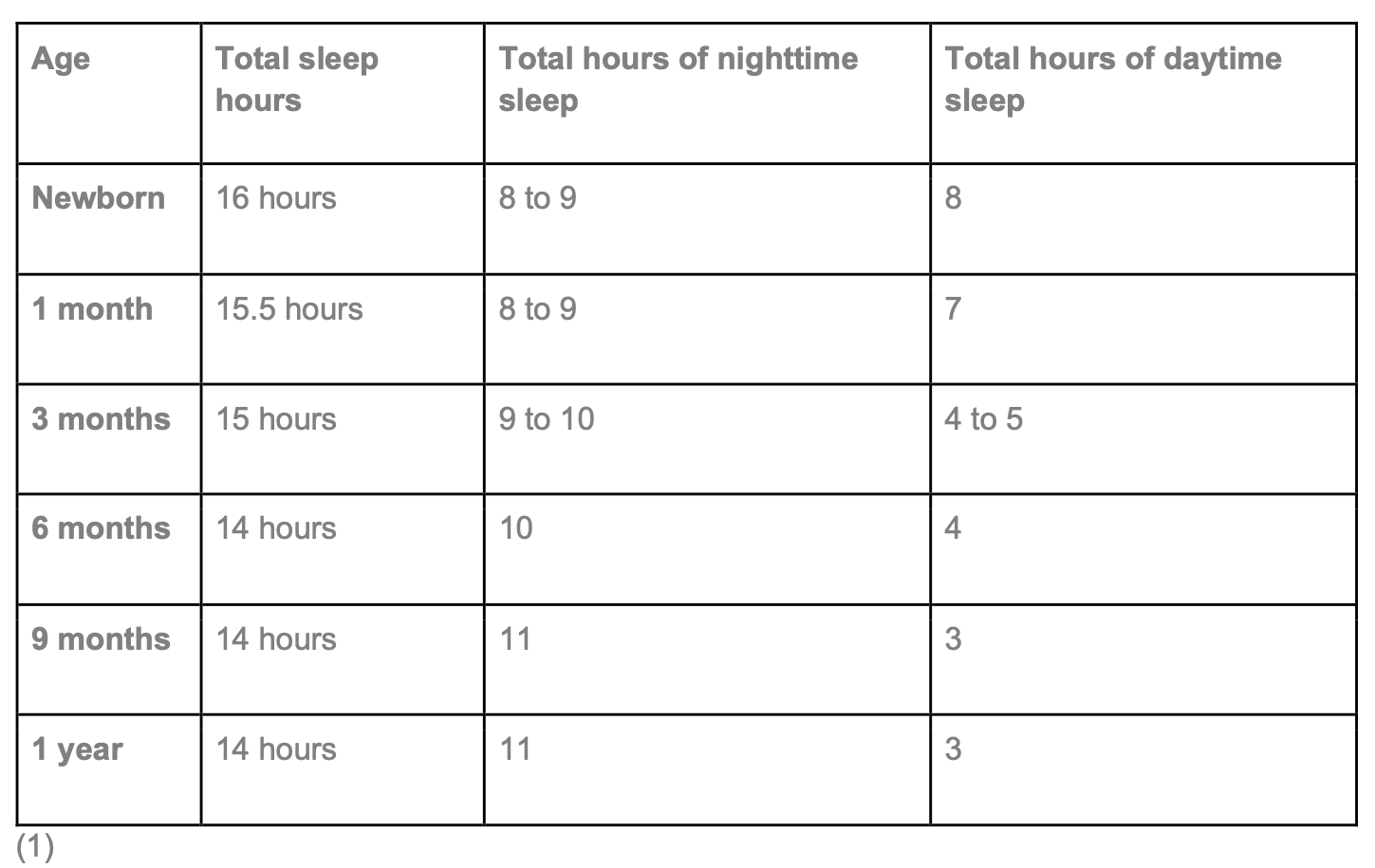
If you have a newborn, you’ve probably noticed—they sleep a lot—but not always when you want them to! Generally, newborns sleep about 16 hours—8 to 9 hours during the day and around 8 hours at night—with repeated wakings for feedings.(1)
Unfortunately, newborns won’t sleep for more than 1 to 2 hours at a time, which is exhausting for parents—waking up several times a night to feed your baby will be common in the first few months after they’re born.
Here is a table that summarizes the amount of sleep infants need from the time they’re born to their first birthday:
How Should My Baby Sleep? 5 Tips for Safe Sleeping
Here are some tips to keep your baby safe and help him get to sleep:
1. On their back
Your baby should be placed on his back to sleep—not on his stomach or side—to reduce the likelihood of SIDS or sudden infant death syndrome.(2) Once your baby learns to safely roll from his stomach to his back it’s okay for him to sleep on his stomach, but don’t put him to sleep this way.(8) It’s safest to always put your baby down to sleep on his back.
2. On a firm surface
A soft, fluffy surface can block an infant’s airway, so make sure the sheets over your infant’s mattress fit snugly and your baby’s crib, bassinet, or other sleeping arrangement meet safety standards.(2)
3. In an empty crib or bassinet
Your baby’s sleeping area should be free of plush toys, pillows, blankets, sheepskins, quilts, or bumper pads.(2) An exception is putting your baby to sleep with a dummy (known as a pacifier in the US) which can help them go to sleep. And if it falls out while your infant is sleeping, don’t sweat it.(2)
4. Swaddled
You’re likely familiar with swaddling, which has been used for thousands of years across many cultures. Swaddling is when you wrap your newborn snugly in a light blanket to recreate the sensation of being in the womb.(3) Many parents find swaddling helps soothe their baby and helps them sleep for longer stretches.(3)
Swaddling is only appropriate for newborns. Once your infant learns to roll over or is showing signs of being able to roll over, stop swaddling your infant for safety reasons.(3)
5. Appropriately dressed so they don’t overheat
Regardless of their age, don’t over bundle your baby when you put them down for bed! Dress them appropriately for sleep in the climate you live in so they don’t overheat during the night.(2)
How You Can Help Your Baby Fall Asleep
Babies aren’t born with fully developed circadian rhythms. You can help them establish one by making sure they get plenty of stimulation during the day and enough exposure to daylight.(4) However, you don’t want to keep your infant awake during the day in the hopes she’ll sleep more at night. Babies who are overtired actually have more trouble falling asleep than those who’ve had enough naps during the day!(5)
Setting up a routine for your baby to associate with sleeping. Taking a bath, getting sung to, getting changed into pyjamas in a quiet environment, and dimming the lights, can all be helpful.(4) Try to teach your baby to associate the crib with being soothed and calm.(6)
Your baby may not feel safe falling asleep on their own at first. Putting your baby to bed while they’re still awake can help them practice falling asleep without you.(4) Sleep training is another great resource for parents who want to get more than one hour of shut eye a night.
What Is Sleep Training? 5 Sleep Training Methods (4 to Try, 1 to Avoid)
There are a number of different sleep training methods out there and we’ll go over five of them so you can make an informed choice for your family.
Sleep training teaches your baby to self-soothe and go to sleep—or fall back asleep—independently. It’s usually appropriate to start when your baby is between four and six months old, as this is typically the age at which infants can learn to soothe themselves.
Here’s a brief overview of 5 sleep training methods so you can make an informed decision for yourself and your infant:
1. The Cry-It-Out Method
This method is controversial, though it was quite popular in the late 19th and early 20th century(7) it’s now seen as rather out of date and perhaps even harmful. Essentially you leave your infant to cry—alone—until he falls asleep. Parents and caregivers don’t respond to baby’s cries throughout the night or soothe them when they’re fussy.(7)
2. The Ferber Method
A less extreme method, the Ferber Method involves checking in on your baby at predetermined times and briefly comforting them. The amount of time between these intervals increases gradually, and you continue with them until your baby falls asleep on their own.(7) Comforting should only last a minute or two and involves gentle touch or speaking to your infant in a calming voice — it does not involve feeding, picking them up, or turning on the light.(8)
3. The Chair Method
The chair method involves sitting in a chair close to your baby’s crib and comforting them as needed until they fall asleep.(9) You move the chair further and further from the crib until you’re able to remove it entirely.(9) If your baby wakes up during the night, you soothe them with gentle reassurance as needed (from wherever the chair is in the process) until they fall back asleep.(9)
4. The Pick Up Put Down Method
The Pick Up Put Down Method is exactly what it sounds like! You put your baby down in their crib and if they cry or fuss, you pick them up and hold them for a bit until they calm down.(10) Once calm, you return your baby to their crib. This is repeated until your baby falls asleep.(10)
5. The Bedtime Fading Method
This method involves not putting your infant to bed at the time you deem correct, but rather tuning into your infant’s sleep cues and putting them down when they show signs of tiredness.(11) Cues such as yawning, fussing, rubbing their eyes, fluttering their eyelids, pulling their ears, etc. can all indicate your infant is sleepy.(11) When they show their sleep cues, put them to bed, and offer comfort as needed throughout the night. Then shift their bedtime by 15 minutes every few nights until it’s at your desired time.(11)
If you’re still having a hard time getting your baby to sleep through the night, it may be a good idea to consult a sleep trainer.
Interested in Learning More?
Check out the Genius Little Minds podcast episode on infant sleep! You’ll learn all about infant sleep cycles and how they differ from adults’, fascinating cultural differences in approaches to sleep and nap time, and hear parent questions on co-sleeping vs. room-sharing, the cry-it-out method, and whether pacifiers are appropriate sleep aids.
Equip yourself with knowledge and tools to help your child thrive. Subscribe here to the Genius Little Minds podcast so you never miss an episode!
References
https://www.stanfordchildrens.org/en/topic/default?id=infant-sleep-90-P02237
https://www.parents.com/baby/sleep/issues/why-the-cry-it-out-method-is-so-controversial/
https://www.parents.com/baby/sleep/basics/the-ferber-method-explained/
https://www.whattoexpect.com/first-year/sleep/chair-method-sleep-training/
https://www.whattoexpect.com/first-year/sleep/pick-up-put-down-method-sleep-training/
https://www.whattoexpect.com/first-year/sleep/fading-sleep-training-method/

Infant Mental Health: What It Is and Why It's Important
When you think about managing mental health, what comes to mind? Perhaps you think of a therapy couch, box of tissues, and feeling loads better after getting some things off your chest.
Or maybe you’re a big believer in a bubble bath or a long run as a form of self-care.
Whatever your mental health management routine, it probably involves taking specific action to care for and nurture yourself. After all, your life is complex. You have a job, relationships and finances to manage, family obligations, and social events to attend.
And if you’re a parent, your life is even more complex because you have the lives of other people to manage as well!

When you think about managing mental health, what comes to mind? Perhaps you think of a therapy couch, box of tissues, and feeling loads better after getting some things off your chest.
Or maybe you’re a big believer in a bubble bath or a long run as a form of self-care.
Whatever your mental health management routine, it probably involves taking specific action to care for and nurture yourself. After all, your life is complex. You have a job, relationships and finances to manage, family obligations, and social events to attend.
And if you’re a parent, your life is even more complex because you have the lives of other people to manage as well!
Luckily, your infant’s social calendar is pretty empty, so you can’t imagine they have a lot to stress about. Aside from feeding, sleeping, and pooping, there’s not much on their agenda... So they can’t possibly have mental health that needs attending to, right?
Wrong!
Believe it or not, even your infant has mental health needs! Yes, even before your little one is babbling or crawling, walking or talking, their mental health is being shaped by the world around them—and their relationship with you.
Loving parent that you are, you’re doing everything you can to provide love, affection, and protection for your child.
So where do you start with their mental health needs? And what does infant mental health even mean?
What Is Infant Mental Health?
You can think of infant mental health as infant brain health.(1) Brain health is crucial to an infant’s development, and it all starts when the baby is still in the womb.
Previously it was thought that as long as pregnant women avoided harmful substances like drugs or alcohol and ate enough nutrients, they’d give birth to healthy babies.(2) But research shows that when the pregnant mother is stressed, the fetus is negatively impacted.
Risks of Prenatal Stress
Prenatal stress is associated with altered brain structure and function.(3) A child may be at an increased risk for developing ADHD or conduct disorder, having impaired cognitive development and emotional issues if a mom is stressed, depressed, or anxious during pregnancy.(3)
People stressed during pregnancy are more likely to deliver preterm or before 37 weeks.(4) Low birth weight is also associated with maternal stress during pregnancy(4) and complications can arise later for preterm babies, like chronic lung disease, learning disorders, or developmental delays. Babies who are stressed out in utero are also more likely to develop chronic health problems as adults, like diabetes, high blood pressure, or heart disease.(2)
Because prenatal stress can have a lasting impact on an infant’s health, neurocognitive development, and immune system functioning, it’s important you take care of yourself as best you can if you’re pregnant.(3) Work with your healthcare provider and social network to develop a plan to help you cope with the stresses of pregnancy.
The Impact of a Child’s Environment on Their Brain Development
Stable, nurturing, positive relationships with parents and adults help babies develop strong, healthy brains. So does stimulation, love and caring interaction.(5)
But the opposite is also true.
If a parent or caregiver is frequently absent or unable to regulate their baby, toxic stress can occur.
What Is Toxic Stress?
Toxic stress—or the prolonged activation of the body’s stress response—overloads a child’s developing systems. And it can have lifelong consequences for children.(6) Persistent negative experiences means fewer brain connections will form. And those that do will develop at a slower rate.(5)
A child’s environment helps determine which synapses are used more or less. For example, if a baby is talked to or read to often, their language development synapses are activated more often.(8) But if a baby and his family has to face severe, prolonged, or repetitive adversity, and the parent or caregiver is unable to relieve the child’s stress response, an abnormal stress response develops.(7)
The Effects of Toxic Stress on Child Development
The prolonged activation of stress hormones in infancy and early childhood can reduce neural connections when they should actually be multiplying.(6) Children who experience toxic stress in early childhood are more likely to develop long-term negative health problems that may not show up until adulthood. Poor coping skills and stress management capabilities, mental illness, and physical disease are all more likely for children who experience toxic stress.(7)
We can avoid toxic stress if the environments children are growing and developing in are stable, nurturing, and engaging.
Signs of Infant Mental Health Concerns
Raising an infant comes with challenges—there’s no doubt about that. And every parent does the best they can with the resources they have available to them. But sometimes, infants seem to struggle more than “normal.” And since infants aren’t able to communicate their needs with words, it’s important to look for signs that they may be struggling with their mental health.
Seeking support from an expert in infant and early childhood development can be helpful when challenges become chronic.
Here are some warning signs that your infant’s mental health may need some tending to:(10,11)
They don’t want to be held
They’re not comforted when they’re upset
They avoid eye contact
They have feeding and sleeping difficulties
They cry persistently
They’re restless
They display distress, fear, anxiety, and/or tension
They aren’t gaining weight
They have intestinal disturbances
They aren’t meeting developmental milestones
Understanding Infant Behavior and Development
Sometimes a parent or caregiver is unable to provide consistent, reliable care to an infant despite their best efforts. This may be due to their own mental illness, their own history of neglect or abuse, or a lack of social support, especially for single parents. Financial stress, relationship conflict, and alcohol or drug abuse can all contribute to a parent not being able to consistently meet their infant’s needs.(9)
Raising kids is hard work. There’s just no way around that. But there’s support available if you know where to look for it.
Consider the following tips to better understand your infant’s behavior and development:
Connect with an Infant Mental Health Specialist
There are actually professionals trained in newborn behavioral observation, which can be extremely helpful! Seek out an infant mental health consultation if you’re looking for insight into how to read your infant better, understand their cues, bond with them, and interact with them in ways that will encourage your relationship to thrive.(9)
Learn About Attachment Theory
An attachment is an emotional bond that forms between two people, and children seek closeness with their attachment figures to find safety and comfort. When an adult responds to an infant’s needs in an appropriate way, secure attachment becomes possible. Learn about the four attachment styles to understand your own way of relating to others and to know if your child is securely attached to you (or not).
Seek out Your own Mental Health Resources
Often times, the way we were raised impacts the way we raise our kids. It can be helpful to seek your own therapy to understand your family of origin and process any mental health blocks you may be facing that’s impacting your ability to be there effectively for your child. There’s never any shame in asking for help!
Interested in Learning More?
Check out this podcast episode on infant brain development. You’ll get a deeper look at the topics covered in this blog and much more! Tune in to get a basic overview of your baby’s brain—how it’s growing in and out of the womb and what makes them kick—plus dive into Piaget’s stages of cognitive development and how this theory can help you understand your infant better. You’ll also learn about how many neurons your baby’s brain has when they’re born—hint: it’s as many stars as there are in the Milky Way!
Equip yourself with knowledge and tools to help your child thrive. Subscribe here to the Genius Little Minds podcast so you never miss an episode!
References
Clinton, J., Feller, A. F., & Williams, R. C. (2016). The importance of infant mental health. Paediatrics & child health, 21(5), 239–241. https://doi.org/10.1093/pch/21.5.239
Glover, V. (2019). The effects of prenatal stress on child behavioural and cognitive outcomes start at the beginning. Encyclopedia on Early Childhood Development. https://www.child-encyclopedia.com/stress-and-pregnancy-prenatal-and-perinatal/according-experts/effects-prenatal-stress-child
(2019, October). Stress and pregnancy. March of Dimes. https://www.marchofdimes.org/complications/stress-and-pregnancy.aspx
https://www.firstthingsfirst.org/early-childhood-matters/brain-development/
Toxic Stress Derails Healthy Development. (2011, September 29). [Video]. YouTube. https://www.youtube.com/watch?time_continue=26&v=rVwFkcOZHJw&feature=emb_logo
Franke H. A. (2014). Toxic Stress: Effects, Prevention and Treatment. Children (Basel, Switzerland), 1(3), 390–402. https://doi.org/10.3390/children1030390
(2021, April). Styger, K., Zadroga, J. Infants have mental health needs, too. Mayo Clinic. https://www.mayoclinichealthsystem.org/hometown-health/speaking-of-health/infants-have-mental-health-needs-too
Stapert, E. Infant mental health – what is it and why is it important? Manhattan Psychology Group. https://manhattanpsychologygroup.com/infant-mental-health-what-is-it-and-why-is-it-important/

Secure Attachment with Your Infant: What It Is and How to Develop It
Whether you’re a first-time parent or have kids already, one thing is certain — you love your children and would do anything for them. But there’s a lot of noise about how to do this parenting thing “right” — so how do you determine what to tune out and what to tune into?
Tuning in to your infant’s needs is really at the core of attachment theory.
What is Attachment Theory?
An attachment is an emotional bond that forms between people.(1) We create bonds with all types of people throughout our lifetime — friends, loved ones, and family. Evolutionarily, attachment serves a purpose. An infant who stays physically close to her primary caregiver is generally more likely to survive.(2)

Whether you’re a first-time parent or have kids already, one thing is certain — you love your children and would do anything for them. But there’s a lot of noise about how to do this parenting thing “right” — so how do you determine what to tune out and what to tune into?
Tuning in to your infant’s needs is really at the core of attachment theory.
What Is Attachment Theory?
An attachment is an emotional bond that forms between people.(1) We create bonds with all types of people throughout our lifetime — friends, loved ones, and family. Evolutionarily, attachment serves a purpose. An infant who stays physically close to her primary caregiver is generally more likely to survive.(2)
Children naturally seek closeness with their attachment figures to feel safe and be soothed. Infants especially need trustworthy adults to feel a sense of well-being and safety.(3)
Think of a time in your own life when you were particularly distressed and you reached out to someone for comfort. Knowing someone was there for you was soothing, right?
It’s the same thing for babies. It’s soothing to be seen.
We aren’t born with the ability to self-regulate — this is a behavior learned from caregivers.(4)
When an adult responds appropriately to an infant’s needs, secure attachment becomes possible. A baby is more likely to securely attach to someone who responds to their needs with sensitivity, calm and regularity. Lack of consistency and responsiveness is very distressing, especially for infants.
You can follow every trick in the book — breastfeeding, skin to skin contact, co-sleeping situations — there’s so much parenting advice out there, it can be hard to know what’s what! But at the end of the day, the most important thing is the relationship you’re forming with your baby. And tuning in to your infant’s needs is crucial to developing a secure attachment.
Biological parents aren’t the only ones a baby can securely attach to. A secure attachment can be formed with a mom, a dad, an aunt, a grandparent — however your family looks, forming secure attachment is possible.
The Four Attachment Styles
Psychologists Bowlby and Ainsworth developed a theory that there are four attachment styles: secure, anxious, avoidant, and disorganized.(5)
1. Secure Attachment
If a child is brought up in an environment where the caregiver is responsive and attuned to their emotional needs, a secure attachment is formed. The child learns that if they need something, someone will be there for them. Their needs are met and their emotions are acknowledged, so they feel supported and loved, and learn they can trust others. If the infant has a safe, predictable, attuned relationship with at least one caregiver, neural structures in the brain that contribute to infant well-being will form.(6) This doesn’t mean mistakes won’t be made! But if a parent does misinterpret an infant’s cue — trying to feed them when they want a nap, for example — it doesn’t mean a secure attachment won’t form. The parent just has to make a repair attempt and try again to understand their baby’s needs.
2. Anxious Attachment
Anxious attachment is formed when a parent or caregiver is intrusive, inconsistent, or misattuned.(7) Sometimes they’re responsive to the infant’s needs, sometimes they aren’t. The infant becomes confused and doesn’t know what to expect. Will someone be there when they cry and need soothing? Will they be fed when they’re hungry? Will they be changed when they’ve soiled their diaper and are uncomfortable? When a child becomes anxiously attached, they desire closeness, but they also have a fear of abandonment. This can cause issues later in life in their adult relationships. Researchers estimate that parents only have to understand their baby’s cues a third of the time for secure attachment to be possible.(8) So anxious attachment is more likely if there’s chronic misattunement or intrusiveness.
3. Avoidant Attachment
Avoidant attachment, on the other hand, happens when a parent is emotionally distant.(9) When the baby is crying or seeking connection, especially when they’re distressed, the parent rejects that bid for closeness. The parent might be irritable or emotionally rigid, so the infant learns not to seek comfort from others when they’re anxious. Over time, a person with avoidant attachment learns to be overly self-reliant. They become uncomfortable with closeness because they’ve learned it’s not safe to depend on others.
4. Disorganized Attachment
Disorganized attachment is formed when a child depends on someone who also scares them. It’s often found when parents physically, emotionally, or sexually abuse their children.(10) But that kind of trauma doesn’t have to be present for this type of attachment to form. Chaotic (but not necessarily abusive) dynamics can also cause disorganized attachment. With disorganized attachment, the caregiver is unpredictable and frightening, so the child learns being close to others is unsafe.(10)
How to Create Secure Attachment with Your Baby
You’re probably wondering how you can develop secure attachment with your infant. Here are five things you can do to promote secure attachment and wellbeing within your relationship.
1. Learn Their Cues
Pay attention to and learn your child’s cues. Every baby is different! What worked for your first born may not work for your second child. Think of yourself as a sensory sleuth trying to figure out what your baby is communicating with their facial expressions, movements, coos or cries. Understand when your baby needs to be held versus played with. Learn what kind of touch comforts them and what type of environment they enjoy. Do they like peace and quiet or soft music playing in the background? Do they want to be rocked when they’re fussy or is motion not comforting?(8) Have patience with yourself because learning these cues will take time! And remember, even if you get a cue wrong on the first guess, if you make an attempt to repair the disconnect and figure out what your baby needs, you can still be on track to building a secure attachment!(8)
2. Mirror Your Baby
Mirroring, playing with and laughing with your baby also help form secure attachment. Mirroring is a psychological term that means reflecting the affect, behavior or body language of another person.(11) So when you smile at your baby and she smiles back at you, you’re engaging in mirroring. Mirroring is so important for children because it gives them the experience of being seen and makes them feel validated.(12) Even though your infant won’t remember playing peek-a-boo with you, or how you giggled at her so she would giggle back, she will remember how you made her feel. Mothers who are securely attached mirror their infant twice as often as mothers who aren’t.(13)
3. Create a Mutual Relationship
Mirroring is part of creating a mutual relationship with your child. Don’t let the relationship be dominated by what you need — put what the baby needs first. Remember when I talked about intrusive behavior from the caregiver? If you’re initiating play with your infant when all she really wants and needs is to take a nap, that’s intrusive. You’re making it about your needs, not hers. And she probably won’t be much fun if she’s exhausted, anyway! Don’t be smothering. Go along with it when your baby initiates interactions or play. Creating a mutual relationship becomes more possible as you learn cues and get in tune with her. All of which comes with practice and time and the monitoring of your own needs.(14)
4. Do Your Own Internal Work
Taking care of yourself is so important when you have children. It may feel impossible to take care of your own needs when you have a newborn because you’re on constant sleep, feed, and diaper change duty. But as your children grow up, you may find yourself reflecting on how you were parented as a child and whether or not you want to parent your child the same way.(12) Doing your own internal homework can help you navigate the messages that were sent to you as a child by your parents and whether you want to send the same messages or say something different.(12) The more space you have to be present with your own experience, the more you’ll be able to be present with your child.(12) And learning about your own family of origin and attachment style can be useful when trying to figure out how to parent.
5. Be as Consistent as You Can
Respond to your baby’ distress as consistently as you can. Babies whose needs are met consistently are more likely to develop higher self-confidence and better self-image later in life. They learn they are respected, worthy, and lovable, which impacts their relationships and the way they navigate the world as they grow.(15) Research shows that children who form a secure attachment early in life score higher in agreeableness and conscientiousness and lower in neuroticism.(16) The reverse is also true. Children with insecure attachments early in life score higher in neuroticism and lower in agreeableness and conscientiousness.(16)
Interested in Learning More?
Check out this podcast episode on Attachment Theory. You’ll learn surprising facts about whether breastfeeding, natural birth, and taking space from your infant helps or hurts secure attachment. Plus so much more!
Equip yourself with knowledge and tools to help your child thrive. Subscribe here to the Genius Little Minds podcast so you never miss an episode!
References
Cherry, K. (2022, May). What is attachment theory? The importance of early emotional bonds. Very Well Mind. https://www.verywellmind.com/what-is-attachment-theory-2795337
McCleod, S. (2017, February). Attachment theory. Simply Psychology. https://www.simplypsychology.org/attachment.html
(2021, April). Infants have mental health needs to. Mayo Health Clinic. https://www.mayoclinichealthsystem.org/hometown-health/speaking-of-health/infants-have-mental-health-needs-too
(2018, October). How emotional attunement can transform your relationships. Emotional Enhancement. https://www.emotionenhancement.com/single-post/how-attunement-can-transform-your-relationships
Li, P. (2022, April). Attachment styles — how they affect your parenting. Parenting for Brain. https://www.parentingforbrain.com/attachment-styles/
Li, P. (2022, April). Dismissive avoidant attachment — what it is, causes and signs. Parenting for Brain. https://www.parentingforbrain.com/dismissive-avoidant-attachment/
(2022, February). Anxious attachment style: causes and symptoms. Attachment Project. https://www.attachmentproject.com/blog/anxious-attachment/
Robinson, L., Saisan, J., Smith, M., Segal, J. (2020, October). Help Guide. https://www.helpguide.org/articles/parenting-family/building-a-secure-attachment-bond-with-your-baby.htm
(2015, April). Building a secure attachment with your baby. CAPPA https://cappa.net/2015/04/18/building-a-secure-attachment-with-baby/
Li, P. (2022, April). Disorganized attachment: understanding how it forms and how to heal. Parenting for Brain. https://www.parentingforbrain.com/disorganized-attachment/
(2013, October). How to parent with attunement and creativity. The Attached Family. http://theattachedfamily.com/membersonly/?p=4214
Kim, S., Fonagy, P., Allen, J., Martinez, S., Iyengar, U., Strathearn, L. (2014). Mothers who are securely attached in pregnancy show more attuned infant mirroring 7 months postpartum. Infant Behavior and Development, 37(4) 491-504. https://doi.org/10.1016/j.infbeh.2014.06.002
(2016, May). Five ways to create a secure attachment with your baby, without sharing your bed. PsychCentral. https://psychcentral.com/lib/five-ways-to-create-a-secure-attachment-with-your-baby-without-sharing-your-bed#3
Cuddling does kids (and parents) good. Children’s Hospital Los Angeles. https://www.chla.org/blog/rn-remedies/cuddling-does-kids-and-parents-good
Young, E. S., Simpson, J. A., Griskevicius, V., Huelsnitz, C. O., & Fleck, C. (2019). Childhood attachment and adult personality: A life history perspective. Self and Identity, 18(1), 22–38. https://doi.org/10.1080/15298868.2017.1353540