Infant Mental Health: What It Is and Why It's Important
When you think about managing mental health, what comes to mind? Perhaps you think of a therapy couch, box of tissues, and feeling loads better after getting some things off your chest.
Or maybe you’re a big believer in a bubble bath or a long run as a form of self-care.
Whatever your mental health management routine, it probably involves taking specific action to care for and nurture yourself. After all, your life is complex. You have a job, relationships and finances to manage, family obligations, and social events to attend.
And if you’re a parent, your life is even more complex because you have the lives of other people to manage as well!

When you think about managing mental health, what comes to mind? Perhaps you think of a therapy couch, box of tissues, and feeling loads better after getting some things off your chest.
Or maybe you’re a big believer in a bubble bath or a long run as a form of self-care.
Whatever your mental health management routine, it probably involves taking specific action to care for and nurture yourself. After all, your life is complex. You have a job, relationships and finances to manage, family obligations, and social events to attend.
And if you’re a parent, your life is even more complex because you have the lives of other people to manage as well!
Luckily, your infant’s social calendar is pretty empty, so you can’t imagine they have a lot to stress about. Aside from feeding, sleeping, and pooping, there’s not much on their agenda... So they can’t possibly have mental health that needs attending to, right?
Wrong!
Believe it or not, even your infant has mental health needs! Yes, even before your little one is babbling or crawling, walking or talking, their mental health is being shaped by the world around them—and their relationship with you.
Loving parent that you are, you’re doing everything you can to provide love, affection, and protection for your child.
So where do you start with their mental health needs? And what does infant mental health even mean?
What Is Infant Mental Health?
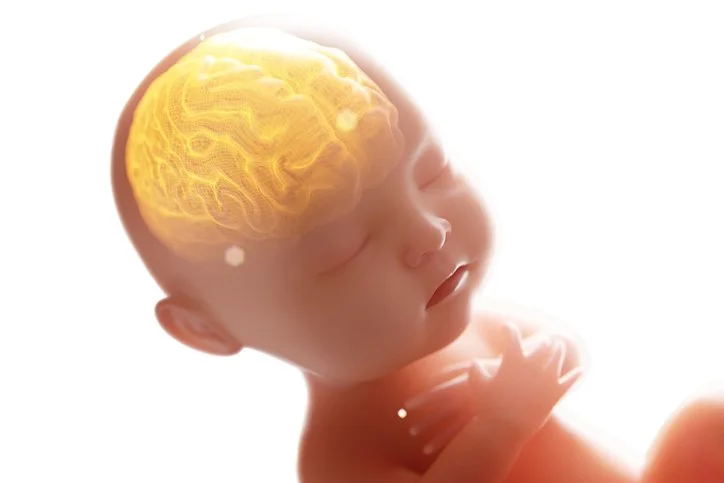
You can think of infant mental health as infant brain health.(1) Brain health is crucial to an infant’s development, and it all starts when the baby is still in the womb.
Previously it was thought that as long as pregnant women avoided harmful substances like drugs or alcohol and ate enough nutrients, they’d give birth to healthy babies.(2) But research shows that when the pregnant mother is stressed, the fetus is negatively impacted.
Risks of Prenatal Stress
Prenatal stress is associated with altered brain structure and function.(3) A child may be at an increased risk for developing ADHD or conduct disorder, having impaired cognitive development and emotional issues if a mom is stressed, depressed, or anxious during pregnancy.(3)
People stressed during pregnancy are more likely to deliver preterm or before 37 weeks.(4) Low birth weight is also associated with maternal stress during pregnancy(4) and complications can arise later for preterm babies, like chronic lung disease, learning disorders, or developmental delays. Babies who are stressed out in utero are also more likely to develop chronic health problems as adults, like diabetes, high blood pressure, or heart disease.(2)
Because prenatal stress can have a lasting impact on an infant’s health, neurocognitive development, and immune system functioning, it’s important you take care of yourself as best you can if you’re pregnant.(3) Work with your healthcare provider and social network to develop a plan to help you cope with the stresses of pregnancy.
The Impact of a Child’s Environment on Their Brain Development
Stable, nurturing, positive relationships with parents and adults help babies develop strong, healthy brains. So does stimulation, love and caring interaction.(5)
But the opposite is also true.
If a parent or caregiver is frequently absent or unable to regulate their baby, toxic stress can occur.
What Is Toxic Stress?
Toxic stress—or the prolonged activation of the body’s stress response—overloads a child’s developing systems. And it can have lifelong consequences for children.(6) Persistent negative experiences means fewer brain connections will form. And those that do will develop at a slower rate.(5)
A child’s environment helps determine which synapses are used more or less. For example, if a baby is talked to or read to often, their language development synapses are activated more often.(8) But if a baby and his family has to face severe, prolonged, or repetitive adversity, and the parent or caregiver is unable to relieve the child’s stress response, an abnormal stress response develops.(7)
The Effects of Toxic Stress on Child Development
The prolonged activation of stress hormones in infancy and early childhood can reduce neural connections when they should actually be multiplying.(6) Children who experience toxic stress in early childhood are more likely to develop long-term negative health problems that may not show up until adulthood. Poor coping skills and stress management capabilities, mental illness, and physical disease are all more likely for children who experience toxic stress.(7)
We can avoid toxic stress if the environments children are growing and developing in are stable, nurturing, and engaging.
Signs of Infant Mental Health Concerns
Raising an infant comes with challenges—there’s no doubt about that. And every parent does the best they can with the resources they have available to them. But sometimes, infants seem to struggle more than “normal.” And since infants aren’t able to communicate their needs with words, it’s important to look for signs that they may be struggling with their mental health.
Seeking support from an expert in infant and early childhood development can be helpful when challenges become chronic.
Here are some warning signs that your infant’s mental health may need some tending to:(10,11)
They don’t want to be held
They’re not comforted when they’re upset
They avoid eye contact
They have feeding and sleeping difficulties
They cry persistently
They’re restless
They display distress, fear, anxiety, and/or tension
They aren’t gaining weight
They have intestinal disturbances
They aren’t meeting developmental milestones
Understanding Infant Behavior and Development
Sometimes a parent or caregiver is unable to provide consistent, reliable care to an infant despite their best efforts. This may be due to their own mental illness, their own history of neglect or abuse, or a lack of social support, especially for single parents. Financial stress, relationship conflict, and alcohol or drug abuse can all contribute to a parent not being able to consistently meet their infant’s needs.(9)
Raising kids is hard work. There’s just no way around that. But there’s support available if you know where to look for it.
Consider the following tips to better understand your infant’s behavior and development:
Connect with an Infant Mental Health Specialist
There are actually professionals trained in newborn behavioral observation, which can be extremely helpful! Seek out an infant mental health consultation if you’re looking for insight into how to read your infant better, understand their cues, bond with them, and interact with them in ways that will encourage your relationship to thrive.(9)
Learn About Attachment Theory
An attachment is an emotional bond that forms between two people, and children seek closeness with their attachment figures to find safety and comfort. When an adult responds to an infant’s needs in an appropriate way, secure attachment becomes possible. Learn about the four attachment styles to understand your own way of relating to others and to know if your child is securely attached to you (or not).
Seek out Your own Mental Health Resources
Often times, the way we were raised impacts the way we raise our kids. It can be helpful to seek your own therapy to understand your family of origin and process any mental health blocks you may be facing that’s impacting your ability to be there effectively for your child. There’s never any shame in asking for help!
Interested in Learning More?
Check out this podcast episode on infant brain development. You’ll get a deeper look at the topics covered in this blog and much more! Tune in to get a basic overview of your baby’s brain—how it’s growing in and out of the womb and what makes them kick—plus dive into Piaget’s stages of cognitive development and how this theory can help you understand your infant better. You’ll also learn about how many neurons your baby’s brain has when they’re born—hint: it’s as many stars as there are in the Milky Way!
Equip yourself with knowledge and tools to help your child thrive. Subscribe here to the Genius Little Minds podcast so you never miss an episode!
References
Clinton, J., Feller, A. F., & Williams, R. C. (2016). The importance of infant mental health. Paediatrics & child health, 21(5), 239–241. https://doi.org/10.1093/pch/21.5.239
Glover, V. (2019). The effects of prenatal stress on child behavioural and cognitive outcomes start at the beginning. Encyclopedia on Early Childhood Development. https://www.child-encyclopedia.com/stress-and-pregnancy-prenatal-and-perinatal/according-experts/effects-prenatal-stress-child
(2019, October). Stress and pregnancy. March of Dimes. https://www.marchofdimes.org/complications/stress-and-pregnancy.aspx
https://www.firstthingsfirst.org/early-childhood-matters/brain-development/
Toxic Stress Derails Healthy Development. (2011, September 29). [Video]. YouTube. https://www.youtube.com/watch?time_continue=26&v=rVwFkcOZHJw&feature=emb_logo
Franke H. A. (2014). Toxic Stress: Effects, Prevention and Treatment. Children (Basel, Switzerland), 1(3), 390–402. https://doi.org/10.3390/children1030390
(2021, April). Styger, K., Zadroga, J. Infants have mental health needs, too. Mayo Clinic. https://www.mayoclinichealthsystem.org/hometown-health/speaking-of-health/infants-have-mental-health-needs-too
Stapert, E. Infant mental health – what is it and why is it important? Manhattan Psychology Group. https://manhattanpsychologygroup.com/infant-mental-health-what-is-it-and-why-is-it-important/

Infant Attachment: Understanding Your Baby’s Needs, Emotions, and Behavior
“He’s a mama’s boy.”
“She just loves her Nana.”
“She is attached to her daddy’s side as soon as he’s home.”
I’m sure you’ve heard parents say each of these phrases. Some just think we’re talking about a baby’s favorite person. But in psychology, those statements are talking about attachment. Attachment is the bond and relationship between infants and their caregivers. Positive attachment is absolutely essential to healthy development in infants and children.

“He’s a mama’s boy.”
“She just loves her Nana.”
“She is attached to her daddy’s side as soon as he’s home.”
I’m sure you’ve heard parents say each of these phrases. Some just think we’re talking about a baby’s favorite person. But in psychology, those statements are talking about attachment.
Attachment is the bond and relationship between infants and their caregivers. Positive attachment is absolutely essential to healthy development in infants and children.
But what exactly are attachment styles and how can you foster healthy attachment in your baby? Read on to find out!
Attachment Theory
Modern ideas on attachment have been shaped by many psychologists. But most of today’s ideas on attachment were developed by John Bowlby in the 1980s and 1990s (3)(4). Bowlby challenged the popular thoughts of his day that attachment was only related to feeding. Whoever fed the baby could soothe the baby. Bowlby just didn’t think that was true.
So, he dove deeper into what builds attachment. He found that meeting all of an infant’s needs is what grew attachment. This means their need for sleep, comfort, stimulation, and feeding.
Stages of Infant Attachment
Bowlby’s theory on attachment outlines four main stages that infants should progress through (5).
From birth to six weeks, infants show little preference for a specific caregiver.
From six weeks to seven months, infants should show a preference for primary and secondary caregivers. This can be mom, dad, grandma, babysitters, or daycare providers. Anyone that regularly cares for the baby can be a primary or secondary caregiver.
Around 7 months, most babies go through separation anxiety. They will often cry and be difficult to soothe if they are separated from their primary caregiver. An infant’s primary caregiver is most often the mother, but it can be whoever takes care of the baby most often.
Most babies grow out of separation anxiety on their own. From 10 months on, infants and toddlers grow their relationships and attachments to a variety of caregivers.
Learning about what stage your child is in is helpful in being able to recognize why they behave the way that they do. It can also be beneficial to understand attachment styles to further grasp how infant attachment affects behavior.
Attachment Styles
Bowlby’s work was expanded on by Mary Ainsworth, Main, and Solomon to outline four attachment styles, or ways that an infant can be positively or negatively attached to their caregivers (1)(8).
Ambivalent Attachment
Avoidant Attachment
Disorganized Attachment
Secure Attachment
A baby’s only way to communicate is through crying. How a caregiver responds to their cry is what determines what attachment style a baby has. Does a caregiver consistently come to meet their needs in a loving, compassionate way?
As their names would suggest, ambivalent, avoidant, and disorganized attachment styles are the types you want to avoid. Infants with ambivalent attachmentare inconsolable when separated from their primary caregiver but then show anger when reunited.
Avoidant attachment is shown by infants having no preference for any caregivers. They have no response to being separated from or reunited with their caregiver.
Infants with disorganized attachment show a mix of both avoidant and ambivalent attachment.
These attachment styles are often developed when a child is neglected or abused. A lack of response to their needs or even punishment for relying on a caregiver can result in an ambivalent or avoidant attachment. An association between care and pain can be a dangerous one for children’s mental health. Children with a revolving door of caregivers often develop a disorganized attachment style.
When a baby is securely attached, they look to their primary caregiver and know that they will be safe and taken care of. Time after time of receiving quick, loving care reinforces their sense of safety. They develop trust in their caregiver. And this trust gives them the confidence to explore the world around them.
Securely attached babies may cry when separated from their primary caregiver but are able to adjust relatively quickly to their situation. When reunited with their primary caregiver, they show joy and excitement.
Why Is a Secure Attachment so Important?
Secure attachment has been linked in study after study to positive outcomes throughout childhood and later in life (2)(5)(7). These positive outcomes include:
● Increased grey matter in the brain (7)
● Higher quality social and romantic relationships (9)
● Better performance in school
● Stronger self-esteem and self-reliance (5)
● Lower rates of depression and anxiety
Infant attachment also has a ripple effect as the child grows, becomes an adult, and has their own child. Adults that were securely attached as infants are better equipped to respond well to their babies, thus building a secure attachment in their babies.
It’s easy to see how attachment styles can be generational, whether good or bad.
Unfortunately, there’s an array of negative outcomes that are seen when infants have no single caregiver to become attached to, such as in an adoption scenario, or when they have an ambivalent, avoidant, or disorganized attachment style. So much of a person’s identity is shaped by the relationships they experience in those first years of life.
Oppositional defiant disorder (ODD), conduct disorder (CD), or post-traumatic stress disorder (PTSD) are often seen in children that were negatively attached as an infant.
How to Create a Secure Attachment in Your Baby
Don’t worry! It’s not a complicated 27-step process. It doesn’t take fancy training or special toys.
The most important thing for secure attachment is responding to your baby.
When your baby cries, you respond by looking for their source of discomfort. Does their diaper need change? When did they have a bottle last? Are they too warm or too cold?
In a new or stressful situation, you are your baby’s safe space. You protect them and provide comfort.
Responding to your baby doesn’t just mean going to them when they cry (though, that’s really important!). It also means mirroring them: giggling when they giggle, clapping when they clap, and repeating their newest sound with them over and over.
You probably do it every day, all day long. Playing, interacting, and taking care of your baby. You’re building a secure attachment.
The relationship between you and your baby is one that requires work just like any other relationship in your life. So nurture it; enjoy it. And know that you are setting your baby up for success throughout their life!
For more tidbits of infant development and parenting, check out my website here!
References
Ainsworth MD, Bell SM. Attachment, exploration, and separation: Illustrated by the behavior of one-year-olds in a strange situation. Child Dev. 1970;41(1):49-67. doi:10.2307/1127388
Benoit D. (2004). Infant-parent attachment: Definition, types, antecedents, measurement and outcome. Paediatrics & child health, 9(8), 541–545. https://doi.org/10.1093/pch/9.8.541
Bowlby, J. (1969). Attachment and loss. (OKS Print.) New York: Basic Books.
Bowlby J. Attachment and loss: Retrospect and prospect. Am J Orthopsychiatry. 1982;52(4):664-678. doi:10.1111/j.1939-0025.1982.tb01456.x
Cherry, K. (2019, July 17). How attachment theory works. Verywell Mind. Retrieved January 9, 2022, from https://www.verywellmind.com/what-is-attachment-theory-2795337
Colin, V. (1991, June 28). Infant attachment: What we know now. ASPE. https://aspe.hhs.gov/reports/infant-attachment-what-we-know-now-0
Leblanc, É., Dégeilh, F., Daneault, V., Beauchamp, M. H., & Bernier, A. (2017). Attachment security in infancy: A preliminary study of prospective links to brain morphometry in late childhood. Frontiers in Psychology, 8. https://doi.org/10.3389/fpsyg.2017.02141
Main, M. & Solomon, J. (1986) Discovery of a new, insecure-disorganized/disoriented attachment pattern. In T. B. Brazelton & M. Yogman (Eds), Affective development in infancy , pp. 95-124. Norwood, New Jersey: Ablex.
Nordahl, D., Rognmo, K., Bohne, A. et al. Adult attachment style and maternal-infant bonding: the indirect path of parenting stress. BMC Psychol 8, 58 (2020). https://doi.org/10.1186/s40359-020-00424-2