
Infant Sleep: How to Help Them Fall (and Stay) Asleep
If you’re a first-time parent, you may not know a lot about infants’ sleep needs. In fact, the only thing you may know about sleep is you won’t be getting a lot of it.
If you have questions like…
Can newborns sleep too much?
Should I keep my newborn awake during the day?
Is swaddling safe?
When do I stop swaddling?
How do I sleep train my baby?
Then this article is for you!

If you’re a first-time parent, you may not know a lot about infants’ sleep needs. In fact, the only thing you may know about sleep is you won’t be getting a lot of it.
If you have questions like…
Can newborns sleep too much?
Should I keep my newborn awake during the day?
Is swaddling safe?
When do I stop swaddling?
How do I sleep train my baby?
Then this article is for you!
How Much Should My Infant Sleep?
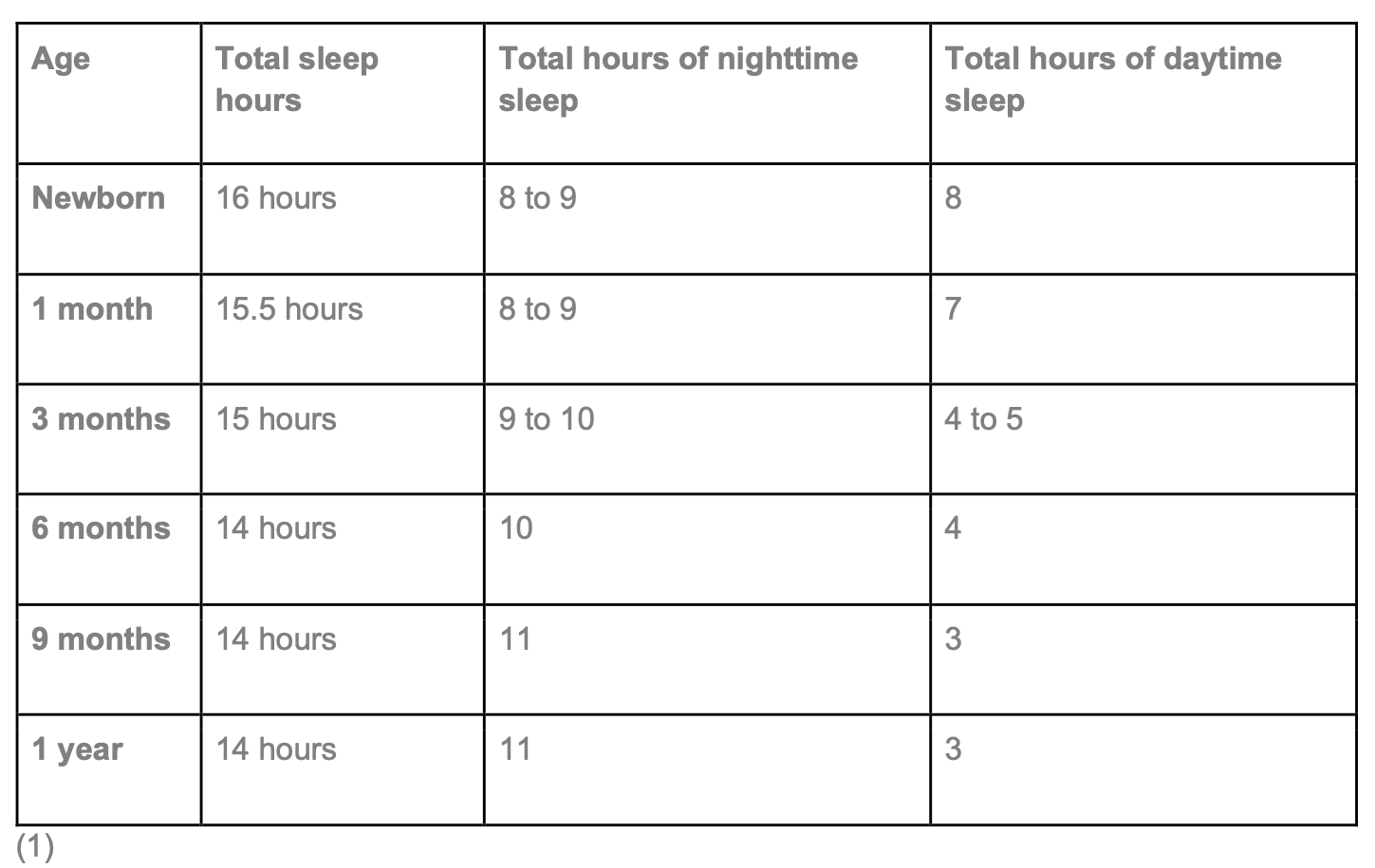
If you have a newborn, you’ve probably noticed—they sleep a lot—but not always when you want them to! Generally, newborns sleep about 16 hours—8 to 9 hours during the day and around 8 hours at night—with repeated wakings for feedings.(1)
Unfortunately, newborns won’t sleep for more than 1 to 2 hours at a time, which is exhausting for parents—waking up several times a night to feed your baby will be common in the first few months after they’re born.
Here is a table that summarizes the amount of sleep infants need from the time they’re born to their first birthday:
How Should My Baby Sleep? 5 Tips for Safe Sleeping
Here are some tips to keep your baby safe and help him get to sleep:
1. On their back
Your baby should be placed on his back to sleep—not on his stomach or side—to reduce the likelihood of SIDS or sudden infant death syndrome.(2) Once your baby learns to safely roll from his stomach to his back it’s okay for him to sleep on his stomach, but don’t put him to sleep this way.(8) It’s safest to always put your baby down to sleep on his back.
2. On a firm surface
A soft, fluffy surface can block an infant’s airway, so make sure the sheets over your infant’s mattress fit snugly and your baby’s crib, bassinet, or other sleeping arrangement meet safety standards.(2)
3. In an empty crib or bassinet
Your baby’s sleeping area should be free of plush toys, pillows, blankets, sheepskins, quilts, or bumper pads.(2) An exception is putting your baby to sleep with a dummy (known as a pacifier in the US) which can help them go to sleep. And if it falls out while your infant is sleeping, don’t sweat it.(2)
4. Swaddled
You’re likely familiar with swaddling, which has been used for thousands of years across many cultures. Swaddling is when you wrap your newborn snugly in a light blanket to recreate the sensation of being in the womb.(3) Many parents find swaddling helps soothe their baby and helps them sleep for longer stretches.(3)
Swaddling is only appropriate for newborns. Once your infant learns to roll over or is showing signs of being able to roll over, stop swaddling your infant for safety reasons.(3)
5. Appropriately dressed so they don’t overheat
Regardless of their age, don’t over bundle your baby when you put them down for bed! Dress them appropriately for sleep in the climate you live in so they don’t overheat during the night.(2)
How You Can Help Your Baby Fall Asleep
Babies aren’t born with fully developed circadian rhythms. You can help them establish one by making sure they get plenty of stimulation during the day and enough exposure to daylight.(4) However, you don’t want to keep your infant awake during the day in the hopes she’ll sleep more at night. Babies who are overtired actually have more trouble falling asleep than those who’ve had enough naps during the day!(5)
Setting up a routine for your baby to associate with sleeping. Taking a bath, getting sung to, getting changed into pyjamas in a quiet environment, and dimming the lights, can all be helpful.(4) Try to teach your baby to associate the crib with being soothed and calm.(6)
Your baby may not feel safe falling asleep on their own at first. Putting your baby to bed while they’re still awake can help them practice falling asleep without you.(4) Sleep training is another great resource for parents who want to get more than one hour of shut eye a night.
What Is Sleep Training? 5 Sleep Training Methods (4 to Try, 1 to Avoid)
There are a number of different sleep training methods out there and we’ll go over five of them so you can make an informed choice for your family.
Sleep training teaches your baby to self-soothe and go to sleep—or fall back asleep—independently. It’s usually appropriate to start when your baby is between four and six months old, as this is typically the age at which infants can learn to soothe themselves.
Here’s a brief overview of 5 sleep training methods so you can make an informed decision for yourself and your infant:
1. The Cry-It-Out Method
This method is controversial, though it was quite popular in the late 19th and early 20th century(7) it’s now seen as rather out of date and perhaps even harmful. Essentially you leave your infant to cry—alone—until he falls asleep. Parents and caregivers don’t respond to baby’s cries throughout the night or soothe them when they’re fussy.(7)
2. The Ferber Method
A less extreme method, the Ferber Method involves checking in on your baby at predetermined times and briefly comforting them. The amount of time between these intervals increases gradually, and you continue with them until your baby falls asleep on their own.(7) Comforting should only last a minute or two and involves gentle touch or speaking to your infant in a calming voice — it does not involve feeding, picking them up, or turning on the light.(8)
3. The Chair Method
The chair method involves sitting in a chair close to your baby’s crib and comforting them as needed until they fall asleep.(9) You move the chair further and further from the crib until you’re able to remove it entirely.(9) If your baby wakes up during the night, you soothe them with gentle reassurance as needed (from wherever the chair is in the process) until they fall back asleep.(9)
4. The Pick Up Put Down Method
The Pick Up Put Down Method is exactly what it sounds like! You put your baby down in their crib and if they cry or fuss, you pick them up and hold them for a bit until they calm down.(10) Once calm, you return your baby to their crib. This is repeated until your baby falls asleep.(10)
5. The Bedtime Fading Method
This method involves not putting your infant to bed at the time you deem correct, but rather tuning into your infant’s sleep cues and putting them down when they show signs of tiredness.(11) Cues such as yawning, fussing, rubbing their eyes, fluttering their eyelids, pulling their ears, etc. can all indicate your infant is sleepy.(11) When they show their sleep cues, put them to bed, and offer comfort as needed throughout the night. Then shift their bedtime by 15 minutes every few nights until it’s at your desired time.(11)
If you’re still having a hard time getting your baby to sleep through the night, it may be a good idea to consult a sleep trainer.
Interested in Learning More?
Check out the Genius Little Minds podcast episode on infant sleep! You’ll learn all about infant sleep cycles and how they differ from adults’, fascinating cultural differences in approaches to sleep and nap time, and hear parent questions on co-sleeping vs. room-sharing, the cry-it-out method, and whether pacifiers are appropriate sleep aids.
Equip yourself with knowledge and tools to help your child thrive. Subscribe here to the Genius Little Minds podcast so you never miss an episode!
References
https://www.stanfordchildrens.org/en/topic/default?id=infant-sleep-90-P02237
https://www.parents.com/baby/sleep/issues/why-the-cry-it-out-method-is-so-controversial/
https://www.parents.com/baby/sleep/basics/the-ferber-method-explained/
https://www.whattoexpect.com/first-year/sleep/chair-method-sleep-training/
https://www.whattoexpect.com/first-year/sleep/pick-up-put-down-method-sleep-training/
https://www.whattoexpect.com/first-year/sleep/fading-sleep-training-method/

Infant Development: 0 to 6 Month Old Milestones and How to Support Development as a Parent
If you’re a parent or caregiver, you’ve probably heard about childhood developmental milestones from doctors and teachers or other professionals who work with kids. Everyone who spends time with young children on a regular basis is looking for evidence that their development is on track.
Maybe you’ve already spent a lot of time reading about infant and early childhood development. Or maybe the idea of age-appropriate milestones is new to you.

If you’re a parent or caregiver, you’ve probably heard about childhood developmental milestones from doctors and teachers or other professionals who work with kids. Everyone who spends time with young children on a regular basis is looking for evidence that their development is on track.
Maybe you’ve already spent a lot of time reading about infant and early childhood development. Or maybe the idea of age-appropriate milestones is new to you. Keeping track of milestones—when there are so many of them to look out for—can feel overwhelming. But monitoring your child’s development—and engaging with them in ways that contribute to their learning and growth—is so important.
The 4 Important Areas of Early Childhood Development to Look Out For
Children are truly amazing learners. They absorb so much from the interesting world around them. (And they grow up so fast!) You as a parent or caregiver play a vital role in your child’s emotional, language, physical, and cognitive development.
I’m here to demystify the developmental stages babies and young children go through so you know:
What developmental milestones to look for at what age
Specific things you as a parent can do to help your child learn and grow
Developmental milestones refer to the skill sets most children demonstrate competency in within a certain age range. The US Centers for Disease Control and Prevention (CDC) separates milestones into four primary areas (1):
Social/emotional
Language/communication
Movement/physical development
Cognitive (learning, thinking, problem-solving)
All children develop at their own pace. But each age range comes with important milestones to look for. As parents, there are developmentally appropriate things you can do to help your child engage with the world around them. By understanding your infant or toddler’s development, you can provide the type of environment your child needs to grow and thrive. Every parent wants to support their child to the best of their ability. Being equipped with the knowledge of what your child is going through every step of the way as they grow and learn will help you do that.
Infant Development: Your Baby From 0 to 3 Months
Let’s talk about newborns! You’ve just had a baby. They’re—quite literally—a bundle of joy. When your baby is first born, their body will continue to fold slightly. Their fingers and feet naturally curl inward and their arms and legs fold toward their body, mimicking the position they held in the womb (2). Over time their body will begin to unfold and lengthen.
The One Major Thing to Help Your Newborn Develop
(Hint: you’ve probably already heard of it.)
Tummy time—or the time your baby spends on his or her stomach while awake and supervised—is a vital exercise for your newborn to develop motor, visual, and sensory skills as well as strong neck and shoulder muscles. (3) The muscles your newborn develops during tummy time will (eventually) help them sit up, roll over, crawl, and (ultimately) walk! (3) Tummy time also helps prevent positional plagiocephaly—flat spots on the baby’s head—which results from too much time spent on their back. (4)
Infant Development: Milestones From 0 to 3 Months
According to the CDC, there are a few milestones to watch for in your newborn.
Social/Emotional Checklist:
Tries to look at parent
Shows an interest in faces and begins to smile at people
Can briefly calm him or herself (i.e. by sucking on their hand)
Language/Communication Checklist:
Makes gurgling sounds, coos
Turns their head toward a sound or voice
Cries differently to express different needs
Smiles or quiets down in response to a sound or voice
Movement/Physical Development Checklist:
Lifts and holds up their head
Begins to push up when lying on their tummy
Cognitive Checklist:
Pays attention to people’s faces
Begins to recognize people or objects from a distance
Begins to follow moving things with their eyes
Acts bored (cries, fussy) if the activity doesn’t change
What You Can Do to Encourage Healthy Development in Your 0 to 3 Month Old
Take Time For Snuggles
Babies need a lot of physical touch to feel safe and secure. Cuddling and holding your baby not only makes him or her feel loved, but also regulates the baby’s heartbeat and breathing. Skin-to-skin contact is important as it releases oxytocin, relaxing both you and the baby. Develop a strong bond with your newborn and nurture his development by cuddling, playing with, and talking to him.
Talk to Your Baby Often
Whether you’re feeding, changing, bathing, or dressing your baby, talk to him. Even though your newborn can’t talk back, talking to your child is so important. It not only helps him get to know the sound of your voice, which can be soothing, it also helps with language development over time. Reading or singing to him are also great ways to bond with your newborn.
Answer Cries and Soothe Him
Answering your baby when he’s crying isn’t going to spoil him. It’s going to teach him that he can rely on you to get his needs met, and help you develop a strong bond. Attend to your baby when he’s crying and attempt to soothe him so he knows you’re there for him.
Mirror His Smiles by Smiling Back at Him
Mirroring conveys to your baby that he is heard and understood. Babies need psychological mirroring in order to understand that they exist in the world and have valid, real experiences. Mirroring your baby’s behavior is crucial for you and your infant to develop a strong bond.
Infant Development: Your Baby From 4 to 6 Months
And just like that, you no longer have a newborn. You now have an infant! In this stage, your baby will begin to understand the concept of action and reaction. When your baby does something like smile at you—and you smile back—he begins to understand that he can influence his environment. Because of this, a 4 to 6 month old will begin to model the facial expressions or behavior of the people around him.
Infant Development: Milestones From 4 to 6 Months
Around 5 months, your baby will probably have developed color vision. (5) Prior to this, babies only see in black and white! It’s easier for your infant to see bright colors, so it’s useful to introduce colorful toys as opposed to muted shades.
Around 6 months, your baby will probably sit on his own. And when you hold him upright, he’ll be able to start putting weight on both of his legs (an important pre-walking milestone.) And around 6 or 7 months, your baby will probably be able to roll both ways instead of favoring one direction. (5)
According to the CDC, here are some other milestones to watch for in your infant.
Social/Emotional Checklist:
Smiles at people
Begins to recognize familiar faces and knows if someone is a stranger
Likes to play with people, especially parents, and may cry when playing stops
Copies and responds to other people’s emotions by smiling or frowning
Language/Communication Checklist:
Babbles
Starts stringing vowels together while babbling, may begin to make consonant sounds
Copies sounds and enjoys taking turns “talking” with parent
Shows displeasure or joy with sounds
Responds to own name
Movement and Physical Development Checklist:
Lifts and holds head steady without support
Supports weight on legs to stand by pushing down when feet are on a hard surface
Rolls from tummy to back and back to tummy
Pushes up to elbows from prone position
Can bring hands to mouth and hold and shake a toy
Begins to sit up without support (pillows may be useful)
Cognitive Checklist:
Communicates happiness or sadness, responds to affection
Shows curiosity, looks around, tries to grasp out-of-reach toys with one hand
Passes things from hand to mouth or from hand to hand
Watches faces, recognizes people or objects from a distance
Moves eyes side to side to follow moving objects
What You Can Do to Encourage Healthy Development in Your 4 to 6 Month Old
Keep Talking to Your Baby and Repeat Words
Talking to your infant is important for language and communication development. Read colorful picture books, point to and name objects, and say the names of family members, friends, or pets to encourage growth and curiosity in this area. (6)
Around this time, your baby may start to recognize her own name as well. Keep repeating words to and speaking to your child—she’ll likely respond with babbling, and eventually will string a few vowels together. (6)
Make Time to Play Together
Try playing peek-a-boo! Though your baby won’t yet understand the concept of object permanence—the ability for something to exist even if she can’t see it—peek-a-boo can assist with your baby’s visual tracking and communication skills development. (7)
Your baby may also like looking at herself in the mirror! She won’t yet know it’s her own reflection, but she’ll likely be curious and enjoy having a baby-safe mirror around to interact with.
Continue playing and cuddling together and introducing her to trusted friends and family members.
Encourage Different Types of Movement
While doing supervised tummy time, put a colorful toy just out of your baby’s grasp to encourage her to turn her head and reach for it. Change positions often, helping your baby move from tummy time to standing to sitting up (pillows can be useful to offer back support).
Support Your Child Through All Stages of Development
You are your child’s first and greatest teacher. Contact with you—whether that’s snuggling, singing, speaking, reading, or some combination of all of those—is what promotes and supports your baby’s development. By responding reliably to your child’s cries, and other signs of distress, your baby learns that he or she can depend on you. Consistent (not perfect!) caregiving and routines help children develop into secure, independent people.
To read more articles like this with helpful parenting tips, subscribe to my newsletter!
References
(2021, August). Important Milestones: Your Baby By Two Months. Centers for Disease Control and Prevention. https://www.cdc.gov/ncbddd/actearly/milestones/milestones-2mo.html
(2021, December). How Your Newborn Behaves. HealthyChildren.org. https://www.healthychildren.org/English/ages-stages/baby/Pages/How-Your-Newborn-Behaves.aspx
Gavin, M. (2019, October). Tummy Time. Kids Health. https://kidshealth.org/en/parents/tummy-time.html
Hoecker, J. (2020, August). What’s the importance of tummy time for a baby? Mayo Clinic. https://www.mayoclinic.org/healthy-lifestyle/infant-and-toddler-health/expert-answers/tummy-time/faq-20057755
Bielecki, C. (2019, October). Baby Growth and Development: 4-7 Month Milestones. Parents. https://www.parents.com/baby/development/growth/4-7month-milestones/?slide=slide_596033b9-b18b-4905-aa79-c02590b1ab64#slide_596033b9-b18b-4905-aa79-c02590b1ab64
(2021, August). Important Milestones: Your Baby By Six Months. Centers for Disease Control and Prevention. https://www.cdc.gov/ncbddd/actearly/milestones/milestones-6mo.html
4-6 Month Milestones. Pathways.org. https://pathways.org/growth-development/4-6-months/overview/