
Is My Child Learning in Preschool? Yes, Your Child is Learning When They Play
Children learn many valuable skills during the preschool years. They’re learning how to communicate with and listen to others and how to follow directions. They’re developing fine and gross motor skills, and engaging with other children in cooperative play.
The point of preschool is to teach children important skills that will lay the groundwork for their future success. Skills like reading, writing, school readiness, and social skills like how to cooperate with others are all explored in preschool.(1)
Children learn many valuable skills during the preschool years. They’re learning how to communicate with and listen to others and how to follow directions. They’re developing fine and gross motor skills, and engaging with other children in cooperative play.
The point of preschool is to teach children important skills that will lay the groundwork for their future success. Skills like reading, writing, school readiness, and social skills like how to cooperate with others are all explored in preschool.(1)
4 Types of Play in Early Childhood
Play is absolutely essential to your child’s learning and development!(18)
Preschoolers learn through fun and games! When children play, they are developing their cognitive, linguistic, physical, social and emotional skills.(18)
There Are Several Different Types of Play, but They Often Overlap(6)
1. Dramatic Play involves dressing up in costumes, playing pretend, and acting out stories. It helps children explore self-empowerment, make choices and express their feelings.(10)
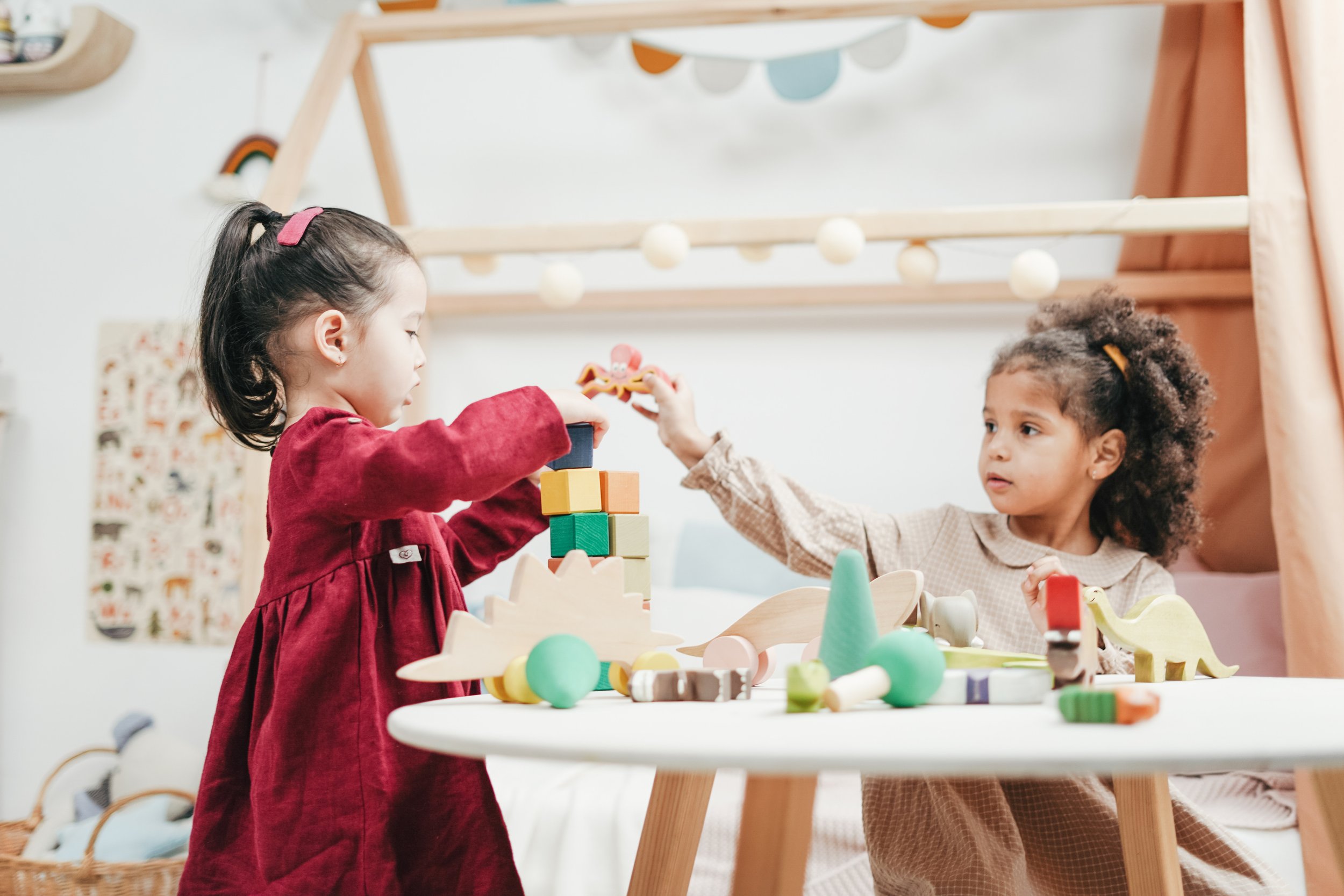
2. Manipulative Play involves building something (e.g. with Legos), putting a puzzle together, or stringing beads to create a necklace.(6) It teaches children about sequencing, patterns, order, colors and textures, and how to make comparisons.(7) It also helps children to practice their decision-making skills, analyze and solve problems, and learn about cause and effect.(7)
3. Physical Play involves being physically active and developing gross motor skills. Preschoolers should get at least 3 hours of physical activity per day.(9)
4. Creative Play involves using art supplies to create while developing fine motor skills. Holding writing utensils takes strength and coordination! Through creative play, your child will practice holding writing utensils and writing their letters and their name.(1)
Play is so vital to early childhood development that sustained, moderate to severe play deprivation in childhood (between the ages of 0 and 10) has been shown to have serious negative consequences. (19) Depression, fragile and shallower relationships, reduced self-control, a propensity for addiction and difficulty adapting to change later in life are linked to play deprivation in the early years.(19)
2 Stages of Play: Cooperative Play vs. Associative Play
You may remember from this blog post that there are 6 stages of play. Preschoolers move from associative play into cooperative play between the ages of 4 and 6.(20)
Associative play, which is stage 5 of 6, is when children play with each other but aren’t working together to reach a common goal.(14) Cooperative play, the last and final stage, is when your child is interested not just in playing, but in cooperating with other children to accomplish a goal. There will likely be a division of labor, rules, assigned roles and organization as they work together toward that goal.(14)
So what does this look like in practice? It’s the difference between playing side by side in a sandbox, talking with other children while working on their own sandcastles (associative play), and working together to build one magnificent sandcastle (cooperative play).
Cooperative play is a learned skill requiring self-regulation and the ability to balance individual needs and wants with the needs and wants of the group.(14) Preschool is a great place for your child to practice and build his or her cooperative play skills.
Learning Happens Inside and Outside the Classroom
Literacy and Language Skills for Preschoolers
Have you ever noticed how your preschooler’s classroom is filled with simple images with the object name displayed? You might notice a bus icon, a cat, the sun, a ball — this is to help your child make connections between the object and the letters and words.(1) Every day your preschooler is becoming aware of letters, numbers, shapes and symbols. Whether they’re sitting on the alphabet rug for circle time, singing songs or reciting rhymes, your child’s literacy skills are growing.(1)
Math Skills for Preschoolers
Your preschooler is also practicing their basic math skills by learning to count, identify patterns, and group similar objects together. Older preschoolers will be able to answer questions like, “How many toy cars are on the floor?” and group objects that go together, like books or blocks. (13) To nurture counting skills, ask your preschooler questions like, “How many apple slices are on your plate?” or “How many steps is it from here to the car?” To grow their sorting skills, have your preschooler help you sort laundry, putting all the red clothes in a pile or matching each family member’s socks.(13)
Science Skills for Preschoolers
Science skills are also introduced at this age, and your preschooler is probably already a natural scientist, curious about the world and eager to explore. Encourage your child to interact with and learn about nature, ask questions and conduct experiments, and even talk with them about scientific concepts.
Cooking is a great example of how to incorporate scientific exploration into play. If you invite your child to help you bake something, let them practice skills like measuring and mixing ingredients.
Tricky Preschooler Behaviors
Preschool isn’t all fun and games. And preschoolers can present some challenging behaviors. This is to be expected! All preschoolers act out sometimes.
Tantrums
In a perfect world, the tantrums will have stopped by the time your child is 4-years-old. Typically, tantrums do decline with age. If your preschooler is having frequent tantrums, they have not quite learned how to cope with frustration and regulate their feelings.(17) Talk to your pediatrician if you suspect underlying causes of tantrums in your older child, such as a sensory processing issue, a speech delay or an underlying mental health disorder.(17)
Fighting
If you notice your child is about to start fighting with a sibling over a toy, try diverting their attention before the fighting starts, or offer choices so your children can proactively be involved in the decision-making of what happens next. (4)
Lying
If you catch your preschooler lying, you may be worried you’re raising a devious child. But the truth is — pun intended — that between the ages of 4 and 5, what’s real versus fantasy is still a bit blurry.(15) Preschoolers’ memories are short. Your child may have forgotten she’s done something wrong. Or she’s convinced herself she didn’t do the “bad” thing (like accidentally break mommy’s vase).(15)
Interested in Learning More?
Check out this podcast episode for more information on preschooler play, learning and behavior! We also talk about what to do if your child is potty trained but too shy to use the toilet at school and how to handle lying, bossiness, and playground aggression.
Equip yourself with knowledge and tools to help your child thrive. And be sure to subscribe to the Genius Little Minds podcast so you never miss an episode!
References
https://www.scholastic.com/parents/school-success/school-success-guides/guide-to-preschool.html
https://raisingchildren.net.au/preschoolers/behaviour/understanding-behaviour/preschooler-behaviour
https://www.first5california.com/en-us/articles/developmentally-appropriate-behavior-preschooler/
https://www.scholastic.com/parents/family-life/parent-child/preschool-struggles.html
https://childmind.org/article/can-help-kids-self-regulation/
https://www.wgu.edu/blog/dramatic-play-what-is-why-important2111.html#close
https://raisingchildren.net.au/preschoolers/play-learning/getting-play-started/preschoolers-at-play
https://rainforestlearningcentre.ca/teaching-useful-calendar-concepts-in-preschool-and-daycare/
https://www.kidcentraltn.com/development/4-5-years/brain-development--preschool-3-5-years.html
https://www.parentingforbrain.com/extreme-tantrums-in-4-year-olds/
https://www.psychologytoday.com/us/blog/optimized/202104/the-impact-play-deprivation

How to Help a Child Who Is Struggling to Make Friends: 8 Tips and Tricks
Most of us reflect fondly on some of the friends that we had in our childhood. Whether it was a friend that lived just down the block that we biked to see every day or a friend we made at summer camp and have kept in touch with ever since. Friendships can be one of the sweetest parts of childhood.
Today, however, we are seeing more and more children struggle to establish and maintain healthy friendships. The pandemic and lockdowns drastically changed children’s social lives. For months on end, most children only interacted with their siblings or even no children at all.

Most of us reflect fondly on some of the friends that we had in our childhood. Whether it was a friend that lived just down the block that we biked to see every day or a friend we made at summer camp and have kept in touch with ever since. Friendships can be one of the sweetest parts of childhood.
Today, however, we are seeing more and more children struggle to establish and maintain healthy friendships. The pandemic and lockdowns drastically changed children’s social lives. For months on end, most children only interacted with their siblings or even no children at all.
Now, as many children have transitioned back to in-person learning and full daycare and preschool, they may have social skills to catch up on.
So, how do we help bridge this gap? Let’s dig into it.
Friendships Are Essential to Healthy Development
You know that a good friendship is good for the soul. You likely have people in your life who you don't know how you would live without.
It can be easy to forget that our children are really just little adults with all those same social and emotional needs. They long for connection and relationships with others just like we do.
Additionally, friendship has so many other benefits. Here are just a few:
Lower stress levels(1)
Providing a sense of belonging
Higher self-esteem
Encouraging good behavior
Good friendships can also help children develop social and emotional skills. Through conversations and interactions with their peers, they learn the rules of conversation.(2) They are also exposed to others’ viewpoints, learning how to put themselves in someone else’s shoes. Being around their peers also shows them what type of behavior is appropriate for their age and situation.
Studies have shown that children with high-quality friendships are more likely to perform well at school. This likely relates to friends helping a child feel comfortable, valued, and welcome in their classroom. Reliable friendships can also make big transitions, like from one grade to the next, easier.
The need for friendship and the benefits experienced by it are equal for boys and girls. We need to remember that boys need quality relationships and connections just as much as girls do.
On the flip side, there are significant challenges that come with not having good friends. More than 50% of children who have been referred for emotional-behavioral problems report having no friends.(4)
Trouble making friendships and keeping healthy relationships often carries into adulthood.(3) These social skills are ones that we need to be teaching our children early on so that they are set up for success.
Why Friendship in Childhood Can Be Difficult
Children lack the practice that adults have in interpersonal skills. They don’t always know how to read social cues and how to act in certain situations.(5)
Some children are a bit more shy and anxious and struggle to start friendships because of this. Other children haven’t yet learned good empathy skills and find it difficult to think about others and their feelings.
If your child is struggling to make friends, it could be for a variety of reasons. Sitting down and having a conversation with them is a great place to start. You can try to understand what they are feeling and experiencing. Then together, form a strategy to build and maintain friendships.
Maybe you need a few pointers to get you started. Here are some of my best tips for helping your child make friends.
8 Tips for Helping Your Child Make Friends
Model what good friendship looks like. Let them watch you make conversation with other adults and children. Tell them when you are reaching out to check on your friend or sending them a gift to brighten their day. Involve them in activities that you do with your friends.
Encourage friendships that are good for your child. You may be thinking, ‘I don’t even know who my child could be friends with.’ If so, this is the first place to start. Talk with your child to identify who they might like to be friends with. You could enlist the help of their teacher or another adult in their life to identify good friends. Then, put in the effort to schedule play dates and fun activities with that child. If you can’t find any particular friends that your child may enjoy, consider enrolling them in group activities, like ballet or football.
Recognize their personality and adjust to it. Every child is unique, just like every adult is unique. Some are introverted while others are extroverted. Some enjoy being in crowds and attending big events while others don’t. Recognize that your child (and their friends) may have a different idea of quality time together than you do. Adjust your activities and plans accordingly.
Role play with your child. Practice what they should say and do in certain situations. Let them practice introducing themselves and asking if the other child would like to play with them. Make conversation with them and guide it in a direction that it would typically go between two children, such as talking about their favorite toy or kind of ice cream.
Reinforce and praise them when they interact well with their peers. Especially in the first few years, you will likely be around for every one of your child’s social interactions. When you see them being kind, sharing, taking turns, and making conversation, praise them. Let them know that they are doing a great job.
Discuss and identify your child’s emotions. Help your child figure out what they are feeling and name it. Many childhood friendships suffer because of a lack of emotional awareness and emotional regulation. Giving your child the tools to manage their emotions will help them avoid this.
Help your child put themselves in someone else’s shoes. Empathy and compassion are essential to making relationships work. Children aren’t born with the ability to see things from another person’s perspective. We need to guide them and help them identify what other children are feeling and how to handle those feelings.
Demonstrate how to say sorry and make amends. Nobody is perfect. Sometimes your child is going to hurt someone else and sometimes your child is going to be the one that’s hurt. We need to demonstrate to our children not only how to apologize and ask forgiveness, but also how to forgive and set healthy boundaries.
Friendships can feel difficult and time-consuming to maintain at times. However, every human needs connection with other humans; it’s how we’re wired.
Before your children are fully independent in their social skills, they may need your help with this. That is totally normal and okay. Give them the tools and information they need and get ready to watch them succeed.
Would you like more child development tips in your email inbox? Be sure to sign up for my newsletter!
References
Autism Spectrum Disorder: What Parents Need to Know
Did you know that 1 in 44 children are diagnosed with autism spectrum disorder?(1)
If you have a child who is currently or has recently been diagnosed with autism, you may be feeling overwhelmed and confused.
You may be wondering what this diagnosis means for your child's future.
What treatment options are available? What can you do to help your child?
Here's what parents need to know about autism spectrum disorder in children.

Did you know that 1 in 44 children are diagnosed with autism spectrum disorder?(1)
If you have a child who is currently or has recently been diagnosed with autism, you may be feeling overwhelmed and confused.
You may be wondering what this diagnosis means for your child's future.
What treatment options are available? What can you do to help your child?
Here's what parents need to know about autism spectrum disorder in children.
What is Autism Spectrum Disorder (ASD)?
Autism spectrum disorder (ASD) is a neurological condition that affects social skills, communication, and behavior.
It's lifelong and can range from mild to severe—with widely varying symptoms.
What Causes Autism Spectrum Disorder?
Diagnoses of ASD are on the rise. What remains unclear is whether we're learning more about autism and are therefore diagnosing more children, if there truly is an increase in autism cases, or a combination of both.(2)
Autism spectrum disorder seems to be caused by a combination of genetic and environmental risk factors.
Research shows an association between genes and autism, and many of the genes seem to be involved in brain development. It's estimated that genetic factors may contribute to 40-80% of the risk of developing ASD.(3)
While autism is present across all cultures, races, and ethnicities, some groups are more likely to be diagnosed than others.
For example, boys are four times more likely to be diagnosed with ASD than girls.(4)
It also tends to run in families. If a parent or sibling has ASD, it increases the likelihood that the child will have ASD.(5)
What Are the Signs of Autism Spectrum Disorder in Children?
While the symptoms and severity of ASD can vary greatly, there are some commonalities.
The two main categories of autism characteristics include:
· Challenges with social skills and communication
· Restricted and repetitive behaviors
Social and Communication Difficulties
Persistent difficulties with communication and social interaction are hallmarks of autism.
These can manifest in several ways, such as:
· Delayed speech and language skills
· Eye contact avoidance
· Repetitive or unusual use of language
· Poor understanding of social cues
· Challenges understanding others' emotions
· Difficulties expressing their own emotions
Restricted and Repetitive Behaviors
Children with ASD may display restricted and repetitive behaviors.
This may include:
· Stereotypical body movements, like hand flapping or spinning
· Obsessive interests in certain topics
· Repetitive use of language or phrases
· Inflexible thinking or behaviors
· Need for routine
· Difficulty with new experiences
· Sensory sensitivities
Is your child's favorite food the brand-name organic white cheddar crackers that come in the purple packaging? (You learned your lesson when you tried to switch to the store brand and the meltdown ensued.)
Children with autism often have very specific interests and may become fixated on certain objects or routines.
They may also have sensory sensitivities, such as an aversion to loud noises.
The world to the child with autism can seem like a confusing and unpredictable place. Routine can provide a sense of security.
How Is Autism Spectrum Disorder Diagnosed?
There is no medical detection for autism and no single test that can diagnose it.(1)
Instead, children are typically diagnosed based on behavior and development. Early signs can be present before 12 months.(6)
It can be reliably diagnosed at age 2, though most children receive a diagnosis after 4.(1)
However, autism can also be diagnosed in the later childhood years. Sometimes, challenges don't arise until children enter school and have difficulty making friends or start showing behavior problems.
Common Co-Morbid Conditions with Autism
Parents should be aware that children with ASD often have other co-occurring conditions.
Children with autism are more likely to have:(7)
· Neurological conditions, such as epilepsy
· Sleep disorders
· Genetic disorders
· Gastrointestinal disorders
· Feeding and eating issues
· Anxiety disorders
· Mood disorders
For instance, research indicates that anxiety is present in almost 40% of children with autism spectrum disorder.(8)
These co-morbid conditions may happen along with ASD or develop later in life. It's important to be aware of them and get help from a doctor or specialist.
What Treatments Are Available for My Child With ASD?
The good news is that there are a number of different treatment options available for children with ASD. The not-so-good news is, that there is no one-size-fits-all treatment for autism.
It can be tricky to navigate all the possible treatments, supports, and interventions for your child, so here is a breakdown of some of the more common ones:
Applied behavior analysis (ABA): A behavioral intervention intended to support children with ASD in improving their skills by reinforcing positive behaviors.
Mental health support: Seeing a psychologist, or other mental health specialist can help your child, especially if they have co-morbid conditions like anxiety or depression.
School-based and special education services: School-based professionals can assess your child's needs and may provide an Individual Education Plan. Under an IEP, students with ASD receive specialized instruction and services to support their learning.
Social skills support: A type of therapy that helps children with autism develop the social skills they need to interact with peers.
Speech therapy: A Speech-Language Pathologist can help children with speech and communication skills. Many schools directly employ SLPs.
Medication: Prescribed medications may be part of a comprehensive treatment plan, though are typically a last resort when all other options have been exhausted.
How Can I Help My Child with Autism Succeed in School and Life?
If you suspect your child may have autism, the first step is to get an evaluation.
Take time to learn what you can about autism spectrum disorder and the various treatments and interventions available. The more you know, the better you will be able to advocate for your child's needs.
Partnering with your child's teacher will be key to their success in school. And when home, you can help support your child by providing consistent structure and routine.
Encouraging your child's interests and providing opportunities for them to practice social skills with other children their age can also be helpful.
What Can I Do If I'm Struggling as a Parent of a Child With ASD?
Let's face it. Parenting is the toughest job around. You have to pour your heart and soul into it 24/7 with little to no sleep, vacations, or mental breaks. And on top of all that, your kiddo is still upset because you cut their sandwich into four instead of two pieces. No wonder you're struggling!
It’s important to seek out support from other parents, professionals, or autism organizations.
Parent skills training: While sessions with a psychologist can be incredibly helpful, what do you do when the psychologist isn't there? It can be very helpful to gain skills and learn effective ways to respond to challenging behavior.
Support groups: Here you can learn from other parents going through similar challenges. And have a chance to vent, share your wins, and get advice.
Autism-specific parent organizations: These organizations can provide you with information about resources in your area.
Autism education: If your child has recently been diagnosed with autism, educate yourself on the condition. The more you know, the better you’ll understand your child and how to provide more effective support at home. Be sure to listen to my podcast, Genius Little Minds, where I dive deeper into the mind of a child with autism, plus answer questions from parents like you.
And don’t forget to subscribe to my monthly newsletter to get parenting tips and resources delivered straight to your inbox.
References