
Embrace the Unwind: The Psychology of Uptightness, its Causes, and Surprising Benefits
In the realm of psychology, we encounter a diverse range of personalities. From the laid-back free spirits to the ones who seem to have swallowed an entire do-it-yourself instruction manual, we all know someone who is, well, a tad uptight. But let us not be too quick to judge! As clinical child psychologists, we are fascinated by the intricate workings of the human mind, and even uptightness has its place in the grand tapestry of personalities. Join us on this whimsical exploration as we unravel the causes of uptightness, appreciate its quirks, and reveal how it can actually bring positive changes to a person's life.

In the realm of psychology, we encounter a diverse range of personalities. From the laid-back free spirits to the ones who seem to have swallowed an entire do-it-yourself instruction manual, we all know someone who is, well, a tad uptight. But let us not be too quick to judge! As clinical child psychologists, we are fascinated by the intricate workings of the human mind, and even uptightness has its place in the grand tapestry of personalities. Join us on this whimsical exploration as we unravel the causes of uptightness, appreciate its quirks, and reveal how it can actually bring positive changes to a person's life.
Unpacking the Uptight
Before we embark on this enlightening journey, let us define our terms. Being uptight refers to someone who possesses an unwavering commitment to order, control, and precision. They dot every "i" and cross every "t" with a precision that would make a Swiss watchmaker blush. At times, their penchant for structure can be mildly amusing or even endearing. However, it is crucial to remember that uptightness, like any personality trait, exists on a spectrum and can vary in intensity.
Causes of Uptightness
Understanding the causes of uptightness can help us empathize with the perpetually prim and proper. Here are a few factors that contribute to the development of this personality trait:
Nature and Nurture Dance
Uptightness can have genetic roots, with certain individuals inheriting a predisposition toward meticulousness and order. Additionally, upbringing and environmental factors, such as overly strict parenting or exposure to excessively rigid social norms, can shape one's propensity for being uptight.
The Anxious Adventure
Uptightness often goes hand-in-hand with anxiety. For some individuals, maintaining strict control over their environment and routine offers a sense of security and reduces anxiety. Think of it as their way of putting a safety net under life's unpredictable trapeze act.
Perfectionism as the Culprit
The relentless pursuit of perfection can fuel uptightness. Individuals who strive for flawlessness in every endeavor might find themselves unable to relax until everything aligns precisely with their high standards.
Surprising Benefits of Uptightness
While uptightness might seem like a burden, it does come with some surprising benefits that can impact a person's life positively:
The Master of Efficiency
Uptight individuals possess an innate talent for organizing their lives with meticulous attention to detail. They transform chaos into a symphony of efficiency.
With color-coded calendars, precisely timed schedules, and immaculate to-do lists, they navigate through tasks and responsibilities like productivity superheroes.
They accomplish more in a day than most people do in a week, leaving ample time for relaxation or pursuing their passions. Efficiency is their middle name!
The Reliable Pillars of Strength
Need someone who always walks the talk? Look no further than your friendly uptight neighbor or coworker. Reliability is their superpower.
Their commitment to precision and strict adherence to rules make them the go-to people for getting things done.
From meeting deadlines to planning events with military precision, they deliver with unwavering dedication and set the bar for dependability.
Zen in the Art of Stress Management
Uptightness often comes hand in hand with a need for control, and control can be an effective stress management strategy.
By meticulously organizing their environment and routines, uptight individuals create islands of calm amidst the chaos of daily life.
Their ability to maintain order and structure provides them with a sense of control, reducing stress levels and promoting overall well-being.
Preparedness as a Superpower
Uptight individuals are the kings and queens of preparedness. They anticipate challenges and plan ahead to avoid potential pitfalls.
Carrying a mini survival kit or having a backup plan for every scenario is second nature to them.
Their preparedness not only helps them navigate unexpected situations with ease but also instills a sense of security and confidence.
Attention to Detail: The Devil's Advocate
Uptightness brings with it a keen eye for detail. No imperfection goes unnoticed, no typo goes uncorrected.
Their meticulousness ensures that everything they do is of the highest quality, be it work, relationships, or personal endeavors.
Their attention to detail often sets them apart, leading to excellence in their chosen fields and garnering admiration from others.
In conclusion, uptightness is a personality trait that adds an intriguing flavor to our diverse human tapestry. While it may seem like a burden at times, uptight individuals bring their own set of unique superpowers to the table. From their masterful efficiency and unwavering reliability to their ability to find solace in structured routines, they navigate life with an unmatched level of precision and control. And let's not forget their meticulous preparedness, always ready to tackle any challenge head-on.But amidst all the benefits, it's important to remember that uptightness, like any trait, has its limitations. It can lead to heightened stress levels and make it challenging to adapt to unpredictable situations. As clinical child psychologists, we encourage embracing the quirks and strengths of uptight individuals while also helping them strike a balance, allowing flexibility and spontaneity to weave their way into their lives.
So, let us appreciate the uptight souls among us, with their perfectly lined-up ducks and color-coordinated schedules. They remind us that there is beauty in order, and that sometimes, a touch of uptightness can bring structure and harmony to a world that often feels chaotic. And who knows, perhaps we can learn a thing or two from their meticulous ways, finding our own balance between spontaneity and structure.
Remember, whether you're a laid-back wanderer or an uptight maestro, our diverse personalities intertwine to create a symphony of humanity. Let us celebrate each other's quirks and learn from one another, finding a harmonious balance between structure and spontaneity.
And to all the uptight individuals out there, embrace your inner precision, but don't forget to let loose and savor the occasional dance with spontaneity. Life is a beautiful blend of structure and surprise, and when we find the right balance, we unlock the magic that lies within us all.
Now go forth, and appreciate the art of unwinding, while cherishing the hidden benefits of uptightness. Remember, it takes all kinds to make this world an interesting and vibrant place.
Until next time, may your routines be orderly, your deadlines met, and your hearts filled with the joy of a perfectly color-coded life.Stay quirky, stay fabulous, and keep embracing the dance between structure and spontaneity.

How to Help Your Children Set Healthy Goals for the New Year
The new year can feel like a wonderful new start. It’s a chance to reevaluate our goals and lifestyles. We can consider changes that we want to make to better ourselves and make a plan to bring those changes to fruition.
Many people set New Year’s resolutions, adults and children alike. Maybe you’ve decided that you want to set new goals this year with your kids but you aren’t quite sure how to do that well. This article will outline some strategies to set your family up for success and include ideas on what resolutions may be good for your kids.

The new year can feel like a wonderful new start. It’s a chance to reevaluate our goals and lifestyles. We can consider changes that we want to make to better ourselves and make a plan to bring those changes to fruition.
Many people set New Year’s resolutions, adults and children alike. Maybe you’ve decided that you want to set new goals this year with your kids but you aren’t quite sure how to do that well. This article will outline some strategies to set your family up for success and include ideas on what resolutions may be good for your kids.
7 Good Principles to Follow
Along with the tradition of setting New Year’s resolutions comes the common problem of those goals falling by the wayside after a couple of months (or even just a few weeks). So how can you avoid the pitfalls of goal setting and not give up too early? Here are 7 tips.
Make It a Big Deal
Don’t make the conversation of setting goals as casual as the question of what to eat for dinner tonight or when you should go to the grocery store. Make it an important discussion. Set a specific time in a certain spot that all of your family will gather to chat. Put the screens and other distractions away and focus on the task at hand.
Talk About Different Types of Goals
New Year’s resolutions don’t have to be just one goal. Your family can set different types of goals, such as long-term and short-term goals. You can also discuss individual goals that everyone is setting and family goals that you all want to work towards together.
Keep It Fun
If your child thinks that this is a fun activity, they are more likely to want to follow through with their goals. Consider setting the goals in a ‘bucket list’ format. Or let them color and create charts to remember and track their goals.
Ensure the Goals Are Healthy and Realistic
Sometimes a child might want to set an unachievable goal like being the best basketball player in the world.(1) Or maybe they just want to be the best basketball player in their school. Either way, both the measurement and achievability of these goals is not ideal. Suggest instead ‘I will work on my basketball skills for 20 minutes every day.’
They also may try to set goals that are beyond their control. An example of this would be becoming friends with every child in their class. While this is a great goal and they can be kind to everyone in their class, they can’t make another child be friends with them. Help them reframe this goal with something like ‘I will be kind to a new person every day.’
Split the Goal into Small, Manageable Steps
Big goals can be good, but they can also be overwhelming. If your child has a goal that is realistic but big, help them split it into smaller steps. Children are often still learning this skill and may need your assistance in seeing how to break apart a task.
Set Specific Goals
Make sure the goal or the small steps that your child is taking to achieve the goal are specific.(2) For example, you don’t want to set a goal as vague as ‘do better in school’. Instead, set the goal as ‘I will do homework before playing outside’ or ‘I will spend 20 minutes a day reading an educational book.’
Frame Failure as a Learning Experience
Just like our goals and plans, our children’s resolutions will likely not go exactly as they want them to. There may be days that they’re sick, busy, or just feeling discouraged and unable to meet their goal that day.
Let them know that this is okay. Each day is a new chance to work towards our goals. Help them process their feelings related to not achieving their goals. Avoid minimizing the way that they feel. Then, talk through ways that they can improve in the future.
Goal Setting Ideas
I will work on the math facts for 5 minutes every day.
I will pick up my room at the end of each day.
I will eat one fruit and one vegetable with every meal.
I will take one bite of new foods that are offered to me.
I will play outside for 30 minutes every day when it is sunny out.
I will do my best on every homework assignment that is sent home.
I will help my mom cook dinner on Monday, Wednesday, and Friday.
When I start to feel mad, I will use a coping method instead of getting upset.
I will give my little sister art lessons once a week.
I will brush my teeth every morning and every night.
I will start a new hobby like soccer. I will practice it for 10 minutes every day.
I will do one act of kindness every day.
I will be friends with other students when I see them by themselves on the playground.
I will draw a picture and deliver it to a new neighbor each week.
I will volunteer at the nursing home once a week.
I will communicate how I’m feeling with my parents when I feel sad.
I will ask for help when I start to feel frustrated.
I will read a new book for 10 minutes each day.
These are just some ideas to get you started.(3) Your child can tweak them based on their interests and desires. If your child is younger, you can tweak these to fit your child and then present them as options.
Good skills and habits will help our children become productive adults. Having the discipline to continue with a good habit even when they don’t really want to will help them to be successful in their school years and beyond. Setting healthy goals this New Year is a great way to begin laying the foundation for healthy goal setting throughout their lifetime.
Do you want more parenting tips right in your inbox? Be sure to subscribe to my newsletter! You can also check out my podcast, Genius Little Minds, for more in-depth information on mental illness and various developmental stages.
References

Stress and Anxiety Around the Holidays: How to Help Your Child Enjoy the Season
Children can feel stress around the holidays for a variety of reasons. The number of people at the gatherings may make them uncomfortable. Or the change in routine may give them anxiety. They feel unsure of what to expect and that in turn makes them feel stressed.
You may not even know exactly what about the holidays seems to trigger your child. You just know that this time of year is difficult for them, and you want to help in any way you can.
Here are some tips to help make this holiday as smooth and enjoyable as possible.

Children can feel stress around the holidays for a variety of reasons. The number of people at the gatherings may make them uncomfortable. Or the change in routine may give them anxiety. They feel unsure of what to expect and that in turn makes them feel stressed.
You may not even know exactly what about the holidays seems to trigger your child. You just know that this time of year is difficult for them, and you want to help in any way you can.
Here are some tips to help make this holiday as smooth and enjoyable as possible.
First, Make Sure That You Are Taking Care of Yourself
Calm, like stress, is contagious. Whatever you are feeling, your children are going to be feeling too. So be sure to preemptively take some time to yourself this holiday season.(1) Spend a few minutes a few days doing something relaxing that you enjoy like reading a book or going for a walk.
When you start to feel overwhelmed, take a deep breath and remember that you are setting the example for how you want your children to respond when they are stressed. If you’re in the same room as your kids when something goes awry, talk through your feelings and coping mechanisms out loud so that they can witness how you work through them.
When you take good care of yourself, you are better able to take care of others.
Keep the Routine as Similar as Possible
While the holidays usually mean special meals, family gatherings, and fun events, try to keep the routine as similar as possible to normal.(3) Their day-to-day activities will be different but stick to their sleep schedule and nap schedule as closely as you can. Plan activities around those times or set up a sleeping space where you are visiting. Overtired children are less emotionally regulated and will only feel worse as they get more and more tired.
If you know that your child struggles with transitions and changes to the routine, prep them ahead of time. Let them know what is going to happen and what to expect. While this may not prevent all issues, it will likely be helpful. You can also try keeping similar things in their routine like bringing their favorite meal along with you wherever you’re going or letting them bring a favorite stuffed animal.
Manage Expectations
Know that, with children, nothing is going to go 100% smoothly. That’s okay. The holidays can still be a fun time with a few bumps in the road.
Have realistic expectations for your children and the event will help everyone feel better. If your expectations are too high, you will only feel disappointed. Plan ahead by taking an extra pair of clothes and a few snacks and know that everyone will have fun even if a few things go wrong.
Keep Your Kids Active
Kids have a ton of energy; we all know this. When they’re cooped up in a car or a dinner chair for too long, they’re more likely to start acting out. This is most often because they just need something to do to get out all the energy that is inside of them.
Encourage them to get outside and play if the weather where you live allows them to. If that’s not possible, you can try setting up an obstacle course indoors or encouraging them to do jumping jacks. Anything that gets their body moving will help them get out that energy.
Spend Quality Time Together with Your Family
Big get-togethers with aunts, cousins, and great-grandparents can be a lot of fun. However, they can also be very stimulating to some children and adults. For these individuals, the event will likely leave them feeling drained.
Try to block out time that will just be spent with your immediate family or close friends.(2) Discuss with your children some family traditions that you would like to start doing. Especially for children that really like routine, they may also really like having yearly traditions.
Do Something As a Family That Helps Others
In a season that’s often filled with gifts, it’s important to also emphasize to our children the importance of giving back to others. Consider volunteering at your local food bank or animal shelter. Or you can bake sweet treats for your local nursing home or neighbors.
There are so many options for charities that need donations around the holiday season. You could also encourage your children to earn money to donate to these causes.
Avoid overscheduling
It’s easy to run from one event to the next during this season. There are so many people to see and so much fun to be had. However, there can be too much of a good thing.
Try to create enough space in your schedule so that you don’t feel like you’re always running late for the next thing. This stress will also be felt by your children, and coupled with the normal stress of the holidays, it can quickly become overwhelming.(4)
Schedule Quiet Time
Avoiding overscheduling is a great first step, but you can take it even further by prioritizing quiet or rest time. Everybody needs time to decompress and recoup after big events. Especially on days when the schedule is full, schedule time in the middle of the day for your children to rest.
This time will give them the chance to emotionally reset and be in a better mood for evening activities.
All of these tips will make this holiday season one that everyone in your house will enjoy. Just remember that it doesn’t need to be perfect; it just needs time spent with the people that you love most. Adapt your schedule and events to meet your kids’ needs, and it will all be okay.
For many parenting tips right in your email inbox, be sure to subscribe to my newsletter. You can also learn more about each stage of development and various mental illnesses on my podcast, Genius Little Minds.
References

Sensory Overload at Holiday Gatherings: 8 Tips to Prevent a Meltdown
The holidays can be a great time to reconnect with family and take part in our favorite traditions.
However, it can also be a time filled with loud conversations and crowded living rooms. Which some of us really enjoy, but others of us don’t quite feel the same.
If your child has a sensory processing disorder or just feels easily overwhelmed in loud spaces, the holidays may pose some challenges. Even as adults, sometimes holiday celebrations can get overwhelming.
Don’t worry. If you dread the holidays each year because of how stimulating they are for your child, there are some steps that you can take to help them. This article is split into what you should do before an event, at the event, and after sensory overload sets in.
Armed with the right knowledge, this holiday season could be the best one yet. Let’s get started!

The holidays can be a great time to reconnect with family and take part in our favorite traditions.
However, it can also be a time filled with loud conversations and crowded living rooms. Which some of us really enjoy, but others of us don’t quite feel the same.
If your child has a sensory processing disorder or just feels easily overwhelmed in loud spaces, the holidays may pose some challenges.(2) Even as adults, sometimes holiday celebrations can get overwhelming.
Don’t worry. If you dread the holidays each year because of how stimulating they are for your child, there are some steps that you can take to help them. This article is split into what you should do before an event, at the event, and after sensory overload sets in.
Armed with the right knowledge, this holiday season could be the best one yet. Let’s get started!
How To Prepare Well
When gearing up for any holiday gathering, you can do a few easy tasks to set your child up for success.
Prepare your child with a detailed description of who will be there and the events that will take place.
All children benefit from knowing what’s going to happen and what is expected of them before walking into a situation.(1) Especially if your child has anxiety about the event, this will likely help them not be overwhelmed right when they arrive because they know what to expect.
Dress them in comfortable clothing.
Itchy or scratchy clothing can cause sensory issues all by themselves. You don’t want their clothes adding to all the stimulation that happens at a holiday gathering. If your child does need to wear a particular outfit for church or picture, bring along something more comfortable for them to change into afterward.
It can also be helpful to let them pick out their outfit. They can pick their favorite and feel even more comfortable and confident.
Tell family members about your child and what extra help they may need
If you know for sure that there will be specific things that trigger your child, let your family know. You might tell them about certain stimuli that bother them, how to respond if they have a meltdown, or what extra assistance they may need.
What to Do Once You’ve Arrived
You’ve made it to the day of. How can you make it a success?
Make sure that your child eats often
Having low blood sugar is a quick way to become emotionally unregulated. Just like we as adults get irritable when we’re hungry, children feel the same way. They will be less able to stay calm and happy if they haven’t had enough to eat.
If you know that there won’t be many foods available that your child likes, consider bringing your own foods. Even just some snacks to get them through until you get home can be a lifesaver.
Try to avoid the sweets table
While the holidays are often full of yummy, sweet treats, try to limit how much sugar your child has. They will likely find it harder to control themselves during the ‘sugar high’ and then feel tired and cranky after the ‘sugar crash.’
Don’t force your child to make eye contact or hug family members
While these are often the social norms, forcing a child to do this in a situation where they already feel uncomfortable will likely lead to a meltdown. Children can struggle with eye contact or physical contact for a variety of reasons, but a large gathering is not the best time or place to work on these skills.
Stick as close to a normal bedtime and a nap schedule as possible
An overtired child is not a well-regulated child.(4) Even a child that doesn’t normally struggle with sensory input may find loud spaces overwhelming when they’re too tired. Make a game plan before arriving of where your child can sleep or when you need to leave so that they can stay on their schedule. Then, stick to the plan, even if they seem like they’re having a lot of fun. Often once overtiredness is apparent is when it’s too late to avoid its negative effects.
Tag team with your partner so that you both get to enjoy
If your child needs special attention throughout the night, try to switch off who is in charge with your partner. The last thing you want is for one parent to feel overwhelmed because of the constant care that they need to give throughout the event.
Give lots of praise for positive behaviors
Let your child know that you are proud of them when they sit nicely around the big, loud dinner table. Encourage them as often as you can throughout the event. This praise will go a long way.
Handling Sensory Overload in the Moment
What if you’ve done all the steps to prepare, but your child still experiences sensory overload? Take a deep breath. Know that it’s okay, and follow the steps below.
Keep watch for signs of overwhelm
It’s much easier to calm down a child who is only slightly overwhelmed than one that has been panicking for the last 30 minutes. As soon as you notice signs of sensory overload, jump into your plan.
These signs could include:(3)
Behavior that is hyperactive or aggressive
Appearing withdrawn or defiant
Increased whining
Increased clinginess to a caregiver
Covering their ears
Make up a code word to tell you if they need a break
An older child may be able to recognize when they are beginning to feel overwhelmed. Before you go to the event, discuss with them a code word that they can tell you so you know they need help. They may be embarrassed to say in front of everyone that they feel overstimulated, and this code word helps avoid that.
Have a plan for how to give them a break
It’s important to think about beforehand what will help your child calm down if they are feeling sensory overload. Maybe it’s their favorite stuffed animal or building blocks. They also might like to wear noise-canceling headphones.
For some children, getting their bodies moving and their blood pumping helps reduce their anxiety. You can encourage them to do 10 jumping jacks or 10 sit-ups.
Whatever it is that will help your child, make sure you bring it with you. Be familiar with the place that you’re going and scope out a quiet space that you can take them to if necessary.
Sensory overload can sometimes feel unavoidable with holiday gatherings. However, there are lots of best practices that you can employ to make this holiday season as enjoyable as possible.
Remember to let go of the expectation that everything will go perfectly smooth; this just isn’t possible with children! Nevertheless, you can still have a great holiday surrounded by the people that you love.
For more tips and tricks on parenting right in your inbox, be sure to subscribe to my newsletter. If there’s a specific topic you want more information on, check out my podcast Genius Little Minds.
References
https://www.sensorymom.com/25-tips-to-reduce-sensory-overload-at-your-holiday-gathering/
https://genes2teens.com/how-to-handle-holiday-gatherings-with-sensory-sensitive-kids/
https://otperspective.com/sensory-overload-in-children-holidays/
https://www.hasa.org/2021/12/06/holiday-tips-to-cope-with-sensory-overload/

Is My Child Learning in Preschool? Yes, Your Child is Learning When They Play
Children learn many valuable skills during the preschool years. They’re learning how to communicate with and listen to others and how to follow directions. They’re developing fine and gross motor skills, and engaging with other children in cooperative play.
The point of preschool is to teach children important skills that will lay the groundwork for their future success. Skills like reading, writing, school readiness, and social skills like how to cooperate with others are all explored in preschool.(1)
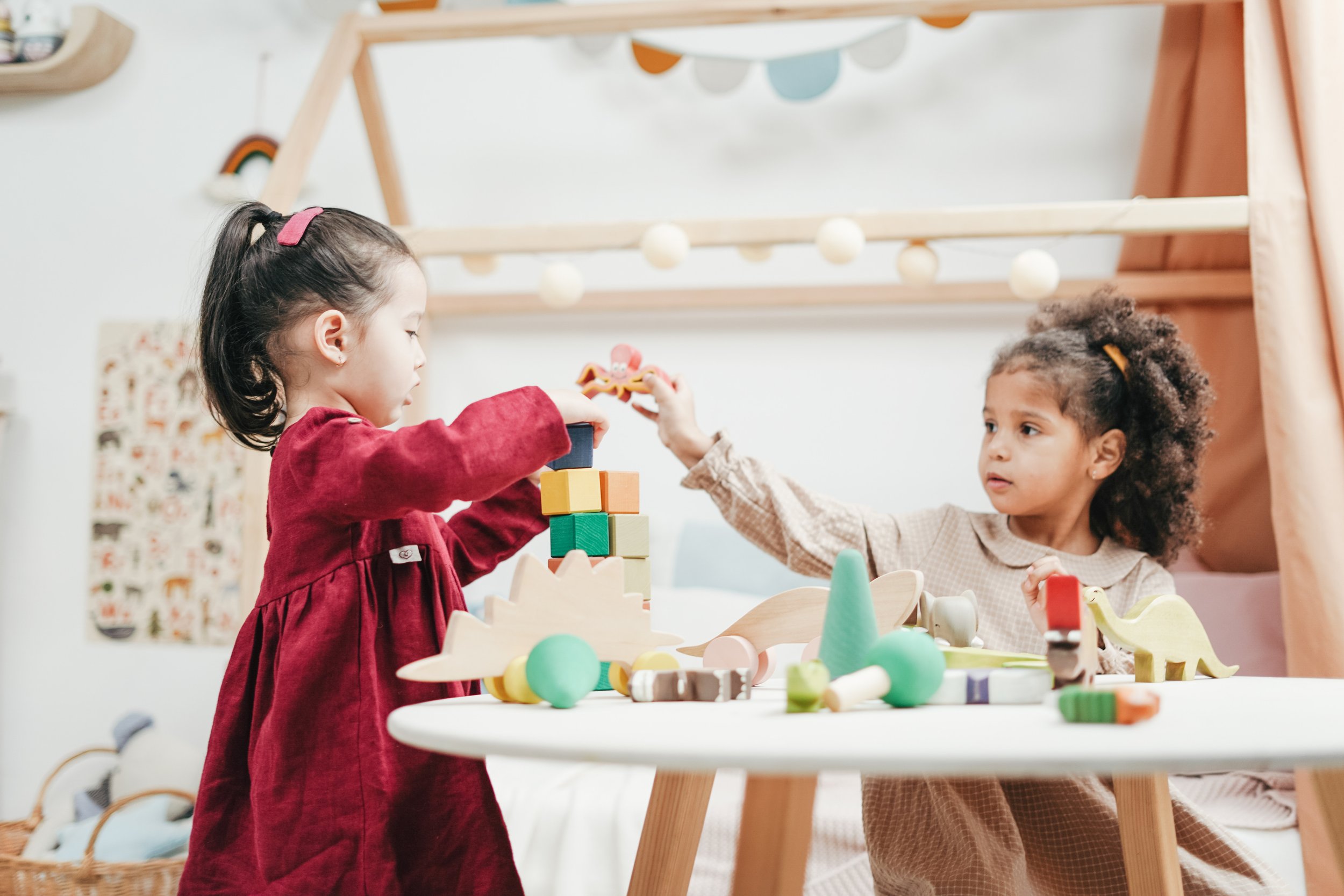
Children learn many valuable skills during the preschool years. They’re learning how to communicate with and listen to others and how to follow directions. They’re developing fine and gross motor skills, and engaging with other children in cooperative play.
The point of preschool is to teach children important skills that will lay the groundwork for their future success. Skills like reading, writing, school readiness, and social skills like how to cooperate with others are all explored in preschool.(1)
4 Types of Play in Early Childhood
Play is absolutely essential to your child’s learning and development!(18)
Preschoolers learn through fun and games! When children play, they are developing their cognitive, linguistic, physical, social and emotional skills.(18)
There Are Several Different Types of Play, but They Often Overlap(6)
1. Dramatic Play involves dressing up in costumes, playing pretend, and acting out stories. It helps children explore self-empowerment, make choices and express their feelings.(10)
2. Manipulative Play involves building something (e.g. with Legos), putting a puzzle together, or stringing beads to create a necklace.(6) It teaches children about sequencing, patterns, order, colors and textures, and how to make comparisons.(7) It also helps children to practice their decision-making skills, analyze and solve problems, and learn about cause and effect.(7)
3. Physical Play involves being physically active and developing gross motor skills. Preschoolers should get at least 3 hours of physical activity per day.(9)
4. Creative Play involves using art supplies to create while developing fine motor skills. Holding writing utensils takes strength and coordination! Through creative play, your child will practice holding writing utensils and writing their letters and their name.(1)
Play is so vital to early childhood development that sustained, moderate to severe play deprivation in childhood (between the ages of 0 and 10) has been shown to have serious negative consequences. (19) Depression, fragile and shallower relationships, reduced self-control, a propensity for addiction and difficulty adapting to change later in life are linked to play deprivation in the early years.(19)
2 Stages of Play: Cooperative Play vs. Associative Play
You may remember from this blog post that there are 6 stages of play. Preschoolers move from associative play into cooperative play between the ages of 4 and 6.(20)
Associative play, which is stage 5 of 6, is when children play with each other but aren’t working together to reach a common goal.(14) Cooperative play, the last and final stage, is when your child is interested not just in playing, but in cooperating with other children to accomplish a goal. There will likely be a division of labor, rules, assigned roles and organization as they work together toward that goal.(14)
So what does this look like in practice? It’s the difference between playing side by side in a sandbox, talking with other children while working on their own sandcastles (associative play), and working together to build one magnificent sandcastle (cooperative play).
Cooperative play is a learned skill requiring self-regulation and the ability to balance individual needs and wants with the needs and wants of the group.(14) Preschool is a great place for your child to practice and build his or her cooperative play skills.
Learning Happens Inside and Outside the Classroom
Literacy and Language Skills for Preschoolers
Have you ever noticed how your preschooler’s classroom is filled with simple images with the object name displayed? You might notice a bus icon, a cat, the sun, a ball — this is to help your child make connections between the object and the letters and words.(1) Every day your preschooler is becoming aware of letters, numbers, shapes and symbols. Whether they’re sitting on the alphabet rug for circle time, singing songs or reciting rhymes, your child’s literacy skills are growing.(1)
Math Skills for Preschoolers
Your preschooler is also practicing their basic math skills by learning to count, identify patterns, and group similar objects together. Older preschoolers will be able to answer questions like, “How many toy cars are on the floor?” and group objects that go together, like books or blocks. (13) To nurture counting skills, ask your preschooler questions like, “How many apple slices are on your plate?” or “How many steps is it from here to the car?” To grow their sorting skills, have your preschooler help you sort laundry, putting all the red clothes in a pile or matching each family member’s socks.(13)
Science Skills for Preschoolers
Science skills are also introduced at this age, and your preschooler is probably already a natural scientist, curious about the world and eager to explore. Encourage your child to interact with and learn about nature, ask questions and conduct experiments, and even talk with them about scientific concepts.
Cooking is a great example of how to incorporate scientific exploration into play. If you invite your child to help you bake something, let them practice skills like measuring and mixing ingredients.
Tricky Preschooler Behaviors
Preschool isn’t all fun and games. And preschoolers can present some challenging behaviors. This is to be expected! All preschoolers act out sometimes.
Tantrums
In a perfect world, the tantrums will have stopped by the time your child is 4-years-old. Typically, tantrums do decline with age. If your preschooler is having frequent tantrums, they have not quite learned how to cope with frustration and regulate their feelings.(17) Talk to your pediatrician if you suspect underlying causes of tantrums in your older child, such as a sensory processing issue, a speech delay or an underlying mental health disorder.(17)
Fighting
If you notice your child is about to start fighting with a sibling over a toy, try diverting their attention before the fighting starts, or offer choices so your children can proactively be involved in the decision-making of what happens next. (4)
Lying
If you catch your preschooler lying, you may be worried you’re raising a devious child. But the truth is — pun intended — that between the ages of 4 and 5, what’s real versus fantasy is still a bit blurry.(15) Preschoolers’ memories are short. Your child may have forgotten she’s done something wrong. Or she’s convinced herself she didn’t do the “bad” thing (like accidentally break mommy’s vase).(15)
Interested in Learning More?
Check out this podcast episode for more information on preschooler play, learning and behavior! We also talk about what to do if your child is potty trained but too shy to use the toilet at school and how to handle lying, bossiness, and playground aggression.
Equip yourself with knowledge and tools to help your child thrive. And be sure to subscribe to the Genius Little Minds podcast so you never miss an episode!
References
https://www.scholastic.com/parents/school-success/school-success-guides/guide-to-preschool.html
https://raisingchildren.net.au/preschoolers/behaviour/understanding-behaviour/preschooler-behaviour
https://www.first5california.com/en-us/articles/developmentally-appropriate-behavior-preschooler/
https://www.scholastic.com/parents/family-life/parent-child/preschool-struggles.html
https://childmind.org/article/can-help-kids-self-regulation/
https://www.wgu.edu/blog/dramatic-play-what-is-why-important2111.html#close
https://raisingchildren.net.au/preschoolers/play-learning/getting-play-started/preschoolers-at-play
https://rainforestlearningcentre.ca/teaching-useful-calendar-concepts-in-preschool-and-daycare/
https://www.kidcentraltn.com/development/4-5-years/brain-development--preschool-3-5-years.html
https://www.parentingforbrain.com/extreme-tantrums-in-4-year-olds/
https://www.psychologytoday.com/us/blog/optimized/202104/the-impact-play-deprivation

World Kindness Day: 11 Activities You Can Do with Your Child to Cultivate Kindness
Kindness is a skill that we have to teach our children. Just like we teach them how to ride a bike or how to do addition, they also need direction on how to be thoughtful to others.
While most children have a strong sense of empathy and compassion, kindness is the process of putting those feelings into action. It’s taking our feelings a step further and doing something nice that will make someone else happy.
The best way that children learn this is through practice. We need to work alongside them to help them think of ways to be kind and then follow through with that plan. If you’re needing some more ideas on how to practice kindness with your child, you’re in the right place!

Kindness is a skill that we have to teach our children. Just like we teach them how to ride a bike or how to do addition, they also need direction on how to be thoughtful to others.
While most children have a strong sense of empathy and compassion, kindness is the process of putting those feelings into action. It’s taking our feelings a step further and doing something nice that will make someone else happy.
The best way that children learn this is through practice. We need to work alongside them to help them think of ways to be kind and then follow through with that plan. If you’re needing some more ideas on how to practice kindness with your child, you’re in the right place!
Why Kindness?
We know that kindness makes others feel good, but did you know that it has positive benefits for the giver too?
Kindness improves a person’s physical and mental health.(1) Teaching children kindness sets them up for wellness throughout their life.
There are six main ways that kindness impacts our bodies, generating oxytocin, increasing energy, elevating happiness, extending the lifespan, producing pleasure, and creating serotonin.(2)
Oxytocin is sometimes referred to as the love hormone because it generates feelings of love, happiness, and closeness with those around us. It also lowers blood pressure and improves overall heart health. Being kind produces oxytocin in the body.
I think that we can all agree that we’d like a little more energy to get through our day. Participants in one study reported that acts of kindness made them feel more energetic, stronger, and calmer.(3)
Another study showed that those who gave financially to charitable organizations were happier than those who didn’t.(4) Those who volunteered reported lower incidences of heart disease, aches and pains, and premature death.(3)
Brain scans have shown that not only does the brain of the person on the receiving end of an act of kindness light up, but so does that of the giver.(5) Some have labeled this pleasure the ‘helper’s high.’
Finally, kindness produces serotonin. Serotonin is a hormone in the brain that makes us feel calm and happy. It also aids in the healing of wounds.
Kindness Activities to Do with Your Kids
So, now you know all the amazing benefits of kindness. Are you ready for some ideas on how to implement more acts of kindness into your life and your kids’ lives so that everyone can reap these benefits? Here are 11 great ideas!
Volunteer at an animal shelter - Whether it’s just one afternoon a month or twice a week, your local animal shelter could likely use the help. Call and ask if you can help walk animals or help clean around the facility.
Visit the elderly - Your local nursing home would probably love to have some young, friendly faces coming to visit. There may still be some COVID-19 precautions in place, so if you can’t go in person, have your children make cards to send instead.
Join a family fun run that donates the money raised to charity - Exercise, family fun, and doing good all wrapped into one. It doesn’t get much better than that!
Volunteer at a food bank - The local food pantry may need help gathering donations, organizing the shelves, or distributing the food to community members. Call the director and ask where they most need help.
Write a kind note to a friend or family member - We want to speak encouraging and positive affirmation often to our kids. We also want them to learn how to give compliments to others. Let your children pull names out of a hat to decide which family member they’ll write an encouraging letter to.
Draw a picture for your teacher - Encourage your child to draw or color a personalized picture for their teacher. If they’re a bit older, have them add a short note of encouragement as well.
Host a lemonade stand for a local charity - Let your child pick a local charity that they want to raise money for and set up shop! It doesn’t have to be lemonade that they sell. It could be cookies or artwork or anything else they would like to.
Bake treats for local firefighters, police officers, and other first responders - It’s important to recognize the individuals that give so much to keep the community safe. Bake some tasty treats with your child and then deliver them in person to say thank you to the officers.
Donate outgrown clothing or toys - Work with your child to teach them how some of the toys that they no longer play with could bring a lot of joy to another child. Let them pick what they donate so that they understand the importance of giving to others.
Create a compliment board in your home - In a place that everyone sees every day, hang up a whiteboard or corkboard. Keep markers or small pieces of paper nearby and encourage your children to add small compliments to it whenever they feel like it. This is a great way to keep them actively thinking about being kind.
Read books about kindness - Kindness doesn’t always happen overnight. Some children may need more guidance on how to think of acts of kindness and carry them out. There are many great books out there that can give them ideas.
World Kindness Day is coming up on November 13th. That’s a great chance to implement some kindness practices in your life. If you want more resources for World Kindness Day, check out School of Kindness.
Being kind isn’t always the easy option. We know that as adults and our children think it, too. However, it’s still important to strive to be kind, for our own health and the health of those around us. Together, we are all better.
Be sure to subscribe to my newsletter to stay up to date on all my latest blog posts. My podcast, Genius Little Minds, is also full of information on child mental health.
References
https://www.randomactsofkindness.org/the-science-of-kindness
Raising Happiness: 10 Simple Steps for More Joyful Kids and Happier Parents by Christine Carter Ph.D.
https://www.naturespath.com/en-us/blog/17-activities-kids-practice-kindness-compassion/
https://biglifejournal.com/blogs/blog/kids-kindness-activities

What is Obsessive-Compulsive Disorder? With 3 Paths to Recovery
If you’re noticing signs of Obsessive-Compulsive Disorder (OCD) in your child or if they’ve recently been diagnosed with OCD, it can be difficult to know what to do.
This mental illness is often misunderstood because of its representation in the media. It’s often described as simply liking a clean room or keeping things a certain way. Clinical OCD is much more intense than this. It often needs professional intervention for the person to be able to live a normal life.
So, what are the signs and symptoms of OCD in children? How can you help after a diagnosis of childhood OCD? It’s all outlined here.

If you’re noticing signs of Obsessive-Compulsive Disorder (OCD) in your child or if they’ve recently been diagnosed with OCD, it can be difficult to know what to do.
This mental illness is often misunderstood because of its representation in the media. It’s often described as simply liking a clean room or keeping things a certain way. Clinical OCD is much more intense than this. It often needs professional intervention for the person to be able to live a normal life.
So, what are the signs and symptoms of OCD in children? How can you help after a diagnosis of childhood OCD? It’s all outlined here.
Signs and Symptoms
The hallmark symptom of OCD is ritualistic behaviors. These ritualistic behaviors are done repeatedly and excessively. Some ritualistic behaviors include washing hands, rechecking items like ovens or door locks, putting things in a particular order, counting the same set of objects, repeating certain words or phrases, or separating food on a dinner plate.
OCD behaviors are different for every individual. This list of behaviors is not exhaustive. Any behavior that is done over and over excessively may be a sign of OCD.
Other emotional symptoms of OCD include:
Intense worry or fear about having things in a particular order
Extreme fear of germs, dirt, or bodily waste
Constant doubts about something being done, like the door being locked or the oven being turned off
Strong need to have tasks done perfectly
Compulsion to touch or count objects
Destructive thoughts
Lack of self-esteem or self-confidence
Difficulty concentrating at school or home
A sense of panic if they aren’t able to perform their rituals exactly as they’d like to
A sufferer of OCD may also experience physical symptoms from their mental state. These include:
Racing heart
Headaches or stomachaches
Shaking and trembling
Difficulty breathing
Feelings of weakness
Intense fatigue
Sweating
Difficulty sleeping
When these symptoms begin to interfere with a child’s ability to function normally is when they need professional help.
Risk Factors
Many of the risk factors of OCD are very similar to other anxiety disorders. The four risk factors are predisposition, genes, environment, and biological processes.
Predisposition refers to the fact that some children are less capable of handling stress well and are more prone to anxiety. Genes, or a family history of OCD, make a child more likely to develop the disorder.
Certain environments may be a factor in the development of OCD. Some of these situations include parental divorce, a death in the family, the birth of a sibling, moving, attending a new school, or experiencing trauma.
Specific biological processes have been suspected to be linked to OCD. These processes are an imbalance of serotonin or a strep infection.
Ways to Help Your Child
So, what if you’ve already seen the signs and received a diagnosis of OCD for your child? Here are some steps you can take to help them.
Learn More
It’s very difficult to help someone with an issue that you do not understand. So, learning more is the first step.
OCD Awareness Week is fast approaching. In 2022, it will be celebrated from October 9th to the 15th. The International OCD Foundation hosts the event, providing videos to watch and events to participate in.
The theme this year is The Road to Reclaiming Your Life. This theme encompasses the idea that with the right treatment and support from those around a person, full recovery from OCD is possible.
Learning more about OCD is beneficial for everyone–not just those suffering from the disease. Understanding better the experiences of those with OCD gives us compassion and ways to help them succeed.
All events are free, and you can click here to check it out.
Speak to a Mental Health Professional
The first line of treatment for OCD is most often therapy. Cognitive-Behavioral Therapy (CBT) in particular is very effective in treating OCD.
CBT helps a child recognize what their thought patterns are and how those thought patterns may be affecting their behavior. By changing their thoughts, they are able to change their actions.
When treating compulsive behaviors, CBT often employs Exposure Response Prevention. This technique supports children while they face their fear of not giving in to compulsive urges. Children slowly work through more and more difficult and scary scenarios. Eventually, they can resist engaging in all of their previous compulsive behaviors.
This approach, while effective, takes a lot of work. It can help if children can see that the hard work is worth it. My upcoming book, Khloe Kitten Is Afraid of Germs!, does just that.
Khloe Kitten experiences compulsive urges around germs, like many of those who suffer from OCD do. She wants to go down the slide like all her other friends do, but she has too much fear. She employs Graded Exposure to slowly expose herself to germs and overcome her fear and behavior.
As your child works through a stepladder approach in therapy, they will be able to see themselves in Khloe Kitten. They may be working on different compulsive behaviors, but they will recognize her feelings and fear.
A child will know that if Khloe Kitten can do it, they can do it too. They also may better understand what their therapist is asking them to do.
Also, each book comes with an About Anxiety page, a Coping Strategies page, and a Stepladder page for parents. Each page will equip you with more information to help your child.
A therapist may also employ other strategies of CBT to help your child. These could include role-playing exercises, teaching positive self-talk, introducing relaxation techniques, and talking through how their thoughts or fears are irrational. Your therapist will create a unique treatment plan for your child.
Medication
If various types of therapy don’t bring enough relief for your children, medication may be a helpful option. Anti-anxiety medications should only be used under the supervision of a pediatrician and psychologist.
Obsessive-Compulsive Disorder can be frustrating and confusing for children and parents alike. However, with the right treatment and support, it’s possible for most children with OCD to lead a productive life.
To learn more information about various mental health illnesses in childhood, be sure to subscribe to my newsletter or check out my podcast, Genius Little Minds.
References
https://adaa.org/sites/default/files/How-to-Help-Your-Child-A-Parents-Guide-to-OCD.pdf
https://childadolescentpsych.cumc.columbia.edu/professionals/research-programs/y-team/ocd-treatment
https://www.psychiatry.org/patients-families/ocd/what-is-obsessive-compulsive-disorder

Celebrating World Mental Health Day: Plus 10 Mental Health Tips
October is here and with its arrival comes World Mental Health Day on October 10th.
Have you been curious about where to get resources for World Mental Health Day for your home or classroom? Or are you just looking for tips on how to support your child’s mental well-being?
You’re in the right place! I’ve outlined great answers to both questions below.

October is here and with its arrival comes World Mental Health Day on October 10th.
Have you been curious about where to get resources for World Mental Health Day for your home or classroom? Or are you just looking for tips on how to support your child’s mental well-being?
You’re in the right place! I’ve outlined great answers to both questions below.
What Is World Mental Health Day?
Organizations around the world recognize that meeting mental health needs is just as important as any other need. It’s just as important as food, water, clothing, and shelter. While you can’t always see a child’s poor mental health, it impacts their life in monumental ways.
Because of the magnitude of importance about this topic, there is not just one organization that sponsors events and provides resources for World Mental Health Day. There are a variety to choose from.
Some organizations that you can check out are the United Nations, the Mental Health Foundation, the World Health Organization, and the World Federation For Mental Health. The theme that was chosen this year by the World Federation for Mental Health is ‘Make Mental Health & Well-Being for All a Global Priority.’ It is widely recognized that especially after the COVID-19 pandemic, many people need more mental health support.
Many of these websites provide printable and digital resources that educate on mental health. Some will have guest speakers or will host community events around the globe.
Focusing on mental health is important for everyone in every place. So, no matter where you and your child are, there is sure to be a way that you can learn and grow from World Mental Health Day.
Ways to Help Your Child with Their Mental Health
Beyond just the big event, what are some ways that you can support your child’s mental health every day?
1. Read Books About Identifying Various Emotions
Books can be a great way to start a conversation about what emotions that your child may be feeling. Kids can see how the characters label their emotions and how they cope with them in healthy ways. Many books focus on a specific emotion, so if your child struggles with one emotion, like anger, in particular, there is likely a book out there that you can read together.
2. Help Them Learn how to Relax and Perform Self-care
School, social pressures, and navigating all the challenges of growing up may cause stress in your child. They need to know how to unwind and relax in order to nurture positive mental health.
Help them find relaxing activities that they enjoy like reading, taking a walk, or drawing. They may also find that more strenuous activities like running or playing a sport help clear their mind. It doesn’t really matter what the activity is. They just need a healthy way to recharge.
3. Keep the Line of Communication Open
Ask your child often about their friends, how their school work is going, and what is new in their lives. As you keep track of soccer practices and dance lessons and their favorite lunch, you may think that you know everything about them. However, you may be surprised with what you learn by asking these simple questions.
Staying in tune to our children’s lives helps us be the first to know when something seems amiss or when they may be needing more support. (1) We want our children to feel safe coming to us whenever they have a problem. That is more likely to happen if there’s already a pattern of open communication in place.
4. Model Healthy Coping Skills
It’s easy to feel like we should never be mad, frustrated, or sad around our children. Sometimes we just put on a happy face because it’s easier. Yet, this is not always in our children’s best interest.
It’s good when they see you frustrated in traffic, but you take calming deep breaths. Or maybe they see you upset when your favorite snack is all gone, but then you calmly chose another option. These may seem like really small things, nonetheless, our children are always watching. They are learning coping skills every time they watch you handle your feelings in a productive way.
5. Create Household Routines and Stick to a Sleep Schedule
Children feel more secure and function better when they know what to expect. This is why routines and schedules can be beneficial for children.
A sleep schedule is particularly important because not getting enough high-quality sleep is a risk factor for many mental illnesses.(2) Make sure that your child is getting enough hours of sleep at night and is sleeping soundly.
6. Give Them Encouragement and Support
Remind your child often how proud you are of them. Children need to hear that they are loved and that you are always there for them. It’s important to show this with your actions, but it’s also important to say it with your words.
7. Encourage Daily Movement and Healthy Habits
A healthy body supports a healthy mind. Encourage your child to get their body moving for at least 30 minutes a day. There are lots of fun ways to make this happen. They could do anything from jumping jumps to kicking a ball around the yard to play at the park.
Also, make sure that your child is eating well-balanced meals and getting all the vitamins and nutrients that they need. Healthy food will fuel their mind and body to help them function at 100%.
8. Watch for Changes in Mood or Behavior
Much like we talked about earlier, you want to understand well how your child is feeling on any particular day. Watch for sudden, drastic changes in their moods or behaviors. This could be a sign of an event that needs to be addressed.
You may also notice slow, more permanent changes over time. While kids' personalities change as they grow, this is referring to increased sadness, anxiety, or other negative emotions for extended periods of time. These may be signs of a mental health struggle.
9. Nurture Their Self-esteem
Help your child feel comfortable with who they are. (3) One way to build self-esteem is to give your child the power to make decisions whenever possible. This sense of accomplishment and power to be independent will do wonders for their self-confidence.
10. Get Professional Support if You Need it
It’s never too early or too late to reach out for help. If you feel like you can’t give your child all of the support that they need, consider talking with a mental health professional. Therapy can be incredibly beneficial not just after the onset of mental illness but even before. A therapist will be able to give you strategies and tips for preventing your child from slipping further into poor mental health.
Now, these tips don’t just apply to children. They are good mental health practices for anyone. We all need to take care of ourselves before we can take care of others. In the same way, World Mental Health Day can be beneficial for anyone. So, let’s go take care of our mental health!
For more information on child mental health, be sure to check out my podcast, Genius Little Minds, and subscribe to my newsletter.
References

Navigating Social Anxiety with Selective Mutism: Using a CBT Approach
A diagnosis of social anxiety with selective mutism (SM) can be hard to navigate.
Especially if you’re an extrovert or you just enjoy social interactions, it can be hard to put yourself in the shoes of a child that feels intense anxiety in those same circumstances. Or your child may not be able to articulate their feelings and tell you exactly what’s wrong when you go out in public.
This article will not only give you a better idea of how to spot this disorder but also the best methods for treating it.
Let’s dive into it.

A diagnosis of social anxiety with selective mutism (SM) can be hard to navigate.
Especially if you’re an extrovert or you just enjoy social interactions, it can be hard to put yourself in the shoes of a child that feels intense anxiety in those same circumstances. Or your child may not be able to articulate their feelings and tell you exactly what’s wrong when you go out in public.
This article will not only give you a better idea of how to spot this disorder but also the best methods for treating it.
Let’s dive into it.
Signs and Symptoms
So, how can you spot a child that may be struggling with social anxiety with selective mutism? The symptoms are quite similar to many anxiety disorders with the differentiator being that the anxiety is brought on or worsened by social situations.
The ‘selective’ in selective mutism means that it only happens in certain situations. The child is physically capable of speaking and forming words, but they feel such intense anxiety in certain situations that they are unable to speak.
This disorder can also involve intense fear even when just thinking about or anticipating social situations. So, parents may notice that their child stops speaking while at home when they know that they will be leaving soon for some social event.
This can seem confusing at first since their home also seems to be their safe place. Sometimes it is necessary to take a step back and examine the full situation to understand how a child may be feeling.
Other emotional symptoms of this disorder include:
Intense anxiety or panic in or about social situations
Refusal to participate in social situations
Temper tantrums
Fear of embarrassment or judgment
Expecting the worst possible consequences during social situations
Inability to interact with strangers
Lack of self-confidence
Difficulty concentrating in various settings
n addition to these emotional symptoms, a child may also experience various physical symptoms independently or as a result of their anxiety. These include:
Heart palpitations or a racing heart
Trembling
Difficulty breathing
Feelings of weakness
Excessive sweating
Fatigue
Headaches
Stomachaches
Difficulty sleeping
When any of these symptoms begin to interfere with a child’s ability to function normally, help from a professional is needed.
Causes and Risk Factors
The causes and risk actors of SM are similar to those of many other anxiety disorders. The three main risk factors are a predisposition, genetic influences, and a child’s environment.
Predisposition is the fact that some children, because of their personality or other factors, are more likely to develop SM and are less capable of handling stress in a healthy way. It may take less severe events to trigger the onset of anxiety episodes or the disorder as a whole.
Our genetic makeup also influences mental health. If a child’s parents or other people in their family tree have mental illnesses, specifically anxiety disorders, then a child is more likely to develop SM.
Certain environmental factors can also bring on a mental health crisis. These factors could include embarrassing social situations, overly controlling parents, others in their home having a mental illness, attending a new school, or being bullied. Any event that brings trauma can also bring on an anxiety disorder.
None of these factors mean that a child will for sure develop social anxiety with selective mutism, but they do make it more likely to happen.
Treatment Options
If your child is struggling with symptoms of social anxiety or has been diagnosed with social anxiety with selective mutism, there are multiple treatment options that you can consider.
Cognitive-Behavioral Therapy
Cognitive Behavioral Therapy (CBT) is the most recommended and evidence-backed form of treatment for anxiety disorders. CBT helps children identify their thought patterns and recognize how those thoughts may be helping or hurting them.
CBT can guide a child to see how what’s happening inside their heads translates into their behavior. A mental health professional will help a child use relaxation techniques, role-playing, and positive self-talk to help them face and conquer their fears.
One of my upcoming children’s books addresses social anxiety with selective mutism in specific. Darcy Deer Is Afraid to Talk, Sometimes! follows Darcy Deer as he wants to perform in the school play but is very worried that he won’t be able to say his lines. Darcy uses a science-proven, stepladder approach to face his fears.
A stepladder approach, or Graded Exposure, slowly and systematically helps a child face their fears and learn to manage the symptoms of their anxiety. It involves gradually taking on tasks that cause increasingly more anxiety. Throughout the process, a child would use the coping skills that they learned in therapy.
A child that is receiving CBT for a diagnosis of social anxiety with selective mutism will relate to Darcy Deer. They will see the hard work that he is putting into managing his symptoms. This might help them feel less alone and more confident in their ability to overcome their own anxiety.
Darcy Deer Is Afraid to Talk, Sometimes!can also be a great resource for parents. Each book contains an About Anxiety page, a Coping Strategies page, and a Stepladder page. This information will you better understand your child and give you concrete ways to help them
Darcy Deer Is Afraid to Talk, Sometimes!will be available late 2023.
Anti-Anxiety Medication
In some cases, a child may not respond as well as hoped to CBT. If therapy options have been exhausted, your child may be prescribed anti-anxiety medication. Medication can be very helpful for some children, but the benefits and risks should be weighed carefully by the parents and a child psychiatrist before medication is given.
Social anxiety with selective anxiety can be tricky to navigate and understand. Oftentimes, figuring out exactly what’s wrong is the biggest obstacle. With the right support and therapy, almost all children are able to cope with this disorder and even push beyond it and thrive.
For more tips and insight on child mental health, be sure to subscribe to my newsletter or check out my podcast Genius Little Minds.
References

“Creating Hope Through Action”: Understanding and Preventing Suicide in Children
Suicidal thoughts and ideation are always serious problems. If you or your child are struggling with suicide, reach out for help right away by calling a suicide hotline or reaching out to a mental health provider.
Suicide is a tough topic. It’s even tougher when we’re talking about suicide in childhood.
However, it’s an important one to understand because prevention means that precious, young lives are saved.
So, what are the signs of suicidal thoughts or behaviors in children? How can you help a child who is thinking about suicide? Let’s dig into it.

Suicidal thoughts and ideation are always serious problems. If you or your child are struggling with suicide, reach out for help right away by calling a suicide hotline or reaching out to a mental health provider.
Suicide is a tough topic. It’s even tougher when we’re talking about suicide in childhood.
However, it’s an important one to understand because prevention means that precious, young lives are saved.
So, what are the signs of suicidal thoughts or behaviors in children? How can you help a child who is thinking about suicide? Let’s dig into it.
Prevalence of Suicide in Children
Unfortunately, suicide among children is far more common than people often think.
While it’s difficult to know exactly how often suicide happens in every country, worldwide, it is estimated for 15- to 19-year-olds, suicide comes in as the 4th leading cause of death.(3)
The World Health Organization estimates that 700,000 people worldwide commit suicide every year.(4) About 11.5% of those are committed by individuals 24 or younger.(5)
Suicide prevalence and information does vary from country to country. One survey in Great Britain found that by the age of 17, 7% of children had attempted suicide.(8)
In the United States, the Center for Disease Control has reported that suicide is the eighth leading cause of death among five- to eleven-year-olds.(1) Even worse, suicide is the second leading cause of death for 15- to 24-year-olds.(2)
Indicators of Suicidal Thoughts or Ideation
So, how can we be on the lookout for symptoms of suicidal thoughts or ideation?
Being attuned to your child’s mental health and mood is the best way to prevent suicide. If you are aware of what’s going on with your child, you will be much more likely to notice when something is off.
Some signs that you can be on the lookout for include:
Feelings of persuasive sadness or anger (2)
Problems with attention and hyperactivity
Increased stress or pressure to succeed
Feelings of self-doubt
Changes in sleeping or eating habits
Physical symptoms like stomach aches or headaches
Children may make comments like, “I wish I was dead,” or “Soon, I won’t be a problem for you.” They may exhibit an unusual interest in death or dying, asking you questions or seeking out books or media to view on the topic.
You may also notice that they’ve recently withdrawn from activities with friends or family. They might have stopped doing things that they enjoy.
Often, children will also have problems at school before a suicide attempt. This could be simple disciplinary problems or issues with friends. It could also be more extreme like recently being suspended or expelled.
Risk Factors
While everyone should remain vigilant for suicidal inclinations in any child, there are some risk factors that make a child more likely to experience suicidal thoughts.
First and foremost, suicide is a sign of poor mental health. Any child that is struggling with a mental health disorder like depression or attention-deficit hyperactivity disorder is more likely to attempt suicide.(1)
Other risk factors include:
Being male (6)
Traumatic events like abuse or neglect
Parental divorce or custody disputes
Parental substance abuse
Family history of suicide
School problems like expulsion or changing schools
History of suicidal thoughts or behavior
Prior psychiatric hospitalization
Any suicide attempt deserves a full intervention and treatment. A recent study showed that young children who attempt suicide are six times more likely to attempt suicide again in their adolescent years. They need proper help to get on the right path.(7)
How to Help
Starting a conversation about how your child is feeling is a great first step. Ask questions like, “How are you feeling today? You seem a bit sad.” Try not to put thoughts in their head but make them feel comfortable enough to tell you how they’re really feeling. Be sure to tell them that you care about them deeply.
Seek out professional help when traumatic situations happen or you notice your child is struggling. There are family-based interventions and trauma-informed approaches that can help everyone in your family process traumatic events better. Remember, while it’s never too late to seek out help, early intervention is almost always easier and more successful than later intervention.
Take any suicidal statement seriously. While it can be easy at times to write off what children say as a vivid imagination or that they don’t know what they’re talking about, suicide is one topic that never falls into either of those categories. If you ever hear a child make suicidal statements, seek help for them immediately.
World Suicide Prevention Day - September 10th
Every year the International Association for Suicide Prevention hosts World Suicide Prevention Day. This year, events will run on September 10th.
There are many organizations and groups worldwide that will host walks, speeches, and other events to help spread awareness about suicide prevention.
If you are looking for more resources to deepen your knowledge about suicide prevention, this event can be a great resource. You can also look up what events may be happening near you by visiting their website here.
Creating Hope Through Action
The theme picked this year is an indicative of the changes that children today needed. Suicide rates among all people, even the youngest populations, are on the rise. We need change.
Events like these let those that are struggling with suicidal thoughts know that we care about them, that there is hope for tomorrow. Every action that you take and every word that you speak about suicide prevention gives hope to someone who is desperately looking for someone to help them.
“By encouraging understanding, reaching in and sharing experiences, we want to give people the confidence to take action. To prevent suicide requires us to become a beacon of light to those in pain.
You can be the light.”
You can be light and hope to a child struggling with suicide by reaching out, checking on them, and getting them the help that they so desperately need.
We’re in this together. Together we can make changes to our mental illness services, approaches to trauma, and general mental health practices to positively impact suicide rates.
It’s possible. We can change the world one child at a time. Let’s go create hope through action.
For more tips and insight on child mental health, be sure to subscribe to my newsletter or check out my podcast Genius Little Minds.
References

5 Tricky Toddler Behaviors for Parents and Caregivers to Understand
If you’re the parent of a toddler, chances are you’ve seen your fair share of temper tantrums, dealt with hitting or biting, or gotten into power struggles with your child.
While the toddler years are a wonderful time of exploration and development, they also can be trying on parents or caregivers.
One minute your child is being oh-so-sweet and angelic and the next they’re throwing a fit in the middle of the frozen food aisle.
Let’s tackle 5 tricky (but common) toddler behaviors and gain insight into why they occur.

If you’re the parent of a toddler, chances are you’ve seen your fair share of temper tantrums, dealt with hitting or biting, or gotten into power struggles with your child.
While the toddler years are a wonderful time of exploration and development, they also can be trying on parents or caregivers.
One minute your child is being oh-so-sweet and angelic and the next they’re throwing a fit in the middle of the frozen food aisle.
Let’s tackle 5 tricky (but common) toddler behaviors and gain insight into why they occur.
Why Does My Toddler Throw Temper Tantrums?
Temper tantrums are a normal part of childhood development. They’re your two- or three-year-old’s way of expressing big emotions they’re unable to regulate. Young children are not able to express frustration, anxiety, or anger the way older children or adults can because their brains are still immature.
It’s normal for toddlers to throw tantrums because they haven’t yet learned the ins and outs of:(2)
Impulse control
Communicating their needs or wants
Self-soothing
Delaying gratification
Problem solving
Navigating situations with appropriate responses
The good news is, by age three and a half, most children have few or no tantrums.(1)
There’sno such thing as a “tantrum disorder.”(2) But frequent or persistent tantrums may be an indication of a larger issue that needs to be addressed. Children with ADHD are particularly prone to outbursts or meltdowns because they struggle with poor impulse control and being bored.(2) A recent study showed that over 75% of children who had severe temper outbursts also fit the criteria for ADHD.(2) Children with autism or anxiety may struggle with unexpected changes or unfamiliar situations and have a tantrum as a result.(2) And children with sensory processing issues may have a tantrum if they are experiencing sensory overload.(2) Depression or undiagnosed learning disorders could also be contributing factors to children throwing tantrums.(2)
Emotion-regulation is a skill children need to be taught, just like problem-solving or communicating their needs.
And when a child can’t emotionally regulate, a tantrum, or two other common toddler behaviors, may ensue.
Why Does My Toddler Bite and Hit?
It may surprise you to learn that biting is a common behavior among toddlers. It typically happens when a child is trying to communicate a need or cope with a difficult emotion. For example, your toddler may become frustrated or mad when a sibling takes his toy. He needs to self-regulate and cope with the anger and frustration but doesn’t know how, so biting ensues.
A Few Reasons Toddlers May Bite or Hit:
They are still developing their impulse control skills
They don’t yet know how to delay gratification
They’re overwhelmed and don’t know how to regulate themselves
They lack the skills to communicate their strong feelings with words
They don’t understand what constitutes an appropriate response to dealing with a challenge
On episode 13 of Genius Little Minds, I give some tips for things you can do and say when your child has bitten another child. Check out the podcast episode here.
Why Does My Toddler Refuse to Share?
Sharing is tough! Even for adults, it’s sometimes difficult.
It’s not very realistic to expect your 2-year-old to be a competent sharer. They’re just too young to grasp the concept. They’re also lacking language skills to express themselves fully, so they often can’t explain why they just don’t want toshare.
So if your young toddler hasn’t yet mastered the art of sharing, don’t sweat it. This skill doesn’t develop until a child is about 3 and a half or 4 years old.(5)
Sharing is a learned skill, so talking about it (without imposing unrealistic expectation that it will happen overnight) can be helpful. Try pointing out moments in your daily life when sharing occurs, like when you share your food with your spouse or take turns using an electronic device.
Why Is My Toddler Not Seeking Independence?
You’ve probably heard that two-year-olds have a lot of opinions. After all, everyone says they love the word “no”, want to dress themselves and try new things. But what if your child doesn’t fit that description?
Of course as a parent, you play a huge role in your child’s life. Your behaviors and parenting style have a huge impact on how your child acts and interacts with the world.
Now I’m not here to shame anyone’s parenting... I know everyone is doing the best that they can with the resources available to them. But there are two parenting styles that can either encourage the development of autonomy or hinder it.
Autonomy Supporting Parenting
Also know as Autonomy Granting Parenting, Autonomy Supporting Parenting encourages independence in ways that are gentle and appropriate.(4)
Children with Autonomy Supporting parents are allowed to explore new, non-threatening situations without interference. (4) This teaches them independence and the idea that it’s OK to be themselves.
Protective Parenting
Protective Parenting is “the broad restriction of a child’s autonomy.”(4) And it “can increase the risk of child anxiety development.”(4)
To some degree, every parent is protective of their children. But Protective Parenting can interfere with a child’s discovery or the magical world of autonomy. It can hinder independent exploration and reduce their confidence.(4)
Interested in Learning More?
Check out this podcast episode for more information on these tricky — but common — toddler behaviors. Learn what to do when your toddler starts to hit the dog… or their sibling. Gain insight into how to handle a toddler who won’t get dressed, and what to do when your child simply won’t. stop. screaming. I also provide a few scripts for what to say to your toddler in these tough situations.
Equip yourself with knowledge and tools to help your child thrive. And be sure to subscribe to the Genius Little Minds podcast so you never miss an episode!
References
https://www.mayoclinic.org/healthy-lifestyle/infant-and-toddler-health/in-depth/tantrum/art-20047845
https://childmind.org/article/why-do-kids-have-tantrums-and-meltdowns/
https://link.springer.com/content/pdf/10.1007/s10802-019-00522-9.pdf
https://www.zerotothree.org/resources/1964-helping-young-children-with-sharing
https://www.todaysparent.com/toddler/toddler-behaviour/how-to-discipline-a-toddler/
https://www.brighthorizons.com/family-resources/articles/e-news/autonomy-supported-parenting
https://www.sciencedirect.com/science/article/pii/S0022096513002440
https://www.babycentre.co.uk/a1021960/how-to-teach-your-child-to-share
https://www.greatkidsinc.org/sharing-is-caringand-a-developmental-milestone/

Why the Toddler Years Matter So Much for Brain Development
If you have a toddler, you’ve witnessed firsthand how incredibly active they are and how fast they learn! So many amazing milestones are reached during the toddler years — from walking to talking to using their fingers to eat.
Toddlers can be larger than life. With their big feelings, bigger tantrums, and daily skill acquisition — you may be marveling at all the new things they’re learning and doing.
Every day is different with a toddler. And it’s in part because their brains are so incredibly malleable and developing at a wildly rapid pace.
So what’s going on inside that genius little mind of theirs?

If you have a toddler, you’ve witnessed firsthand how incredibly active they are and how fast they learn! So many amazing milestones are reached during the toddler years — from walking to talking to using their fingers to eat.
Toddlers can be larger than life. With their big feelings, bigger tantrums, and daily skill acquisition — you may be marveling at all the new things they’re learning and doing.
Every day is different with a toddler. And it’s in part because their brains are so incredibly malleable and developing at a wildly rapid pace.
So what’s going on inside that genius little mind of theirs?
How Does Your Toddler’s Brain Work?
You’ve probably heard that children’s brains have more neuroplasticity than adult brains. What’s neuroplasticity? The brain’s ability to change or rewire itself after experiences.(1)
Two-year-olds have twice as many synapses or connections between neurons than adults do. (2) Synapses are where neurons (or brain cells) communicate. The neural pathways that are used regularly become well-established, while the ones that aren’t are lost.
We either ‘use it or we lose it’.
What does this mean in practical terms?
Brain development is all about forming connections.(2) Your toddler’s brain is shaped by his or her experiences. So singing familiar songs, letting your toddler play, practice their skills, and engage with you and others is a vital part of their development.
This is why you’re encouraged to read to your toddler every single day. Even if you’re reading the same short books over and over again, you’re encouraging those neural pathways to strengthen.
A Critical Period in Brain Development
Children’s brains develop in what are called “critical periods”(2) and “sensitive periods” which are essentially windows of time in which their brain plasticity is maximized.(3) Critical periods happen between age 2 and 7 and again in adolescence.(2) During critical periods, synapses can form or strengthen more easily.
This is why it’s easier for children to learn things when they’re young, like learning to speak a foreign language.
The sensitive period for learning to speak a foreign language like a native speaker is from age 0 to 12.(4) Of course you can still learn to speak a new language after age 12. But it will be harder and require more effort because the critical and sensitive periods will have already closed.(4)
Over time, pruning occurs. The connections that don’t get used get discarded. As we age, our brain wiring becomes harder to change.(5) Just like the old adage says, “You can’t teach an old dog new tricks.” It’s not impossible, but we tend to get stuck in our ways — quite literally.
Help Your Child Cultivate Emotional Intelligence and a Growth Mindset… Eventually
Your toddler is learning something new every single day — be it from you, another caregiver in her life, or just from the wide world she’s interacting with. Her brain is like a sponge, taking in new words, faces, and places. She’s learning to sing songs, identify pictures, and how her toys work. It can be quite surprising when your toddler shows off a new skill or says a new word she overheard!
And as a parent or caregiver, you are a tremendous resource, teacher, and model for desirable behavior.
Here are 3 ways you can help your toddler’s brain develop:
1. Name Feelings Together
Children learn emotional intelligence from the adults who model it for them. And naming feelings is hugely important in helping your child understand his or her emotional landscape and internal world.
Let’s say your child is struggling with jealousy over the birth of her baby sister. You could say, ‘Your new baby sister is getting a lot of attention from your dad and I. I bet that makes you feel a little jealous and maybe even sad.’ Naming and acknowledging your toddler’s feelings — even the more “negative” or “less-desirable” ones — can help her feel understood. It can also help her feel more receptive to being comforted when she’s upset.(5) Rather than brushing her feelings off as insignificant, you’re teaching her what it is she’s feeling. You’re letting her know it has a name.
It may also be helpful to share a time when you were a child and experienced similar emotions. This helps your toddler learn that these big feelings are okay to have and won’t last forever.
2. Praise Their Process
Did you know there’s a difference between praising outcome and praising effort?
Research shows that when you praise the process and effort a toddler is putting into a task rather than just the outcome of the task itself — your toddler is more likely to have a growth mindset five years down the line.(5)
Let’s say your toddler is playing with nesting cups. You could praise intelligence — ‘You did it! You’re so smart!’
You could swoop in when things get tough — not allowing them to work things out for themselves, even if they’re age appropriate — undermining your child’s independence and sense of competence.
Or you could praise the process — ‘You stuck with this even though it was tricky at times. I like how you kept trying.’
Praising process teaches your child that it’s okay to fail. And it’s okay to make mistakes. And it’s okay to try again. Maybe your toddler loves the responsibility of feeding the family cat. But sometimes, more of the cat’s kibble gets on the floor than in the bowl. You could offer praise by saying, ‘Scooping the cat food without spilling is tough! But I love how you’re trying.’
This type of praise not only has an impact on their developing brain but will help cultivate a growth mindset when they’re older.(5)
3. Study Piaget’s Theory of Cognitive Development
Toddlers are fascinating little beings. And Piaget’s Theory of Cognitive Development provides a great framework for understanding just that — how their brain is developing.
If you’re not familiar with it, Piaget’s Theory of Cognitive Development can be a very helpful tool. You’ll gain insight into how your child learns, processes, and engages with the world. When you understand things from their point of view, you can embrace the parenting journey with even wider arms.
According to Piaget’s Theory, toddlers are in the preoperational stage of development. There are 8 important features within this stage that I go over in detail on this podcast episode. I cover things like why the animated film Toy Story is such a hit with kids, whether imaginary friends are “normal” or cause for concern, and why your toddler will play next to her little friend, but struggles to actually engage with her.
Interested in Learning More?
Check out the podcast episode on toddler brain development! You’ll get a deeper look at the topics covered in this blog and much more. Tune in to gain insight into why your 3-year-old might be afraid of the bathtub drain or think her shoe is “mad at her.”
Equip yourself with knowledge and tools to help your child thrive. And be sure to subscribe to the Genius Little Minds podcast so you never miss an episode!
References
https://www.verywellmind.com/what-is-brain-plasticity-2794886
https://www.edutopia.org/article/why-ages-2-7-matter-so-much-brain-development
https://vachildcare.com/the-critical-vs-sensitive-periods-of-brain-development/
https://therapyworks.com/blog/language-development/home-tips/growth-mindset/
Raising an Emotionally Intelligent Child: The Heart of Parenting, John Gottman, Simon & Schuster.

4 Reasons Why You Should Maintain Bedtime Throughout Summer Break
Days full of adventures may be the best part of summer. Whether you’re basking in the sun or hiding from the weather indoors, there is so much fun to be had. Some of us get to spend extra time with our children, maybe even take them on outings to the zoo or park.
In all the hustle and bustle, it’s easy to push bedtime back by just one hour today and maybe 45 minutes tomorrow.

Days full of adventures may be the best part of summer. Whether you’re basking in the sun or hiding from the weather indoors, there is so much fun to be had. Some of us get to spend extra time with our children, maybe even take them on outings to the zoo or park.
In all the hustle and bustle, it’s easy to push bedtime back by just one hour today and maybe 45 minutes tomorrow.
While all the time spent exploring, learning, and enjoying each other’s’ company is a wonderful part of summer, sticking to a sleep schedule is also important. Our children’s bodies and brains thrive on adequate sleep. High-quality sleep habits are as essential a need as food or water.
Let’s dive into the benefits of children getting consistent, quality sleep.
1. Better Brain Function
Many of us know that getting enough sleep is essential for children to be able to learn in the classroom. Research has shown that children not getting enough high-quality sleep translates into trouble concentrating and negatively impacts their ability to learn.(1) These negative effects are especially stark in younger children because their prefrontal cortex is still developing.
Summer is not a time that our children stop learning. They can learn about butterflies and other types of insects as they play out in the garden. They can practice letter writing in a sandbox. Rainbows teach about colors and lights, while baseball teaches about physics.
Learning can happen in so many moments during school breaks. Maintaining an age-appropriate bedtime and, if necessary, nap schedule will prepare your child’s brain to absorb every new thing.
2. Increased Emotional Regulation and More Positive Behavior
We’ve likely all seen a toddler having a meltdown mid-afternoon and thought, “Poor baby, they probably need a nap.”
Poor sleep triggering intense, negative emotions happens in the early years of life and throughout childhood. Even as adults, many of us experience a lack of control of our emotions after a certain number of hours awake. Maybe you’ve found yourself in tears because your favorite food isn’t in the fridge after you’ve spent the last few nights awake with the baby.
Children experience the same thing, just much sooner. Getting enough hours of sleep at night helps a child be in control of their emotions and behavior.(2) Good sleep helps them to stop and think before making decisions, so their behaviors may not be as impulsive.
Inattentive behaviors are also much more common when a child isn’t taking good naps during the day or isn’t getting enough sleep at night.(3) You may notice that your child doesn’t listen to instructions well or jumps from task to task after they’ve slept poorly or didn’t get to bed on time.
3. Greater Motor Skills
Your child focuses hard to get those tiny Lego blocks to click together. Or their brows furrow in concentration as they work on their typing skills at the computer. Their little fingers work so hard to move in just the right way to execute a task.
Research has shown greater fine motor skills in children that got adequate day and night sleep over those who didn’t.(4) Children as young as six years old were able to reap these benefits from sufficient sleep.
You may also see increases in their gross motor skills with adequate sleep. They may be able to go across the monkey bars faster or climb higher on the jungle gym. Their balance will also be better as they tetter across the balance beam or tiptoe from one garden rock to the next.
Play is a child’s work, and they need their motor skills to play and learn. Keeping those skills sharp with adequate sleep is essential.
4. Enhanced Memory
Not only are children able to learn better if they've gotten adequate sleep, but they are also able to remember those lessons better.
Memory consolidation happens while we sleep. Young children have smaller stores for short-term memories than adults do. Think of it like them having a child’s size glass and you having an adult-sized one that you both fill from the same faucet. The child will need to empty theirs much sooner.
Daytime sleep allows them to empty their cup, or short-term memory, into long-term memory. Having shorter intervals between bouts of sleep allows them to retain more information in the long term. One study showed this as preschoolers who consistently took a midday nap were better able to retain information that they learned in the morning.(5)
The results emphasized the importance of daytime sleep in this group. Even an adequate number of hours of nighttime sleep did not reap the same memory benefits as a daytime nap. If your child doesn’t want to take a nap, try having them rest or have quiet time in the middle of the day. You may see some of the same benefits.
Inadequate Sleep Aggravates Mental Illness
All of these benefits of sleep are great. However, it’s good to recognize the flip side as well: not getting enough sleep leads to negative outcomes.
Pre-existing mental illness can be aggravated by a lack of quality sleep.(6) Emotional disorders and behavioral disorders are especially affected. Poor quality, and insufficient sleep can also be a risk factor for developing new mental illnesses.
Protecting bedtime and naptime is essential to caring for our children. They are equipped to thrive with adequate sleep.
So, stick to the nightly routine even when they protest and know that they will be rested and prepared to go again the next day. If the schedule gets off one night, get right back on it the next day. Don’t let a late bedtime become a summer habit. This way your child will be happy, healthy, and ready to enjoy every day.
Enjoy the summer break!
Want to learn more specifically about infant sleep? Check out my recent Genius Little Minds podcast episode that answers all your infant sleep questions!
Be sure to subscribe to my newsletter to stay up to date on all my new blogs and podcast episodes!
References
Dewald, J. F., Meijer, A. M., Oort, F. J., Kerkhof, G. A., & Bögels, S. M. (2010). The influence of sleep quality, sleep duration and sleepiness on school performance in children and adolescents: A meta-analytic review. Sleep medicine reviews, 14(3), 179-189.
Beebe, D. W. (2011). Cognitive, behavioral, and functional consequences of inadequate sleep in children and adolescents. Pediatric Clinics, 58(3), 649-665.
Fallone, G., Acebo, C., Arnedt, J. T., Seifer, R., & Carskadon, M. A. (2001). Effects of Acute Sleep Restriction on Behavior, Sustained Attention, and Response Inhibition in Children. Perceptual and Motor Skills, 93(1), 213–229. https://doi.org/10.2466/pms.2001.93.1.213
Yan, J. H. (2017). Children benefit differently from night-and day-time sleep in motor learning. Human movement science, 54, 297-307.
Kurdziel, L., Duclos, K., & Spencer, R. M. (2013). Sleep spindles in midday naps enhance learning in preschool children. Proceedings of the National Academy of Sciences, 110(43), 17267-17272.
Dahl, R. E., & Harvey, A. G. (2007). Sleep in children and adolescents with behavioral and emotional disorders. Sleep medicine clinics, 2(3), 501-511.

PTSD Awareness: How to Help a Child Through Trauma
We often think of Post-Traumatic Stress Disorder (PTSD) as a mental illness that only soldiers suffer from. In fact, it has been referred to in the past as Shell Shock or Combat Fatigue.(1)
While PTSD is common in those individuals who have seen and experienced war, unfortunately, any person who has experienced trauma can develop PTSD.
This even includes children.
So what should you be looking for if you suspect that your child or another child in your life has PTSD? And how can you help them? Let’s talk about it.

We often think of Post-Traumatic Stress Disorder (PTSD) as a mental illness that only soldiers suffer from. In fact, it has been referred to in the past as Shell Shock or Combat Fatigue.(1)
While PTSD is common in those individuals who have seen and experienced war, unfortunately, any person who has experienced trauma can develop PTSD.
This even includes children.
So what should you be looking for if you suspect that your child or another child in your life has PTSD? And how can you help them? Let’s talk about it.
Symptoms
Common symptoms of PTSD specifically relating to the trauma include:
Flashbacks to the traumatic event
Intense distress when memories of the traumatic event are triggered
Avoidance of people or places associated with the event
Denial that the trauma happened
Reenacting the event
Those struggling with PTSD also tend to experience other symptoms such as:
Nightmares and sleep disturbances
Ongoing sadness, fear, and anxiety
Increased aggression or violent outbursts
Lack of positive emotions
Inability to show affection
Being hypersensitive to possible threats
Feelings of helplessness or hopelessness
Loss of interest in hobbies and activities previously enjoyed
Symptoms must continue for at least one month before a diagnosis of PTSD will be given. PTSD symptoms often appear around 3 months after the traumatic event but can appear months or even years after the event.
It’s essential to understand PTSD across the lifespan and how it can look different in children than it does in adults. Many professionals have worked tirelessly to develop diagnostic criteria for PTSD in children that are developmentally appropriate.(2)(3)
Children with PTSD may have unique symptoms such as having problems at school or regressing to behaviors like thumb-sucking or bedwetting. They also may be overly worried about dying at a young age.(5)
Causes
A variety of traumatic events can cause PTSD. These include:
Sexual, emotional, or physical abuse or neglect
Being a witness to or a victim of a crime
Watching serious illness or death in a loved one
Natural disasters, such as a hurricane or tornado
Serious car accidents
Invasive medical procedures
This list is not exhaustive. Any event that is traumatic can trigger symptoms of PTSD in a person.
It’s important to remember that not every person experiences and processes events in the same way. Two people can experience the exact same event and only one person may emerge with PTSD. This is totally normal and does not mean that there is anything wrong with that person. They simply need more support to work through their trauma.
Risk Factors
Some children are more likely to experience PTSD than others. Genetics play a role, along with a child’s temperament. A more anxious or nervous child may be more likely to develop symptoms of PTSD.
A history of personal mental illness or having many family members with mental illness can also make a child predisposed to developing PTSD
Treatments
Psychotherapy
Many types of psychotherapy may be beneficial to treat PTSD. Using the variety of psychotherapy methods available, a therapist or psychologist will encourage a child to speak, draw, play, or write about the traumatic event.(8) As the mental health professional and patient converse, they examine the patient’s thoughts and feelings to determine the best way to change them for the better.
Many people are hesitant to try psychotherapy but having a non-judgmental, objective person listen to the sufferer can be incredibly healing. Plus, they will also help a person navigate the best way to cope with their symptoms.
Cognitive-Behavioral Therapy
Cognitive-Behavioral Therapy (CBT) is most often the first line of treatment after a diagnosis of PTSD. This type of therapy helps children recognize their thought processes and feelings around the traumatic event. CBT helps a person identify distortions, or inaccuracies, in their thinking that are causing them harm.
Then, a mental health professional will help the child learn how to reframe their thoughts and change their behavior. They learn problem-solving skills and coping techniques to better handle their symptoms when they strike.
If there are other mental health illnesses at play, CBT is a great option.(7) CBT has been proven effective in treating many mental health disorders including anxiety disorders, depression, eating disorders, and more.
Dialectical Behavior Therapy is another technique used in CBT that gives sufferers more tools to manage their stress.(9) This method may be useful for children with PTSD to understand what emotions they’re feeling, how their reactions affect their relationships with others, and what behavioral skills can help change those emotions and reactions.
Acceptance and Commitment Therapy
Acceptance and commitment therapy is another type of psychotherapy that may be useful in treating PTSD. (9) This technique helps a child become more aware of their thoughts and feelings and works towards acceptance of them. Then, the mental health professional will encourage the child to commit to specific changes that will increase their ability to cope with their feelings and adjust better in stressful situations.
Supportive Psychotherapy
Supportive psychotherapy focuses on improving both a sufferer’s symptoms and their self-esteem.(10) The mental health professional is a source of comfort, support, and empathy to the child as they examine their emotional responses and behaviors. Praise, reassurance, and encouragement are used to help the child feel more comfortable with their emotions.
Medication
If a child is not experiencing improvements in their symptoms with therapy, medications may be prescribed as the next option. The use of medications in children should be used sparingly and under the careful supervision of mental health and medical professionals.
PTSD Awareness Month in the US
June marks PTSD Awareness Month in the United States. The goals of this event include raising awareness, understanding PTSD, and getting support. There’s an activity you can complete every day in June or you can join the Virtual Walk, walking 30 minutes every day to raise awareness for PTSD.
To check out more of the resources and events available, visit: https://www.ptsd.va.gov/understand/awareness/index.asp
PTSD affects about 4% of people worldwide.(6) It is dark and scary, but it does not have to be tackled alone.
Children experiencing PTSD need us to come alongside them and support them through this difficult illness. With the right treatment, full recovery is possible.
Check out my podcast, Genius Little Minds, for more information on topics such as Oppositional Defiant Disorder and Autism Spectrum Disorder. You can even submit questions you have about your own children at the bottom of this page!
Don’t forget to subscribe to my newsletter to stay up to date on all my latest articles and podcast episodes.
References
https://www.talkspace.com/mental-health/conditions/articles/history-of-ptsd/
De Young, A.C., Landolt, M.A. PTSD in Children Below the Age of 6 Years. Curr Psychiatry Rep 20, 97 (2018). https://doi.org/10.1007/s11920-018-0966-z
Pate, Kailey Marie, "A Comprehensive Review of Post-Traumatic Stress Disorder (PTSD) in Children" (2020). USF St. Petersburg campus Honors Program Theses (Undergraduate) https://digitalcommons.usf.edu/honorstheses/263
https://www.apa.org/ptsd-guideline/patients-and-families/cognitive-behavioral

More Than Childhood Fear: How to Identify and Address a Specific Phobia
Many children hang on their mother’s leg with apprehension on the first day of kindergarten. Other children struggle to sleep some nights because of the monsters they think are under the bed. Or maybe the trip to the dentist each year is a source of anxiety for your child.
These are all normal childhood fears. They are specific to one experience, and they can be worked through, and the child quickly moves on from them.
When a child’s fears become disproportionate to the actual situation and are long-standing, bleeding into many areas of the child’s life, there may be more going on, such as a Specific Phobia.
A Specific Phobia centers on one particular activity, object, animal, or situation. The fear that the child feels drives them to avoid that trigger at all costs. An inability to avoid the trigger causes intense distress.

Many children hang on their mother’s leg with apprehension on the first day of kindergarten. Other children struggle to sleep some nights because of the monsters they think are under the bed. Or maybe the trip to the dentist each year is a source of anxiety for your child.
These are all normal childhood fears. They are specific to one experience, and they can be worked through, and the child quickly moves on from them.
When a child’s fears become disproportionate to the actual situation and are long-standing, bleeding into many areas of the child’s life, there may be more going on, such as a Specific Phobia.(1)
A Specific Phobia centers on one particular activity, object, animal, or situation. The fear that the child feels drives them to avoid that trigger at all costs. An inability to avoid the trigger causes intense distress.
Some types of specific phobias include:(2)
Fear of water (Aquaphobia)
Fear of the dark (Nyctophobia)
Fear of thunder and lightning (Astraphobia)
Fear of insects (Entomophobia)
Fear of dogs (Cynophobia)
Fear of places or situations that might cause panic (Agoraphobia)
Fear of social situations (Social Phobia)
This isn’t an exhaustive list. There are many other things that children may develop a Specific Phobia around. Looking for the tell-tale symptoms and speaking to a mental health professional are the best ways to determine if your child is suffering from a Specific Phobia.
Symptoms
Children with Specific Phobia can experience both emotional and physiological symptoms. The emotional symptoms of intense, unrealistic fear and panic around a specific situation or thing are what most people think of when they think of a Specific Phobia.(2) However, children can also feel a compelling need to avoid the object of their anxiety. This need for avoidance shapes their behavior and influences how they make decisions.
Physical symptoms that are experienced with Specific Phobia can include headaches, stomachaches, a racing heart, trembling, difficulty breathing, sweating, and feelings of weakness.(5) Children can experience any combination of these physical symptoms in addition to the emotional symptoms they experience.
Specific Phobia can interfere with many aspects of a child’s life by disrupting their sleep patterns or ability to have fun.(4) It can also cause concentration problems that often result in behavior issues in the classroom. If the symptoms of Specific Phobia have progressed to this point, the child needs help from a mental health professional.
Causes
The three main causes of Specific Phobia are predisposition, genes, and environment. Predisposition speaks to a child’s personality. Some children are more prone to be anxious and are less capable of handling stressors in their lives.
Mental illnesses can be hereditary or related to genetics.(3) A child with more anxious people in their family history is more likely to be diagnosed with a Specific Phobia. Finally, if a child’s environment is stressful, that can also be a cause of Specific Phobia. These environments could include living in a volatile home, feeling stressed at school, having parents going through a divorce, or a loss of a family member.
Very rarely is just one of these factors at play with a diagnosis of Specific Phobia. More often two or three factors are involved to varying degrees.
Treatments
Cognitive Behavioral Therapy (CBT) is often the most effective type of therapy to treat a Specific Phobia.(7) CBT works to help a child identify their thought patterns and how those thoughts may be helping or hurting them. As they begin to recognize what their thought patterns are and the power that they hold, children can work to change those thoughts and, in turn, change their behavior.
One technique of CBT, known as Graded Exposure, helps children systemically face their fears and more effectively manage their symptoms.(6) Through repeated practice of Graded Exposure, a child can gain mastery over their fear.
The mental health professional may help your child understand how the outcome that they imagine when they are anxious is not realistic. They might teach your child how to use self-talk to combat fear. Therapy sessions may also consist of your child learning various relaxation techniques, like breathing exercises.(6) The exercises are great for you as the parent to learn as well so that you can help coach your child through them when they are anxious.
For a child suffering from a Specific Phobia and their parents, an effective technique like Graded Exposure can be an amazing tool. So let me tell you a bit more about implementing Graded Exposure with your child.
Graded Exposure
While treatment of a Specific Phobia should always be overseen by a mental health professional, there are strategies that can be practiced at home to help your child.
My anxiety disorder series, I’M AFRAID, has a book focused on Specific Phobia. Sophia Swan Is Afraid of Water! follows Sophia as she faces her intense fear of water. She uses Graded Exposure to slowly expose herself to water and address her fear step-by-step.
This book can be a wonderful tool to see the practical application of Graded Exposure. Your child may see themselves in Sophia. They can watch as a character that feels the same fear that they do is able to succeed in facing her fears.
The book also has a page outlining this stepladder approach and other coping strategies that may be useful.
Other Therapy Strategies
The mental health professional you partner with may also try other techniques to help your child address their fear.
Role-playing techniques can be a great tool to work through a worst-case scenario that a child is picturing. Through role-playing, the child can most often see how that scenario is not likely or even not possible.
A mental health professional can help a child find the combination of different strategies that work best specifically for them. They can also provide the space and encouragement to continue to practice these techniques until the child is able to use them successfully.
Remember, some childhood fears are normal. The many new and unusual things that a child experiences are bound to bring out some feelings of trepidation. However, if any anxiety is beginning to seem prolonged and unrealistic, reach out for help.(2) Even if there is no diagnosis, it never hurts to have someone come alongside you and your child and give you strategies to cope with anxiety.
Pre-order Sophia Swan Is Afraid of Water! HERE. To check out other books in the I’M AFRAID anxiety disorder series, visit: www.DrMadeleineVieira.com/books/imafraid
Would you like more information on childhood anxiety? Listen to my Genius Little Minds two-part podcast series on childhood anxiety disorders now! Click here for part 1 and Click here for part 2.
And don’t forget to subscribe to my monthly newsletter to stay up-to-date on the latest blogs and podcasts on infant and childhood mental health!
References
https://www.mayoclinic.org/diseases-conditions/specific-phobias/symptoms-causes/syc-20355156
https://adaa.org/understanding-anxiety/additional-disorders/phobias
https://adaa.org/understanding-anxiety/specific-phobias/symptoms
https://www.mayoclinic.org/diseases-conditions/specific-phobias/diagnosis-treatment/drc-20355162
https://www.nhs.uk/mental-health/conditions/phobias/treatment/

Why Is My Child Acting Out? Oppositional Defiant Disorder Explained
Some kids are just “bad kids.” You know the ones. They run down the aisle screaming at church. They have meltdowns in the supermarket. They don’t listen, they talk back, and they laugh in the face of authority. They can’t be controlled by their parents or teachers.
In short, they’re a menace with a capital M.
Except… there’s no such thing as a “bad kid,” is there? There are good kids who need help… Kids who start to believe the worst about themselves because they’ve come to expect negative reinforcement from their parents, other adults, or their peers…
Believe it or not, that kid yelling obscenities at his mother in the school parking lot probably doesn’t want to be doing that. But children with oppositional defiant disorder, or ODD for short, have difficulty controlling their impulses and making healthy, developmentally appropriate choices.

Some kids are just “bad kids.” You know the ones. They run down the aisle screaming at church. They have meltdowns in the supermarket. They don’t listen, they talk back, and they laugh in the face of authority. They can’t be controlled by their parents or teachers.
In short, they’re a menace with a capital M.
Except… there’s no such thing as a “bad kid,” is there? There are good kids who need help… Kids who start to believe the worst about themselves because they’ve come to expect negative reinforcement from their parents, other adults, or their peers…
Believe it or not, that kid yelling obscenities at his mother in the school parking lot probably doesn’t want to be doing that. But children with oppositional defiant disorder, or ODD for short, have difficulty controlling their impulses and making healthy, developmentally appropriate choices.
What is Oppositional Defiant Disorder?
Oppositional defiant disorder (ODD) is a behavior disorder that’s typically diagnosed in childhood between the ages of 6 and 8 (3). Children with ODD can be defiant, hostile, exceptionally uncooperative, and argumentative.(1)
ODD Symptoms(2)
If your child has ODD, you may notice they frequently have an angry and irritable mood and are:
Easily annoyed by other people
Resentful
Often losing their temper
If your child has ODD, you may notice defiant, argumentative behavior where they:
Argue with authority figures frequently
Defy adults and refuse to follow rules
Deliberately annoy and upset other people
Blame others for their own mistakes, misbehaviors, or wrongdoings
If your child as ODD, you may notice vindictive behavior where they:
Behave spitefully
Try to “get back at” someone they feel has wronged them
But children with ODD aren’t having your typical toddler tantrum or teenage rebellion. Just because your toddler learned the word “no” and loves saying it to everyone and everything, for example, does not mean they have oppositional defiant disorder.(2) For a parent of a child with ODD, things like screaming matches, angry or aggressive behavior, expulsions from school, or daily rule breaking are the norm.(4) And it can be really hard on families.
In children with ODD, the oppositional and defiant behavior is persistent, extreme, and significantly interferes with their ability to function in school or have relationships with others.(1) It also has to be going on for at least 6 months in order to be diagnosed as ODD.(2)
Is ODD Genetic?
Biological, genetic, and environmental factors may all play a role in a child developing oppositional defiant disorder.(5) Unbalanced neurotransmitters may play a role too, as many children with ODD also have other mental health disorders, such as ADHD or mood disorders.(5)
Risk Factors for ODD:
Lack of supervision(11)
Poverty(11)
An unstable or dysfunctional home life(11)
Exposure to violence or aggressive behavior(8)
A family history of substance abuse(8)
Abuse or neglect(8)
Inconsistent parenting and disciplining(7)
A parent or close relative with mental illness(7)
You may be thinking, “Now, wait a minute. I’ve given my child everything! Nothing you’ve described sounds like our family. There’s no violence, no drugs. The rules are clear, easy to follow, and my child still has these out-of-control outburst and anger issues.”
A chaotic, stressful home life can contribute to mental health problems, there’s just no way around that. But even in a stable home, some children will develop oppositional defiant disorder.
Genetics may also be a factor. If a child has a close relative with mental illness, they are more likely to develop ODD.(7) Oppositional defiant disorder occurs more commonly among children whose family members have a history of ADHD, mood disorders like depression or bipolar disorder, and substance use disorders.(8)
Comorbidity
Children with ODD may struggle with one or more of the following:(9)
ADHD
Conduct disorder
Mood disorders (anxiety and depression)
ODD Diagnosis
You love your child desperately… You’d do anything for them. You’d die for them! But at this rate, you’re finding it very difficult to like them.
You know the angry outbursts, temper tantrums, spiteful behavior and arguments are, well… not exactly normal. So what’s a parent to do?
A medical doctor or mental health professional like a child psychologist or psychiatrist can diagnose oppositional defiant disorder. It’s likely they’ll want to talk to you, the parent or caregiver, and your child to conduct an assessment. They may also want to speak to your child’s teachers and conduct an assessment at school, depending on where your child exhibits their ODD symptoms.
What’s the Outlook for Kids with ODD?
About two thirds of children diagnosed with ODD overcome the disorder and don’t show behavioral symptoms anymore by the time they’re 18. (7) Amazing news, right?
It’s so important that your child get help if you think they do have ODD. Left untreated, severe oppositional defiant disorder can become conduct disorder, which is a more serious, delinquency version of ODD. But when treated early, prognosis is much better. Studies have shown that ODD symptoms resolve within 3 years in about 67% of children with the diagnosis.(14)
Treatment
There are many treatment options for children with ODD, and they will likely involve the whole family!
Family Therapy
ODD can be very taxing for parents and difficult on siblings. Family therapy can help improve communication skills, suggest systemic changes that need to be made within the family unit, and provide support for the entire family.(1) Being involved in your child’s treatment plan is important. Share your concerns, goals, and hopes with your child’s care team.
Parent-Management Training
Want to learn how to manage your child’s behavior? There’s a class for that! In parent-management training, you’ll be taught positive reinforcement techniques and how to discipline effectively.(14) Ask your child’s therapist or doctor for information on where to sign up.
Cognitive Behavioral Therapy
Often, children with ODD don’t understand that their defiant and aggressive behavior is wrong or unjustified. When asked why they behave the way they do, they might say, “because my parents are always on case.” In therapy, your child will master social skills and learn that he’s capable of making different, healthier choices.
Cognitive Behavioral Therapy (CBT) helps tackle unhelpful patterns of thinking and replaces them with healthier patterns.(10) In therapy, your child may role play scenarios he might encounter with family or friends and practice more adaptive, appropriate behaviors.
Peer Group Therapy
This can be a great resource if your child struggles to interact and socialize with peers. ODD can be hard on friendships. Peer group therapy provides a safe space for children with ODD to practice getting their social interactions right so they feel safe to try things out in the real world.
Medication
Typically, medication is not recommended to treat ODD unless another underlying condition like ADHD needs to be addressed.
Interested in Learning More?
Check out this podcast episode on ODD. You’ll learn five surprising questions you should ask yourself if you think your child has oppositional defiant disorder… and you’ll learn more about the parent-child relationship and how it can impact your child’s mental health. This is an episode you won’t want to miss!
Equip yourself with knowledge and tools to help your child thrive. Subscribe here to the Genius Little Minds podcast so you never miss an episode!
References
https://www.hopkinsmedicine.org/health/conditions-and-diseases/oppositional-defiant-disorder
https://www.healthline.com/health/childrens-health/odd-in-children
https://my.clevelandclinic.org/health/diseases/9905-oppositional-defiant-disorder
https://www.additudemag.com/what-is-oppositional-defiant-disorder/
https://www.sonorabehavioral.com/behavioral/odd/symptoms-causes/
https://www.apa.org/ptsd-guideline/patients-and-families/cognitive-behavioral

Two Mental Health Events With a Common Thread: Friendship and Connection
Our children’s mental health and our own mental health can feel like topics difficult to tackle. Being equipped with the right knowledge, however, can make all the difference.
Mental health events can do exactly this. They often have speakers, online forums, and other resources to help make difficult topics easier to understand and talk about. A theme often ties the event together to focus on one area of mental health.
Both events that are happening in May very fittingly chose to focus on connection and friendship.

Our children’s mental health and our own mental health can feel like topics difficult to tackle. Being equipped with the right knowledge, however, can make all the difference.
Mental health events can do exactly this. They often have speakers, online forums, and other resources to help make difficult topics easier to understand and talk about. A theme often ties the event together to focus on one area of mental health.
Both events that are happening in May very fittingly chose to focus on connection and friendship.
US Children’s Mental Health Awareness Week
This week-long event will be celebrated in the United States from May 1st to the 5th. The Youth Mental Health Project heads this event and offers up online events to educate on children’s mental health. These events can be attended by teachers, parents, and friends alike from anywhere in the world.
To learn more about the events during Children’s Mental Health Week visit: https://ymhproject.org/cmhaweek/
Find Connections. Build Community
This theme is a very understandable one after the world has felt the isolation of being in a pandemic for over two years. Many of us found ourselves staying home 24/7, only having contact with the people we lived with (if you didn’t happen to live alone).
Most of us had never experienced that before. We had never known a time when friendships, school and work relationships, and community events were cut off so completely and with so little notice. Our world changed almost overnight.
And many people’s mental health suffered because of it. The rate of anxiety and depressive disorders in adults quadruped.(2) Many parents reported that their children’s mental health worsened or was at the lowest it had ever been as a result of the pandemic.(3)
We need a shift, a path back to wholeness and health. The best way to get through is with one another.
A Sense of Belonging
Friendship and community are two things that every person is looking for. Some people look for belonging at their favorite sports or events, some look at church, and others look at their job. Everyone wants a place where they are wanted and needed. They want a place where they can be 100% who they are and are accepted in that form.
You may think I’m speaking of adults when talking about this, but children seek this sense of belonging as well. Children want to fit in with their peers; they want to be accepted and appreciated. They want meaningful relationships with their parents or other adults in their life.
While these wants may simply seem to be what we desire, they are also a necessity for mental health. Leaning on each other when times are tough, helping one another get professional help, and providing safe spaces for one another are essential to our well-being.
Understanding One’s Struggles and Perspectives
Connections and relationships with people who emphasize with one’s struggles are invaluable. Feeling that someone truly understands what you’re going through and has maybe even experienced it themselves brings a certain comfort.
Support like this can help youth who would not otherwise reach out for help feel confident enough to do so. Since we know that up to 47% of children and teens with certain mental illnesses do not receive treatment, the importance of this cannot be overstated.(1)
Adults need to be well-educated on the signs and symptoms of mental illness to be able to spot it in children. They also need to be in a close enough relationship with that child to empathize with their struggles and offer support and help.
UK Mental Health Awareness Week
UK’s Mental Health Awareness Week is celebrated from May 9th to the 15th. The Mental Health Foundation provides a variety of resources for parents and teachers to use to be better equipped to talk to their children about mental health.
To learn more about UK Mental Health Awareness Week and the events it’s hosting visit: https://www.mentalhealth.org.uk/blog/why-loneliness-theme-mental-health-awareness-week-2022
Loneliness
UK’s Mental Health Awareness Week picked its topic with the very same experiences in mind. Everyone around the world has been in this pandemic together. Though various countries have experienced spikes and lockdowns are different points in time, everyone has experienced them at some point.
The mental health implications of the pandemic have also been felt worldwide. One study found that people were reporting intense loneliness at three times the rate experienced before the pandemic.(4)
Loneliness can be detrimental to mental health, gnawing away at a person’s sense of self-worth and satisfaction with life. It has also been shown to lead to higher rates of mortality and poorer physical health outcomes.(5)
Many children have struggled with the loss of time at daycare or school, time that was spent playing with other children and building friendships. Suddenly one day, it was gone, and their young minds couldn’t fully understand why.
We should not be surprised that children’s mental health outcomes were also at a very low point. The pandemic has thrust loneliness upon them too.
Share Your Stories, Break The Stigma
The statistics tell us that no person is alone in their feelings of loneliness. So many are experiencing the pain and heartache of not having the social connections that they really want.
Together we can tackle loneliness. It is possible. We just need each other.
We can share our stories with one another, relating to each other’s struggles and finding a connection in that. Sharing publicly, during an event like Children’s Mental Health Week, helps break the stigma that admitting to mental health struggles makes one weak. More and more children and adults alike will feel the strength to come out from the shadows, share their own stories, and receive the support and help they desperately need.
Over the next few weeks, as these events take place, have the courage to engage in those hard conversations. Talk with your children about how they’re really doing, how they’re feeling on the inside. Check on your neighbors and friends. Ask your coworkers how they are.
We’re all in this together.
For more tips on child mental health, be sure to subscribe to my newsletter or check out my podcast.
Resources
Autism Spectrum Disorder: What Parents Need to Know
Did you know that 1 in 44 children are diagnosed with autism spectrum disorder?(1)
If you have a child who is currently or has recently been diagnosed with autism, you may be feeling overwhelmed and confused.
You may be wondering what this diagnosis means for your child's future.
What treatment options are available? What can you do to help your child?
Here's what parents need to know about autism spectrum disorder in children.

Did you know that 1 in 44 children are diagnosed with autism spectrum disorder?(1)
If you have a child who is currently or has recently been diagnosed with autism, you may be feeling overwhelmed and confused.
You may be wondering what this diagnosis means for your child's future.
What treatment options are available? What can you do to help your child?
Here's what parents need to know about autism spectrum disorder in children.
What is Autism Spectrum Disorder (ASD)?
Autism spectrum disorder (ASD) is a neurological condition that affects social skills, communication, and behavior.
It's lifelong and can range from mild to severe—with widely varying symptoms.
What Causes Autism Spectrum Disorder?
Diagnoses of ASD are on the rise. What remains unclear is whether we're learning more about autism and are therefore diagnosing more children, if there truly is an increase in autism cases, or a combination of both.(2)
Autism spectrum disorder seems to be caused by a combination of genetic and environmental risk factors.
Research shows an association between genes and autism, and many of the genes seem to be involved in brain development. It's estimated that genetic factors may contribute to 40-80% of the risk of developing ASD.(3)
While autism is present across all cultures, races, and ethnicities, some groups are more likely to be diagnosed than others.
For example, boys are four times more likely to be diagnosed with ASD than girls.(4)
It also tends to run in families. If a parent or sibling has ASD, it increases the likelihood that the child will have ASD.(5)
What Are the Signs of Autism Spectrum Disorder in Children?
While the symptoms and severity of ASD can vary greatly, there are some commonalities.
The two main categories of autism characteristics include:
· Challenges with social skills and communication
· Restricted and repetitive behaviors
Social and Communication Difficulties
Persistent difficulties with communication and social interaction are hallmarks of autism.
These can manifest in several ways, such as:
· Delayed speech and language skills
· Eye contact avoidance
· Repetitive or unusual use of language
· Poor understanding of social cues
· Challenges understanding others' emotions
· Difficulties expressing their own emotions
Restricted and Repetitive Behaviors
Children with ASD may display restricted and repetitive behaviors.
This may include:
· Stereotypical body movements, like hand flapping or spinning
· Obsessive interests in certain topics
· Repetitive use of language or phrases
· Inflexible thinking or behaviors
· Need for routine
· Difficulty with new experiences
· Sensory sensitivities
Is your child's favorite food the brand-name organic white cheddar crackers that come in the purple packaging? (You learned your lesson when you tried to switch to the store brand and the meltdown ensued.)
Children with autism often have very specific interests and may become fixated on certain objects or routines.
They may also have sensory sensitivities, such as an aversion to loud noises.
The world to the child with autism can seem like a confusing and unpredictable place. Routine can provide a sense of security.
How Is Autism Spectrum Disorder Diagnosed?
There is no medical detection for autism and no single test that can diagnose it.(1)
Instead, children are typically diagnosed based on behavior and development. Early signs can be present before 12 months.(6)
It can be reliably diagnosed at age 2, though most children receive a diagnosis after 4.(1)
However, autism can also be diagnosed in the later childhood years. Sometimes, challenges don't arise until children enter school and have difficulty making friends or start showing behavior problems.
Common Co-Morbid Conditions with Autism
Parents should be aware that children with ASD often have other co-occurring conditions.
Children with autism are more likely to have:(7)
· Neurological conditions, such as epilepsy
· Sleep disorders
· Genetic disorders
· Gastrointestinal disorders
· Feeding and eating issues
· Anxiety disorders
· Mood disorders
For instance, research indicates that anxiety is present in almost 40% of children with autism spectrum disorder.(8)
These co-morbid conditions may happen along with ASD or develop later in life. It's important to be aware of them and get help from a doctor or specialist.
What Treatments Are Available for My Child With ASD?
The good news is that there are a number of different treatment options available for children with ASD. The not-so-good news is, that there is no one-size-fits-all treatment for autism.
It can be tricky to navigate all the possible treatments, supports, and interventions for your child, so here is a breakdown of some of the more common ones:
Applied behavior analysis (ABA): A behavioral intervention intended to support children with ASD in improving their skills by reinforcing positive behaviors.
Mental health support: Seeing a psychologist, or other mental health specialist can help your child, especially if they have co-morbid conditions like anxiety or depression.
School-based and special education services: School-based professionals can assess your child's needs and may provide an Individual Education Plan. Under an IEP, students with ASD receive specialized instruction and services to support their learning.
Social skills support: A type of therapy that helps children with autism develop the social skills they need to interact with peers.
Speech therapy: A Speech-Language Pathologist can help children with speech and communication skills. Many schools directly employ SLPs.
Medication: Prescribed medications may be part of a comprehensive treatment plan, though are typically a last resort when all other options have been exhausted.
How Can I Help My Child with Autism Succeed in School and Life?
If you suspect your child may have autism, the first step is to get an evaluation.
Take time to learn what you can about autism spectrum disorder and the various treatments and interventions available. The more you know, the better you will be able to advocate for your child's needs.
Partnering with your child's teacher will be key to their success in school. And when home, you can help support your child by providing consistent structure and routine.
Encouraging your child's interests and providing opportunities for them to practice social skills with other children their age can also be helpful.
What Can I Do If I'm Struggling as a Parent of a Child With ASD?
Let's face it. Parenting is the toughest job around. You have to pour your heart and soul into it 24/7 with little to no sleep, vacations, or mental breaks. And on top of all that, your kiddo is still upset because you cut their sandwich into four instead of two pieces. No wonder you're struggling!
It’s important to seek out support from other parents, professionals, or autism organizations.
Parent skills training: While sessions with a psychologist can be incredibly helpful, what do you do when the psychologist isn't there? It can be very helpful to gain skills and learn effective ways to respond to challenging behavior.
Support groups: Here you can learn from other parents going through similar challenges. And have a chance to vent, share your wins, and get advice.
Autism-specific parent organizations: These organizations can provide you with information about resources in your area.
Autism education: If your child has recently been diagnosed with autism, educate yourself on the condition. The more you know, the better you’ll understand your child and how to provide more effective support at home. Be sure to listen to my podcast, Genius Little Minds, where I dive deeper into the mind of a child with autism, plus answer questions from parents like you.
And don’t forget to subscribe to my monthly newsletter to get parenting tips and resources delivered straight to your inbox.
References
Understanding Generalized Anxiety Disorder: What It Is, Why It Happens, and How to Help Your Child
“What if everyone stands up and leaves when it’s my turn to sing on stage?”
“What if I trip on the playground and no one ever wants to be my friend again?”
“What if all the walls of my bedroom fall in on me?”
These may sound like normal childhood fears; every child experiences fears at some point. However, it is important to be able to spot when normal childhood fear has become overwhelming anxiety.
Generalized anxiety disorder sounds like a scary term, but breaking it down and understanding it will give you insight into how to cope with your child’s fears. So what is generalized anxiety disorder, what triggers it, and how is it treated? Let’s dive in.

“What if everyone stands up and leaves when it’s my turn to sing on stage?”
“What if I trip on the playground and no one ever wants to be my friend again?”
“What if all the walls of my bedroom fall in on me?”
These may sound like normal childhood fears; every child experiences fears at some point. However, it is important to be able to spot when normal childhood fear has become overwhelming anxiety.
Generalized anxiety disorder sounds like a scary term, but breaking it down and understanding it will give you insight into how to cope with your child’s fears. So what is generalized anxiety disorder, what triggers it, and how is it treated? Let’s dive in.
What is Generalized Anxiety Disorder?
Generalized anxiety disorder (GAD) is exactly what the name suggests. A person suffering from this disease doesn’t feel anxiety about one particular thing or situation in their life but instead feels excessive anxiety throughout their daily activities.
They are always worried about what could go wrong, but their fears seem irrational or out of proportion to the situation. The intense worry that they feel about everything often makes it difficult for them to go about their daily life in a normal way.
Other symptoms can include:
Difficulty making decisions
Restlessness or trouble concentrating
Fatigue or trouble sleeping
Crankiness or irritability
Muscle tensions and aches
Stomach upset, including nausea and diarrhoea
Headaches
About 2% of American adults suffer from generalized anxiety disorder; most of these individuals begin experiencing symptoms in childhood or adolescence.(2) The prevalence of GAD in children is estimated to be similar to adults at 2-4%.(4)
Worry and nervousness are a part of life. Every child will feel these emotions at some point. When the anxiety seems out of control or disproportionate to the situation is when there may be something more going on. You have the power to get them the help they need to manage their anxiety and fears.
What Triggers Child Anxiety?
Oftentimes, anxiety disorders are not caused for reason alone. The risk factors can include environmental factors, genetic influences, and biological factors. Someone with GAD may experience any number or combination of these risk factors.
Environmental factors that may trigger episodes of anxiety include:
Parental divorce or separation
Loss of a family member or friend
Living with an ill or disabled family member
Living with someone with an anxiety disorder
Living in a volatile home
Moving
Changing schools
Experiencing a traumatic event
Genes often play a role in the likelihood of a child developing an anxiety disorder. Many mental health professionals will assess the parents’ mental health when diagnosing a child, but family members beyond the parents could also be considered. Children can be predisposed to anxiety disorders if there is a history of anxiety disorders in their family.
Biological factors can also influence childhood anxiety. Imbalances of certain chemicals in the brain, such as serotonin and dopamine, can lead to feelings of anxiety and depression.(4)
How Can I Help My Child with Generalized Anxiety Disorder?
When your child is suffering from generalized anxiety disorder, it’s easy to feel helpless. Luckily there are many things that you can do to help your child.
Use Cognitive Behavioral Therapy Strategies
Cognitive Behavioral therapy (CBT) is often the first strategy employed by mental health professionals when treating children with generalized anxiety disorder.
CBT works on helping children identify what their thought patterns are and how those thought patterns help or hurt them. They learn to recognize that how they think influences how they feel. CBT can be a useful tool to give children the power back over their anxiety.
Check Out My Upcoming Book
Priscillia Puppy Is Afraid of Everything! uses a specific technique in CBT, called Graded Exposure, to help your child manage their anxiety.
Graded Exposure helps children slowly and systematically face their fears and anxieties. The end goal is to help children learn to manage their anxiety and experience reduced symptoms.
As you read this story with your child, you will see Priscilla Puppy recognize her anxiety, use Graded Exposure, and be successful in managing her fears. Your child will learn how Graded Exposure could be applied to their fears and help them manage their anxiety.
Other Treatment Options
Treatment of generalized anxiety disorder should always be overseen by a mental health professional. Mental health treatment is not one size fits all. Having a professional on your child’s side is invaluable.
Cognitive Behavioral Therapy is the gold standard for treatment of generalized anxiety disorder. Especially, Graded Exposure Therapy, part of CBT, is a very effective treatment to reduce anxiety symptoms. CBT includes some of the following techniques and strategies:
Psychoeducation – Learning about their symptoms and the pattern they follow.(8)
Somatic management skills – Progressive muscle relaxation or diaphragmatic breathing to control the physical symptoms of anxiety.(5)
Cognitive restructuring – Learning to reshape maladaptive thoughts or cognitive distortions.(8)
The mental health professional will continue to use tools and methods to help your child until they find the ones that work best. Alternative treatment options for your child are Mindfulness-Based Psychotherapy or Psychodynamic Psychotherapy.(6)
Your child’s mental health professional may suggest anti-anxiety medications if all other routes have not improved their symptoms as much as is needed. SSRIs and SSNRIs can be an effective form of treatment for generalized anxiety disorder but should only be used as a last resort and under the careful watch of a psychiatrist or psychologist.(7) Oftentimes, medication will be used in tandem with therapy to give a child all the tools they need to overcome their anxiety.(6)
Generalized anxiety disorder can feel difficult to overcome as it permeates every part of a sufferer's day-to-day life. However, there are many effective treatments. Your child can learn to cope with their anxiety and live a normal life.
Pre-order Priscillia Puppy Is Afraid of Everything! here. To check out other books in the I’M AFRAID anxiety disorder series, visit: www.DrMadeleineVieira.com/books/imafraid
Would you like more information on childhood anxiety? Listen to my Genius Little Minds two-part podcast series on childhood anxiety disorders now! Click here for part 1 and click here for part 2.
And don’t forget to sign up for my monthly newsletter to stay up-to-date on the latest blogs and podcasts!
Resources
https://www.drmadeleinevieira.com/books/imafraid/generalizedanxietydisorder
https://www.med.upenn.edu/ctsa/general_anxiety_symptoms.html
https://www.childrenshospital.org/conditions/generalized-anxiety-disorder-gad
https://www.heretohelp.bc.ca/infosheet/strategies-for-children-with-generalized-anxiety-disorder
Wehry, A. M., Beesdo-Baum, K., Hennelly, M. M., Connolly, S. D., & Strawn, J. R. (2015). Assessment and treatment of anxiety disorders in children and adolescents. Current psychiatry reports, 17(7), 52. https://doi.org/10.1007/s11920-015-0591-z
Kodish, I., Rockhill, C., & Varley, C. (2011). Pharmacotherapy for anxiety disorders in children and adolescents. Dialogues in clinical neuroscience, 13(4), 439–452. https://doi.org/10.31887/DCNS.2011.13.4/ikodish
https://www.uptodate.com/contents/psychotherapy-for-anxiety-disorders-in-children-and-adolescents

How Do I know if It’s ADHD or Developmentally Appropriate Behavior?
Children can be tiresome—no matter their age. But oh, they are charming! The wit, the spontaneity, the unadulterated joy—it’s enough to make you crack up, but also drive you mad, isn’t it? Especially when you can’t get them to sit still, follow directions, wait their turn, or listen carefully! And for a child with ADHD, these types of requests or expectations are even harder to meet.
All children will be inattentive, impulsive, or hyperactive sometimes. That’s just part of being a kid. Preschoolers in particular struggle to stay focused on one activity for a sustained amount of time. It’s not unusual for preschoolers to have short attention spans. Plus, isn’t it cute when they get sidetracked by a bug or a pile of rocks with no particularly interesting quality except that they exist?
In school-aged children and teens, it’s not uncommon for their attention spans to depend on their interest in what’s at hand.(1) Pursuing their passion for basketball, reading, or collecting sneakers trumps doing boring stuff like homework any day.

Children can be tiresome—no matter their age. But oh, they are charming! The wit, the spontaneity, the unadulterated joy—it’s enough to make you crack up, but also drive you mad, isn’t it? Especially when you can’t get them to sit still, follow directions, wait their turn, or listen carefully! And for a child with ADHD, these types of requests or expectations are even harder to meet.
All children will be inattentive, impulsive, or hyperactive sometimes. That’s just part of being a kid. Preschoolers in particular struggle to stay focused on one activity for a sustained amount of time. It’s not unusual for preschoolers to have short attention spans. Plus, isn’t it cute when they get sidetracked by a bug or a pile of rocks with no particularly interesting quality except that they exist?
In school-aged children and teens, it’s not uncommon for their attention spans to depend on their interest in what’s at hand.(1) Pursuing their passion for basketball, reading, or collecting sneakers trumps doing boring stuff like homework any day.
But for children with ADHD, symptoms of inattention or hyperactivity are severe, persistent over time, and significantly impair their functioning. (2) And they aren’t able to “will” themselves to focus or pay attention.(9)
ADHD Symptoms
There are 2 behavioral symptoms associated with ADHD(3):
· Inattentiveness
· Hyperactivity/impulsiveness
Boys are more likely to be diagnosed due to hyperactive behavior, whereas girls are more likely to display inattentiveness. Many girls go undiagnosed because of this, and do not get the help or treatment they need.(3)
There are 3 types of ADHD(4):
· Inattentive (This is called attention deficit disorder, or ADD)
· Hyperactive/impulsive
· Combined
If you child has inattentive ADHD (or ADD), you might notice they(4):
· Have trouble focusing
· Get distracted easily
· Have a short attention span(3)
· Seem like they aren’t listening
· Struggle with following through on instructions
· Make careless mistakes (like on homework) or don’t pay attention to details
· Struggle with organization
· Fail to complete chores or homework
· Avoid tasks they dislike or that require sustained mental effort and focus (like homework)
· Can be forgetful or lose things frequently(3)
· Change tasks or activities often(3)
If your child has hyperactive/impulsive ADHD, you might notice they(4):
· Fidget, tap their hands or feet, squirm when seated
· Have trouble staying seated (like in the classroom)
· Seem to be in constant motion, are always on the go
· Run or climb when not appropriate
· Struggle to play or do an activity quietly
· Blurt out answers, speak out of turn, talk a lot
· Interrupt other people’s conversations, activities or games
· Struggle to wait their turn
· Act without thinking(3)
· Don’t have a good sense of danger(3)
If your child has combined ADHD, you might notice they(7):
· Display symptoms related to both inattention and hyperactivity/impulsivity
Combined ADHD is the most common subtype.
Behavioral Presentation of ADHD
Often children with ADHD will struggle to get organized. Their backpack may be a mess. They may lose their homework frequently. They often have trouble getting started on, prioritizing, or staying committed to tasks. They may leave things to the last minute because they can’t get started on a project unless it feels like an emergency. Others will have trouble managing their time. Finishing things within a reasonable timeframe can seem impossible to a child with ADHD. And they may struggle to regulate their sleep, often staying up later than they should and having a hard time waking up. You may hear a child with ADHD say, “I can’t sleep because I can’t shut off my brain.”(9)
Children with ADHD also tend have difficulty managing their emotions. A small frustration will set them off, and then, just as quickly, they’ll be over it.(9) They can struggle with impulsivity and moderating their actions, too. A child with ADHD is likely to jump into something without thinking about the risks or consequences.
Difficulty with short-term memory recall is another symptom. They may study for a test and know all the answers, but then not be able to retrieve that information when taking the test.
Many people will struggle with one or more of these symptoms at some point in their life due to the normal stresses and pressures of daily living. But it’s a question of how severe the symptoms are and how much they interfere with a child’s daily life.
What Causes Childhood ADHD?
Genetics, environmental factors, and brain chemistry all contribute to the development of ADHD. It’s a neurobiological disorder linked to an imbalance of dopamine and noradrenaline in the brain.(2)
Out of every 4 people diagnosed with ADHD, one of them has a biological parent with ADHD, though the parent may not be diagnosed. The other 3 usually have another family member who struggle with it.(9)
Risk Factors for ADHD(1):
· If you or a blood relative has ADHD, it’s more likely your child will develop it
· Exposure to environmental toxins such as lead pipes or paint
· Alcohol, drug or tobacco use during pregnancy
· Premature birth
Comorbidity:
Approximately two-thirds of children and adolescents with ADHD have a comorbid disorder, meaning they have another disorder present simultaneously.(2)
Children with ADHD may also struggle with one or more of the following(3):
· Anxiety disorders
· Oppositional defiant disorder
· Conduct disorder
· Depression
· Autism spectrum disorder
· Tourette’s syndrome
· Dyspraxia
· Epilepsy
· Sleep issues
· Learning disorders
I Think My Child Has ADHD. What Do I Do?
In the UK, approximately 2-5% of school-aged children have ADHD(2) and approximately 6 million children in the US have been diagnosed with ADHD.(6) If you or someone else in your child’s life thinks they may be struggling with ADHD, here are some steps you can take.
Connect with your child’s teacher(s)
Learn what’s happening at school. Explain what types of things you’re seeing and hearing at home, and ask if similar things are presenting in class.
Seek out resources
Educate yourself about ADHD and its treatments. Learn about the symptoms but also the myths associated with this disorder. Connect with other families whose children or teens struggle with ADHD.
Work with an ADHD specialist
There isn’t a cure for ADHD, but treatment can help children manage their symptoms so their lives (and yours) don’t spin out of control. Early intervention and diagnosis can help improve outcome.(7) Working with a therapist or care provider who specializes in ADHD will help your child learn non-pharmacological coping strategies, though treatment for ADHD typically involves both behavior therapy and medication. Talk to your child’s doctor about the risks and side effects associated with medication.(8)
Be patient
It may take time for your child to get a handle on his or her ADHD. If medication is prescribed, it may take a while to find the correct dose. Medication doses may need to be adjusted as your child matures, or if they experience significant side effects.(8)
Look for (and praise) successes
Children with ADHD often have difficulty with low self-esteem on top of their ADHD symptoms. This may be partially due to their receiving criticism more often than other children. Try to notice your child’s strengths. Praise big and small wins. Observe what strengths helped your child succeed and then name them.(8)
Take action
Your child’s ADHD may not go away, but with treatment, they can learn to manage their symptoms and thrive despite the challenges that living with ADHD can present. Seek professional intervention and get help from a doctor, psychiatrist, or mental health provider who specializes in ADHD diagnosis and treatment.
Interested in learning more?
Check out this podcast episode on childhood ADHD. You’ll get information on how a brain with ADHD works, what behaviors you’ll see in the home or at school, comorbidity or the prevalence ADHD is occurring with other disorders, and so much more. If your child does have ADHD, you’ve probably encountered many behavioral challenges. At the end of the podcast, hear from other parents whose children may be struggling with ADHD for tips on behavior management and next steps.
Equip yourself with knowledge and tools to help your child thrive. Subscribe here to the Genius Little Minds podcast so you never miss an episode!
References
https://www.mayoclinic.org/diseases-conditions/adhd/symptoms-causes/syc-20350889
https://www.england.nhs.uk/north-west/wp-content/uploads/sites/48/2019/03/GM-wide-ADHD-guidance.pdf
https://www.nhs.uk/conditions/attention-deficit-hyperactivity-disorder-adhd/symptoms/
https://www.mayoclinic.org/diseases-conditions/adhd/symptoms-causes/syc-20350889
https://www.mayoclinic.org/diseases-conditions/adhd/diagnosis-treatment/drc-20350895
ADD/ADHD | What Is Attention Deficit Hyperactivity Disorder? (2016, May 4). [Video]. YouTube. https://youtu.be/ouZrZa5pLXk