Toddler Development: The Amazing Things Your 13 to 15 Month Old Can Do!
Toddler Development: Your Toddler From 13 to 15 Months
You made it through your baby’s first year! Way to go. Give yourself a pat on the back and kick up your feet.
Don’t take a rest for too long, though — you have a toddler now, and they’ll surely keep you on your toes!
You’re probably eagerly awaiting the day when your child takes their first unsupported steps — so grab the camera because between 13 and 15 months, that milestone will likely be reached, as well as many others.

Toddler Development: Your Toddler From 13 to 15 Months
You made it through your baby’s first year! Way to go. Give yourself a pat on the back and kick up your feet.
Don’t take a rest for too long, though — you have a toddler now, and they’ll surely keep you on your toes!
You’re probably eagerly awaiting the day when your child takes their first unsupported steps — so grab the camera because between 13 and 15 months, that milestone will likely be reached, as well as many others.
Walking
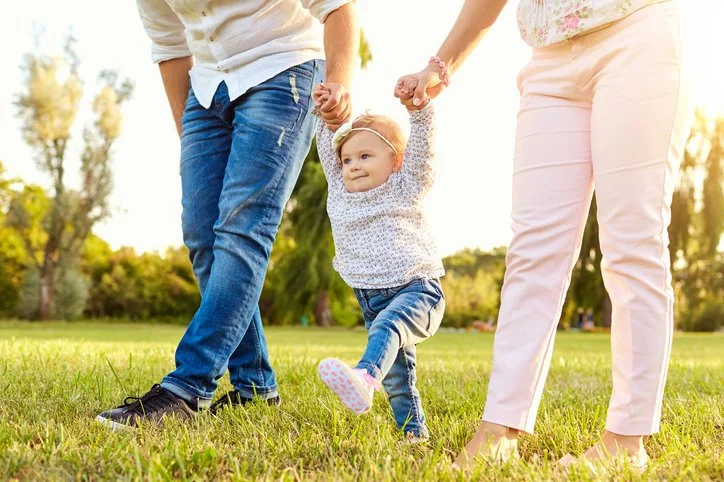
All children develop at their own pace, but with toddlerhood comes the exciting milestone of learning to walk! Many children take their first independent steps around 14 months.(1) Before a baby can walk, they need the coordination and muscle strength to pull themselves up to a standing position and then stay standing, either by holding onto furniture or a caregiver.(2) Babies will pull themselves up to stand about 2 to 4 months before they take their first unsupported steps.(2)
When learning to walk, your toddler might fall down a lot! And that’s okay. Perfecting their strut doesn’t happen all at once, so prepare for your baby to fall down or start and stop frequently as they’re learning.(3)
Talking
By this age, your toddler may be able to say two to four words.(6) And you may start hearing them over and over again! (Though it might be “ba” for ball, not the full word yet!) Your toddler will also make lots of babbling sounds and respond to their name. As she learns more and more words, your toddler will learn what it means when you say things like, “Where is your truck?” And then she’ll go look for it. Songs and rhymes will also continue to delight your toddler. And even though she may not know the word for something, if she wants it, she’ll point to it to ask for it.(6)
Personality Grows as Your Toddler Discovers Her Independence
With toddlerhood comes an emerging personality! So your toddler will likely be pretty vocal about their likes and dislikes — and you can expect some tantrums to emerge at this age. Toddlers experience frustration because they aren’t able to adequately communicate how they feel or what they want from adults.(8) You can imagine how frustrating that must be! So try to exercise patience and be compassionate toward your toddler.
Some more fun parts of your toddler’s personality will start to emerge as well, like a sense of humor. Your child may start to find lots of things really funny! So enjoy the ups and downs of the journey and find the humor where you can, too.
As your little angel grows, so will her independence and sense of self.(9) You may even find your toddler tries to help you dress her by holding out an arm or leg as you do so.(9)
Toddler Development: Milestones From 13 to 15 Months
While every child develops differently, there are a few milestones to look out for at this age.
Here are some things your child will likely do when they’re between 13 to 15 months old:
Social/Emotional Checklist(7):
Shows affection to parent or caregiver (hugs, kisses, cuddles)
Hugs stuffed animals or dolls
Claps hands together when excited
Shows you something they like, such as a toy or object
Copies other children during play
Language/Communication Checklist(7):
Attempts to say words besides “mama” or “dada”
Points to things as a way to ask for them or receive help
Follows directions when they are given with a gesture and words
Looks at/for a familiar object when you say its name
Reaches for you when they want to be picked up(8)
Movement and Physical Development Checklist(7):
Attempts to use things properly (like a phone)
Stacks small objects, like blocks, two or more at a time
Cognitive Checklist(7):
Feeds herself food by using her fingers
Walks (at least a few steps) independently
What You Can Do to Encourage Healthy Development in Your 13 to 15 Month Old
Narrate Your Day
Even though your young toddler isn’t capable of having full blown conversations just yet, the more you talk to them, the more words they’ll be exposed to and encouraged to pick up. By talking to your toddler, you’re helping develop their language skills.(4) Generally toddlers understand more than what they can communicate on their own.(4)
Choose Toys Wisely
By this age, your toddler can pick things up with his finger and thumb.(6) So choose toys that help him develop his hand-eye coordination and motor skills.(3) (Puzzles with large pieces and vibrant colors are great for hand-eye coordination!) Avoid toys with small pieces as your toddler may try to put them in his mouth. Toys that encourage repetition and walking around (like push toys) can help with their development and show off those brand-new walking skills!
Have Playdates
By setting up playdates for your child, you’re giving him a change of scenery and a chance to practice his budding social skills.(10) Don’t be alarmed if your toddler is less than enthused about his new pal, however. He may grab a toy from his playdate or shove the other child out of the way to get something he wants.(10) This is because he hasn’t mastered the concept of empathy, yet!(10) But the chance to interact with and observe peers can still be useful (and you may enjoy getting some adult conversation in, too!).
Make Reading Part of Your Routine
Even babies get pleasure from books! By this age, your child can select the book they want you to read to them.(5) They’ll even be able to point to pictures they like.(5) So encourage your 13- to 15-month-old to participate in the bedtime reading routine. If there are animals in the book, make the sound the animal makes so your toddler can imitate you. When your child points to an image, name what they’re pointing to. They’ll be able to pay attention for at least a few minutes while you enjoy looking at a book together, so help them turn the pages and get reading!(5)
Every Stage is Full of Surprises
Support your child through all stages of development! To read more blogs like this with helpful parenting tips, subscribe to my newsletter!
You can also check out the other blogs in the infant and early childhood development series for more information on your child’s development and how to help them grow and learn! For more info on newborns to 6 month olds, click here. For 7 to 9 month olds, click here. And to learn about 10 to 12 month olds, click here.
References
(2020, August). Geddes, J. When do babies start walking? What to Expect. https://www.whattoexpect.com/first-year/first-steps/
(2022, March). Dewar, G. When do babies start walking, and how does it develop? Parenting Science. https://parentingscience.com/when-do-babies-start-walking/
(2020, November). 13-month-old: toddlerhood has begun! Pampers. https://www.pampers.com/en-us/toddler/development/article/13-month-old?web_traffic_source=direct
(2019, October). St. Clair, M., Lloyd-Esenkaya, V. When should my child start speaking? The Conversation. https://theconversation.com/when-should-my-child-start-speaking-122579
(2013, March). How to share books with your 12- to 14-month-old. Healthy Children. https://www.healthychildren.org/English/ages-stages/toddler/Pages/How-to-Share-Books-with-Your-12-to-14-Month-Old.aspx?_gl=1*1drff11*_ga*MTA4NjE2NzAyOS4xNjUyMzA3OTY2*_ga_FD9D3XZVQQ*MTY1MjMwNzk2Ni4xLjEuMTY1MjMwODA5Ny4w&_ga=2.230413080.505984204.1652307967-1086167029.1652307966
Infant & Toddler Development. 13-15 Months. The Parent Line. http://www.theparentline.org/infant-toddler-development/13-15-months/
(2022, March). Important milestones: your baby by fifteen months. Center for Disease Control and Prevention. https://www.cdc.gov/ncbddd/actearly/milestones/milestones-15mo.html
Toddler Month by Month: 13 Months. The Bump. https://www.thebump.com/toddler-month-by-month/13-month-old
Logan-Banks, P. Developmental milestones: self-care Baby Centre. https://www.babycentre.co.uk/a6503/developmental-milestones-self-care
(2022, March). Masters, M. 15-month-old child. What to Expect. https://www.whattoexpect.com/toddler/15-month-old.aspx
Infant Development: Cruising, First Words, and Your 10 to 12 Month Old
How is it possible that your precious child is already a year old? Doesn’t it seem like they were born just yesterday?
The 12-month mark will be here before you know it. And between the ages of 10 and 12 months, your baby’s curiosity is expanding at a rapid pace.
Around their first birthday, they’ll likely say their very first word! You’ll melt at the cuteness when your baby says “dada” or “mama” for the first time. And soon the baby babbling will transform into even more real words you can recognize.
With this exciting stage comes crawling, standing, and eventually… walking! Your baby’s newfound independence is sure to keep you on your toes.
You’ll watch your little one learn, grow, and change every single day!

How is it possible that your precious child is already a year old? Doesn’t it seem like they were born just yesterday?
The 12-month mark will be here before you know it. And between the ages of 10 and 12 months, your baby’s curiosity is expanding at a rapid pace.
Around their first birthday, they’ll likely say their very first word! You’ll melt at the cuteness when your baby says “dada” or “mama” for the first time. And soon the baby babbling will transform into even more real words you can recognize.
With this exciting stage comes crawling, standing, and eventually… walking! Your baby’s newfound independence is sure to keep you on your toes.
You’ll watch your little one learn, grow, and change every single day!
Infant Development: Your Baby From 10 to 12 Months
Important language and movement milestones occur between the ages of 10 and 12 months, and they’re oh so much fun to enjoy with your child!
Crawling, Cruising, Walking
All babies develop, grow, and reach milestones at their own pace. But it’s natural to wonder when your child may start to crawl. Typically babies learn to crawl between 7 and 10 months old.(2) The more your child can move around, the more they’ll want to explore on their own. Rolling, scooting, creeping on their belly or full on crawling—your little one will be learning, growing, and changing every single day. And it’s so much fun to watch!
At every chance your child gets, they’ll be showing off new skills and interacting with the wonderful world around them. Your child may enjoy “cruising” or walking around without adult help while holding onto furniture for support. Typically by 10 months, your baby will be able to walk slowly while holding your hands. Around 11 months, they’ll be standing up by themselves, climbing up stairs, and cruising the living room. And they may even take their first unsupported steps by their first birthday!(3)
Baby’s First Words! How to Communicate With Your 10- to 12-Month-Old
Every child will say their first word in their own time. “Mama” or “dada” may become part of their vocabulary by the time they’re 10 months old. And one additional word may be in the mix by 11 months.(4) By their first birthday, two other words besides “mama” and “dad” could be in your child’s vocabulary. And how exciting that will be!(4) Whether it’s “bus,” “ball,” “hi,” or “dog,” hearing your child say their first word will be an experience you’ll remember for the rest of your life.
Your 10- to 12-month-old will start to understand short phrases like “hand me the toy” and wave when you say “bye bye!”(1) Short, “baby talk” sentences may creep into your child’s vocabulary. Each day brings a new way to interact with the world, as shaking their head “no” or asking for something by gesturing or pointing becomes the norm.
Play a Game
“Copycat” is a great game to play with your child to encourage the development of their social skills and ability to mimic others.(5) To play, sit across from your child and show them something they can easily copy, like covering their eyes, sticking out their tongue, or scrunching up their nose. Offer praise when they copy your gesture—you’ll both be sure to end up in fits of giggles by the game’s end!
Infant Development: Milestones From 10 to 12 Months
There are a few important milestones to watch out for at this age, though please remember every child develops at his or her own pace! Here are some things your child will likely do within this age range:
Social/Emotional Checklist(8):
May display shyness , nervousness, or fear with strangers
Shows facial expressions (happy, sad, surprised, angry)
Has a reaction when you leave (cries, reaches for you, or simply looks)
When you call their name, looks to you
Smiles and laughs during peek-a-boo
Enjoys games like pat-a-cake or copycat
Language/Communication Checklist(6):
Does simple gestures (shakes head “no” or waves)
Follows simple verbal requests or instructions
Imitates the words you say
Changes tone when making sounds to imitate speech
Can say “mama” or “dada” and exclamations like “oh no!”
Movement and Physical Development Checklist(6):
Sits without assistance
Can pull himself up to stand and walk by holding on to furniture (“cruising”)
May take a couple of steps without holding on
May stand without support
By 12 months, may take first unsupported steps
Can use thumb and pointer finger to pick things up (begins to finger-feed themselves)
Passes things from one hand to the other
Points and pokes with pointer finger
Copies gestures
Cognitive Checklist(6):
Is able to put things in and take things out of a container
Locates hidden objects easily
Can identify objects when named (8)
Drops or places things without assistance
Explores objects by shaking, throwing or banging (especially by banging two things together)
Imitates you (may “talk” on the phone like you do, or brush their hair)
What You Can Do at This Stage to Encourage Healthy Development in Your 10- to 12-Month-Old
Model Healthy Self-Expression
Being a child can be frustrating. Babies and children don’t have access to the language they need to express themselves. And because they’re still learning, they often don’t understand what it is they’re experiencing when they feel big emotions. Your baby might display frustration or the desire to gain control of a situation by throwing things or screaming. If your baby throws a toy out of frustration, remain calm. Say, “You’re frustrated. Let’s try again together.” Then demonstrate what they need to do to succeed. Afterward, give them the chance to try again. You might say, “The triangle block goes here. Now, why don’t you try?”
Keep Reading and Singing
By this age, books with textures, flaps, activities or other interactive features will captivate your baby’s attention. Keep age-appropriate books nearby so your baby can pick them up and interact with them even if you’re not reading aloud. It’s likely your baby will enjoy music at this age and move and groove to certain tunes. When you encourage humming and sing to your child, you’re stimulating them while also helping develop their language, motor skills, and rhythmic capabilities.(9)
Initiate Conversations
Even if your baby hasn’t yet said her first word, encouraging conversation and pausing for her to respond is still helpful and promotes the development of healthy language and communication skills. If your child says, “baba” and points to a bottle, you can say, “Yes, you want the bottle.” If she points to a dog while you’re reading a picture book, you could say, “You found the dog. What noise does a dog make?” Pause, giving your baby a chance to respond. (Even if it’s just with a sound.) Then offer the correct answer to your question. (“Woof!”) Continue to ask your baby questions throughout the day about her environment. You don’t have to limit yourself to yes or no questions! Even though you might want an adult to talk to by the end of the day, engaging with your baby in this way helps boost her development.(6)
Encourage Curiosity
Continue to encourage your child’s curiosity. Maybe they’re curious about the zipper on your coat, the bubbles at the park, or the colorful blocks they have at home. Teaching your child to stack blocks or sort toys by color and shape helps build their motor, concentration, memory, and problem-solving skills.(9)
Don’t have a 1-year-old yet? Check out the other blogs in the infant development series for more information on your baby’s development and how to help them grow and learn! For more info on newborns, click here . For 7- 9-month-olds, click here .
References
(2019, July). Learning, Play, and Your 8- to 12- Month-Old. Kids Health. https://kidshealth.org/en/parents/learn812m.html
(2020, March). When Do Babies Start Crawling? Pamperse. https://www.pampers.com/en-us/baby/development/article/when-do-babies-crawl
(2021, March). When Does a Baby Start Walking? Grow by WebMD https://www.webmd.com/baby/when-does-a-baby-start-walking
Ages 8 to 12 Months—5 Months of Magical Milestones. Similac. https://www.similac.com/baby-feeding/milestones-development/8-9-10-11-12-month-old.html
(2021, September). 9 Fun Activities for 10-Month-Old Babies. Peanut. https://www.peanut-app.io/blog/activities-for-10-month-old
(2020, June). Infant development: Milestones from 10 to 12 months. Mayo Clinic. https://www.mayoclinic.org/healthy-lifestyle/infant-and-toddler-health/in-depth/infant-development/art-20047380
(2022, March). Important Milestones: Your Baby By Nine Months. Centers for Disease Control and Prevention. https://www.cdc.gov/ncbddd/actearly/milestones/milestones-9mo.html
(2022, March). Important Milestones: Your Child By One Year. Centers for Disease Control and Prevention. https://www.cdc.gov/ncbddd/actearly/milestones/milestones-1yr.html
At 8 – 12 months your baby should… Healthy Children. https://www.healthychildren.org/english/ages-stages/baby/Pages/default.aspx
(2020, October). 10-Month-Old Baby Activities: 8 Things to Do With Your Child. Flo Health. https://flo.health/being-a-mom/your-baby/growth-and-development/activities-for-a-10-month-old-baby