
5 Tricky Toddler Behaviors for Parents and Caregivers to Understand
If you’re the parent of a toddler, chances are you’ve seen your fair share of temper tantrums, dealt with hitting or biting, or gotten into power struggles with your child.
While the toddler years are a wonderful time of exploration and development, they also can be trying on parents or caregivers.
One minute your child is being oh-so-sweet and angelic and the next they’re throwing a fit in the middle of the frozen food aisle.
Let’s tackle 5 tricky (but common) toddler behaviors and gain insight into why they occur.

If you’re the parent of a toddler, chances are you’ve seen your fair share of temper tantrums, dealt with hitting or biting, or gotten into power struggles with your child.
While the toddler years are a wonderful time of exploration and development, they also can be trying on parents or caregivers.
One minute your child is being oh-so-sweet and angelic and the next they’re throwing a fit in the middle of the frozen food aisle.
Let’s tackle 5 tricky (but common) toddler behaviors and gain insight into why they occur.
Why Does My Toddler Throw Temper Tantrums?
Temper tantrums are a normal part of childhood development. They’re your two- or three-year-old’s way of expressing big emotions they’re unable to regulate. Young children are not able to express frustration, anxiety, or anger the way older children or adults can because their brains are still immature.
It’s normal for toddlers to throw tantrums because they haven’t yet learned the ins and outs of:(2)
Impulse control
Communicating their needs or wants
Self-soothing
Delaying gratification
Problem solving
Navigating situations with appropriate responses
The good news is, by age three and a half, most children have few or no tantrums.(1)
There’sno such thing as a “tantrum disorder.”(2) But frequent or persistent tantrums may be an indication of a larger issue that needs to be addressed. Children with ADHD are particularly prone to outbursts or meltdowns because they struggle with poor impulse control and being bored.(2) A recent study showed that over 75% of children who had severe temper outbursts also fit the criteria for ADHD.(2) Children with autism or anxiety may struggle with unexpected changes or unfamiliar situations and have a tantrum as a result.(2) And children with sensory processing issues may have a tantrum if they are experiencing sensory overload.(2) Depression or undiagnosed learning disorders could also be contributing factors to children throwing tantrums.(2)
Emotion-regulation is a skill children need to be taught, just like problem-solving or communicating their needs.
And when a child can’t emotionally regulate, a tantrum, or two other common toddler behaviors, may ensue.
Why Does My Toddler Bite and Hit?
It may surprise you to learn that biting is a common behavior among toddlers. It typically happens when a child is trying to communicate a need or cope with a difficult emotion. For example, your toddler may become frustrated or mad when a sibling takes his toy. He needs to self-regulate and cope with the anger and frustration but doesn’t know how, so biting ensues.
A Few Reasons Toddlers May Bite or Hit:
They are still developing their impulse control skills
They don’t yet know how to delay gratification
They’re overwhelmed and don’t know how to regulate themselves
They lack the skills to communicate their strong feelings with words
They don’t understand what constitutes an appropriate response to dealing with a challenge
On episode 13 of Genius Little Minds, I give some tips for things you can do and say when your child has bitten another child. Check out the podcast episode here.
Why Does My Toddler Refuse to Share?
Sharing is tough! Even for adults, it’s sometimes difficult.
It’s not very realistic to expect your 2-year-old to be a competent sharer. They’re just too young to grasp the concept. They’re also lacking language skills to express themselves fully, so they often can’t explain why they just don’t want toshare.
So if your young toddler hasn’t yet mastered the art of sharing, don’t sweat it. This skill doesn’t develop until a child is about 3 and a half or 4 years old.(5)
Sharing is a learned skill, so talking about it (without imposing unrealistic expectation that it will happen overnight) can be helpful. Try pointing out moments in your daily life when sharing occurs, like when you share your food with your spouse or take turns using an electronic device.
Why Is My Toddler Not Seeking Independence?
You’ve probably heard that two-year-olds have a lot of opinions. After all, everyone says they love the word “no”, want to dress themselves and try new things. But what if your child doesn’t fit that description?
Of course as a parent, you play a huge role in your child’s life. Your behaviors and parenting style have a huge impact on how your child acts and interacts with the world.
Now I’m not here to shame anyone’s parenting... I know everyone is doing the best that they can with the resources available to them. But there are two parenting styles that can either encourage the development of autonomy or hinder it.
Autonomy Supporting Parenting
Also know as Autonomy Granting Parenting, Autonomy Supporting Parenting encourages independence in ways that are gentle and appropriate.(4)
Children with Autonomy Supporting parents are allowed to explore new, non-threatening situations without interference. (4) This teaches them independence and the idea that it’s OK to be themselves.
Protective Parenting
Protective Parenting is “the broad restriction of a child’s autonomy.”(4) And it “can increase the risk of child anxiety development.”(4)
To some degree, every parent is protective of their children. But Protective Parenting can interfere with a child’s discovery or the magical world of autonomy. It can hinder independent exploration and reduce their confidence.(4)
Interested in Learning More?
Check out this podcast episode for more information on these tricky — but common — toddler behaviors. Learn what to do when your toddler starts to hit the dog… or their sibling. Gain insight into how to handle a toddler who won’t get dressed, and what to do when your child simply won’t. stop. screaming. I also provide a few scripts for what to say to your toddler in these tough situations.
Equip yourself with knowledge and tools to help your child thrive. And be sure to subscribe to the Genius Little Minds podcast so you never miss an episode!
References
https://www.mayoclinic.org/healthy-lifestyle/infant-and-toddler-health/in-depth/tantrum/art-20047845
https://childmind.org/article/why-do-kids-have-tantrums-and-meltdowns/
https://link.springer.com/content/pdf/10.1007/s10802-019-00522-9.pdf
https://www.zerotothree.org/resources/1964-helping-young-children-with-sharing
https://www.todaysparent.com/toddler/toddler-behaviour/how-to-discipline-a-toddler/
https://www.brighthorizons.com/family-resources/articles/e-news/autonomy-supported-parenting
https://www.sciencedirect.com/science/article/pii/S0022096513002440
https://www.babycentre.co.uk/a1021960/how-to-teach-your-child-to-share
https://www.greatkidsinc.org/sharing-is-caringand-a-developmental-milestone/

Why Is My Child Acting Out? Oppositional Defiant Disorder Explained
Some kids are just “bad kids.” You know the ones. They run down the aisle screaming at church. They have meltdowns in the supermarket. They don’t listen, they talk back, and they laugh in the face of authority. They can’t be controlled by their parents or teachers.
In short, they’re a menace with a capital M.
Except… there’s no such thing as a “bad kid,” is there? There are good kids who need help… Kids who start to believe the worst about themselves because they’ve come to expect negative reinforcement from their parents, other adults, or their peers…
Believe it or not, that kid yelling obscenities at his mother in the school parking lot probably doesn’t want to be doing that. But children with oppositional defiant disorder, or ODD for short, have difficulty controlling their impulses and making healthy, developmentally appropriate choices.

Some kids are just “bad kids.” You know the ones. They run down the aisle screaming at church. They have meltdowns in the supermarket. They don’t listen, they talk back, and they laugh in the face of authority. They can’t be controlled by their parents or teachers.
In short, they’re a menace with a capital M.
Except… there’s no such thing as a “bad kid,” is there? There are good kids who need help… Kids who start to believe the worst about themselves because they’ve come to expect negative reinforcement from their parents, other adults, or their peers…
Believe it or not, that kid yelling obscenities at his mother in the school parking lot probably doesn’t want to be doing that. But children with oppositional defiant disorder, or ODD for short, have difficulty controlling their impulses and making healthy, developmentally appropriate choices.
What is Oppositional Defiant Disorder?
Oppositional defiant disorder (ODD) is a behavior disorder that’s typically diagnosed in childhood between the ages of 6 and 8 (3). Children with ODD can be defiant, hostile, exceptionally uncooperative, and argumentative.(1)
ODD Symptoms(2)
If your child has ODD, you may notice they frequently have an angry and irritable mood and are:
Easily annoyed by other people
Resentful
Often losing their temper
If your child has ODD, you may notice defiant, argumentative behavior where they:
Argue with authority figures frequently
Defy adults and refuse to follow rules
Deliberately annoy and upset other people
Blame others for their own mistakes, misbehaviors, or wrongdoings
If your child as ODD, you may notice vindictive behavior where they:
Behave spitefully
Try to “get back at” someone they feel has wronged them
But children with ODD aren’t having your typical toddler tantrum or teenage rebellion. Just because your toddler learned the word “no” and loves saying it to everyone and everything, for example, does not mean they have oppositional defiant disorder.(2) For a parent of a child with ODD, things like screaming matches, angry or aggressive behavior, expulsions from school, or daily rule breaking are the norm.(4) And it can be really hard on families.
In children with ODD, the oppositional and defiant behavior is persistent, extreme, and significantly interferes with their ability to function in school or have relationships with others.(1) It also has to be going on for at least 6 months in order to be diagnosed as ODD.(2)
Is ODD Genetic?
Biological, genetic, and environmental factors may all play a role in a child developing oppositional defiant disorder.(5) Unbalanced neurotransmitters may play a role too, as many children with ODD also have other mental health disorders, such as ADHD or mood disorders.(5)
Risk Factors for ODD:
Lack of supervision(11)
Poverty(11)
An unstable or dysfunctional home life(11)
Exposure to violence or aggressive behavior(8)
A family history of substance abuse(8)
Abuse or neglect(8)
Inconsistent parenting and disciplining(7)
A parent or close relative with mental illness(7)
You may be thinking, “Now, wait a minute. I’ve given my child everything! Nothing you’ve described sounds like our family. There’s no violence, no drugs. The rules are clear, easy to follow, and my child still has these out-of-control outburst and anger issues.”
A chaotic, stressful home life can contribute to mental health problems, there’s just no way around that. But even in a stable home, some children will develop oppositional defiant disorder.
Genetics may also be a factor. If a child has a close relative with mental illness, they are more likely to develop ODD.(7) Oppositional defiant disorder occurs more commonly among children whose family members have a history of ADHD, mood disorders like depression or bipolar disorder, and substance use disorders.(8)
Comorbidity
Children with ODD may struggle with one or more of the following:(9)
ADHD
Conduct disorder
Mood disorders (anxiety and depression)
ODD Diagnosis
You love your child desperately… You’d do anything for them. You’d die for them! But at this rate, you’re finding it very difficult to like them.
You know the angry outbursts, temper tantrums, spiteful behavior and arguments are, well… not exactly normal. So what’s a parent to do?
A medical doctor or mental health professional like a child psychologist or psychiatrist can diagnose oppositional defiant disorder. It’s likely they’ll want to talk to you, the parent or caregiver, and your child to conduct an assessment. They may also want to speak to your child’s teachers and conduct an assessment at school, depending on where your child exhibits their ODD symptoms.
What’s the Outlook for Kids with ODD?
About two thirds of children diagnosed with ODD overcome the disorder and don’t show behavioral symptoms anymore by the time they’re 18. (7) Amazing news, right?
It’s so important that your child get help if you think they do have ODD. Left untreated, severe oppositional defiant disorder can become conduct disorder, which is a more serious, delinquency version of ODD. But when treated early, prognosis is much better. Studies have shown that ODD symptoms resolve within 3 years in about 67% of children with the diagnosis.(14)
Treatment
There are many treatment options for children with ODD, and they will likely involve the whole family!
Family Therapy
ODD can be very taxing for parents and difficult on siblings. Family therapy can help improve communication skills, suggest systemic changes that need to be made within the family unit, and provide support for the entire family.(1) Being involved in your child’s treatment plan is important. Share your concerns, goals, and hopes with your child’s care team.
Parent-Management Training
Want to learn how to manage your child’s behavior? There’s a class for that! In parent-management training, you’ll be taught positive reinforcement techniques and how to discipline effectively.(14) Ask your child’s therapist or doctor for information on where to sign up.
Cognitive Behavioral Therapy
Often, children with ODD don’t understand that their defiant and aggressive behavior is wrong or unjustified. When asked why they behave the way they do, they might say, “because my parents are always on case.” In therapy, your child will master social skills and learn that he’s capable of making different, healthier choices.
Cognitive Behavioral Therapy (CBT) helps tackle unhelpful patterns of thinking and replaces them with healthier patterns.(10) In therapy, your child may role play scenarios he might encounter with family or friends and practice more adaptive, appropriate behaviors.
Peer Group Therapy
This can be a great resource if your child struggles to interact and socialize with peers. ODD can be hard on friendships. Peer group therapy provides a safe space for children with ODD to practice getting their social interactions right so they feel safe to try things out in the real world.
Medication
Typically, medication is not recommended to treat ODD unless another underlying condition like ADHD needs to be addressed.
Interested in Learning More?
Check out this podcast episode on ODD. You’ll learn five surprising questions you should ask yourself if you think your child has oppositional defiant disorder… and you’ll learn more about the parent-child relationship and how it can impact your child’s mental health. This is an episode you won’t want to miss!
Equip yourself with knowledge and tools to help your child thrive. Subscribe here to the Genius Little Minds podcast so you never miss an episode!
References
https://www.hopkinsmedicine.org/health/conditions-and-diseases/oppositional-defiant-disorder
https://www.healthline.com/health/childrens-health/odd-in-children
https://my.clevelandclinic.org/health/diseases/9905-oppositional-defiant-disorder
https://www.additudemag.com/what-is-oppositional-defiant-disorder/
https://www.sonorabehavioral.com/behavioral/odd/symptoms-causes/
https://www.apa.org/ptsd-guideline/patients-and-families/cognitive-behavioral
How Do I know if It’s ADHD or Developmentally Appropriate Behavior?
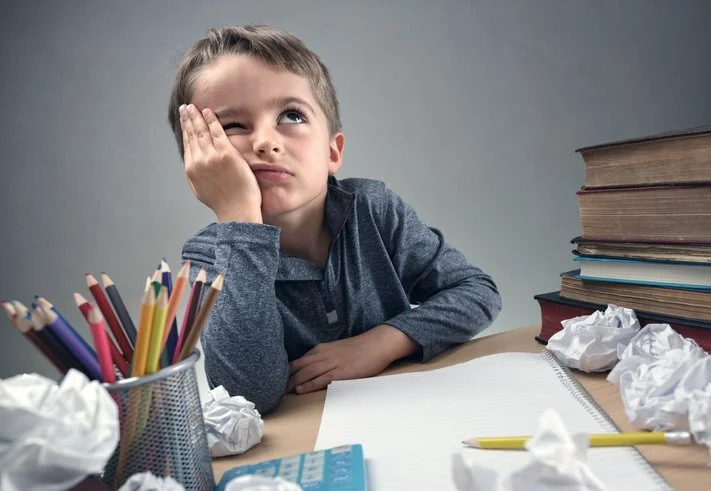
Children can be tiresome—no matter their age. But oh, they are charming! The wit, the spontaneity, the unadulterated joy—it’s enough to make you crack up, but also drive you mad, isn’t it? Especially when you can’t get them to sit still, follow directions, wait their turn, or listen carefully! And for a child with ADHD, these types of requests or expectations are even harder to meet.
All children will be inattentive, impulsive, or hyperactive sometimes. That’s just part of being a kid. Preschoolers in particular struggle to stay focused on one activity for a sustained amount of time. It’s not unusual for preschoolers to have short attention spans. Plus, isn’t it cute when they get sidetracked by a bug or a pile of rocks with no particularly interesting quality except that they exist?
In school-aged children and teens, it’s not uncommon for their attention spans to depend on their interest in what’s at hand.(1) Pursuing their passion for basketball, reading, or collecting sneakers trumps doing boring stuff like homework any day.

Children can be tiresome—no matter their age. But oh, they are charming! The wit, the spontaneity, the unadulterated joy—it’s enough to make you crack up, but also drive you mad, isn’t it? Especially when you can’t get them to sit still, follow directions, wait their turn, or listen carefully! And for a child with ADHD, these types of requests or expectations are even harder to meet.
All children will be inattentive, impulsive, or hyperactive sometimes. That’s just part of being a kid. Preschoolers in particular struggle to stay focused on one activity for a sustained amount of time. It’s not unusual for preschoolers to have short attention spans. Plus, isn’t it cute when they get sidetracked by a bug or a pile of rocks with no particularly interesting quality except that they exist?
In school-aged children and teens, it’s not uncommon for their attention spans to depend on their interest in what’s at hand.(1) Pursuing their passion for basketball, reading, or collecting sneakers trumps doing boring stuff like homework any day.
But for children with ADHD, symptoms of inattention or hyperactivity are severe, persistent over time, and significantly impair their functioning. (2) And they aren’t able to “will” themselves to focus or pay attention.(9)
ADHD Symptoms
There are 2 behavioral symptoms associated with ADHD(3):
· Inattentiveness
· Hyperactivity/impulsiveness
Boys are more likely to be diagnosed due to hyperactive behavior, whereas girls are more likely to display inattentiveness. Many girls go undiagnosed because of this, and do not get the help or treatment they need.(3)
There are 3 types of ADHD(4):
· Inattentive (This is called attention deficit disorder, or ADD)
· Hyperactive/impulsive
· Combined
If you child has inattentive ADHD (or ADD), you might notice they(4):
· Have trouble focusing
· Get distracted easily
· Have a short attention span(3)
· Seem like they aren’t listening
· Struggle with following through on instructions
· Make careless mistakes (like on homework) or don’t pay attention to details
· Struggle with organization
· Fail to complete chores or homework
· Avoid tasks they dislike or that require sustained mental effort and focus (like homework)
· Can be forgetful or lose things frequently(3)
· Change tasks or activities often(3)
If your child has hyperactive/impulsive ADHD, you might notice they(4):
· Fidget, tap their hands or feet, squirm when seated
· Have trouble staying seated (like in the classroom)
· Seem to be in constant motion, are always on the go
· Run or climb when not appropriate
· Struggle to play or do an activity quietly
· Blurt out answers, speak out of turn, talk a lot
· Interrupt other people’s conversations, activities or games
· Struggle to wait their turn
· Act without thinking(3)
· Don’t have a good sense of danger(3)
If your child has combined ADHD, you might notice they(7):
· Display symptoms related to both inattention and hyperactivity/impulsivity
Combined ADHD is the most common subtype.
Behavioral Presentation of ADHD
Often children with ADHD will struggle to get organized. Their backpack may be a mess. They may lose their homework frequently. They often have trouble getting started on, prioritizing, or staying committed to tasks. They may leave things to the last minute because they can’t get started on a project unless it feels like an emergency. Others will have trouble managing their time. Finishing things within a reasonable timeframe can seem impossible to a child with ADHD. And they may struggle to regulate their sleep, often staying up later than they should and having a hard time waking up. You may hear a child with ADHD say, “I can’t sleep because I can’t shut off my brain.”(9)
Children with ADHD also tend have difficulty managing their emotions. A small frustration will set them off, and then, just as quickly, they’ll be over it.(9) They can struggle with impulsivity and moderating their actions, too. A child with ADHD is likely to jump into something without thinking about the risks or consequences.
Difficulty with short-term memory recall is another symptom. They may study for a test and know all the answers, but then not be able to retrieve that information when taking the test.
Many people will struggle with one or more of these symptoms at some point in their life due to the normal stresses and pressures of daily living. But it’s a question of how severe the symptoms are and how much they interfere with a child’s daily life.
What Causes Childhood ADHD?
Genetics, environmental factors, and brain chemistry all contribute to the development of ADHD. It’s a neurobiological disorder linked to an imbalance of dopamine and noradrenaline in the brain.(2)
Out of every 4 people diagnosed with ADHD, one of them has a biological parent with ADHD, though the parent may not be diagnosed. The other 3 usually have another family member who struggle with it.(9)
Risk Factors for ADHD(1):
· If you or a blood relative has ADHD, it’s more likely your child will develop it
· Exposure to environmental toxins such as lead pipes or paint
· Alcohol, drug or tobacco use during pregnancy
· Premature birth
Comorbidity:
Approximately two-thirds of children and adolescents with ADHD have a comorbid disorder, meaning they have another disorder present simultaneously.(2)
Children with ADHD may also struggle with one or more of the following(3):
· Anxiety disorders
· Oppositional defiant disorder
· Conduct disorder
· Depression
· Autism spectrum disorder
· Tourette’s syndrome
· Dyspraxia
· Epilepsy
· Sleep issues
· Learning disorders
I Think My Child Has ADHD. What Do I Do?
In the UK, approximately 2-5% of school-aged children have ADHD(2) and approximately 6 million children in the US have been diagnosed with ADHD.(6) If you or someone else in your child’s life thinks they may be struggling with ADHD, here are some steps you can take.
Connect with your child’s teacher(s)
Learn what’s happening at school. Explain what types of things you’re seeing and hearing at home, and ask if similar things are presenting in class.
Seek out resources
Educate yourself about ADHD and its treatments. Learn about the symptoms but also the myths associated with this disorder. Connect with other families whose children or teens struggle with ADHD.
Work with an ADHD specialist
There isn’t a cure for ADHD, but treatment can help children manage their symptoms so their lives (and yours) don’t spin out of control. Early intervention and diagnosis can help improve outcome.(7) Working with a therapist or care provider who specializes in ADHD will help your child learn non-pharmacological coping strategies, though treatment for ADHD typically involves both behavior therapy and medication. Talk to your child’s doctor about the risks and side effects associated with medication.(8)
Be patient
It may take time for your child to get a handle on his or her ADHD. If medication is prescribed, it may take a while to find the correct dose. Medication doses may need to be adjusted as your child matures, or if they experience significant side effects.(8)
Look for (and praise) successes
Children with ADHD often have difficulty with low self-esteem on top of their ADHD symptoms. This may be partially due to their receiving criticism more often than other children. Try to notice your child’s strengths. Praise big and small wins. Observe what strengths helped your child succeed and then name them.(8)
Take action
Your child’s ADHD may not go away, but with treatment, they can learn to manage their symptoms and thrive despite the challenges that living with ADHD can present. Seek professional intervention and get help from a doctor, psychiatrist, or mental health provider who specializes in ADHD diagnosis and treatment.
Interested in learning more?
Check out this podcast episode on childhood ADHD. You’ll get information on how a brain with ADHD works, what behaviors you’ll see in the home or at school, comorbidity or the prevalence ADHD is occurring with other disorders, and so much more. If your child does have ADHD, you’ve probably encountered many behavioral challenges. At the end of the podcast, hear from other parents whose children may be struggling with ADHD for tips on behavior management and next steps.
Equip yourself with knowledge and tools to help your child thrive. Subscribe here to the Genius Little Minds podcast so you never miss an episode!
References
https://www.mayoclinic.org/diseases-conditions/adhd/symptoms-causes/syc-20350889
https://www.england.nhs.uk/north-west/wp-content/uploads/sites/48/2019/03/GM-wide-ADHD-guidance.pdf
https://www.nhs.uk/conditions/attention-deficit-hyperactivity-disorder-adhd/symptoms/
https://www.mayoclinic.org/diseases-conditions/adhd/symptoms-causes/syc-20350889
https://www.mayoclinic.org/diseases-conditions/adhd/diagnosis-treatment/drc-20350895
ADD/ADHD | What Is Attention Deficit Hyperactivity Disorder? (2016, May 4). [Video]. YouTube. https://youtu.be/ouZrZa5pLXk

Mental Illness in Children: Is It Just a Phase or Something More?
When you hear the phrase “mental illness” what comes to mind? If you think about managing your own mental health or the psychological issues other adults in your life are navigating, you’re not alone.
Often mental health—and on the flipside, mental illness—are seen as things only adults have to manage. But the truth is, one in six children will experience a mental health disorder in any given year.1
The number of children and teens battling mental health issues without proper treatment is staggering.

When you hear the phrase “mental illness” what comes to mind? If you think about managing your own mental health or the psychological issues other adults in your life are navigating, you’re not alone.
Often mental health—and on the flipside, mental illness—are seen as things only adults have to manage. But the truth is, one in six children will experience a mental health disorder in any given year.(1)
The number of children and teens battling mental health issues without proper treatment is staggering.
The teenage years are hard enough as it is—on both teens and parents. What with the raging hormones, the increased importance of friends over family, and the pressures to perform well in school—it’s easy to chalk up mood swings or changes in behavior to growing up.
Every day, I see families just like you, struggling to understand the challenges their children are going through. You may be wondering whether your child or adolescent is exhibiting signs of a larger issue or is just “being a child” or just “going through a phase.” Educating yourself on the signs and symptoms of childhood mental health concerns is a helpful first step.
How Do I Know if My Child Has a Disorder?
Half of all mental illnesses begin by the time a child turns 14. And 1 in 10 children between the ages of 5 and 16 meets the criteria for mental illness but only 30% receive appropriate early intervention.(2)
I’m not sharing these statistics to scare you.
I firmly believe that with this knowledge, you can better serve your family.
“Mental illness” or “mental health disorder” can sound really scary. But with proper management and treatment, children with these challenges can overcome them or learn to manage them over time.
Many children with mental health diagnoses go on to live happy, healthy lives when given the appropriate treatment, support, and early interventions. (Doesn’t that make you want to run, not walk, to next available therapy appointment?)
If your family is going through a tough time right now, know that you are not alone. It can be hard on parents and children to navigate an undiagnosed mental health disorder. (And parenting is a really tough job to begin with!)
But as a parent, you play a vital role in getting your child the help they need. If your child is displaying difficulties in school, with friends, or at home, there are signs and symptoms of potential mental health concerns to watch out for. Consider keeping a record or journal so you can describe your child’s behaviors to a professional if and when you decide intervention and treatment is necessary.
4 Common Diagnoses Children Receive: ADHD, Anxiety, Depression, and ASD
Childhood ADHD, anxiety, depression, and autism spectrum disorder may present differently than adult diagnoses. It’s important to recognize the signs and understand treatment options to get your child the best care possible.
By being aware of the signs and symptoms, you can be your child’s biggest cheerleader on the road to mental health.
ADHD
Are you tired of repeating the same directions to your child over and over again, only to have them forget what you just said or simply not follow instructions? Is it impossible to get your child out the door on time? And do you get calls from school because they’ve forgotten their homework again?
Often children with ADHD get labeled as naughty or lazy. But the truth is, ADHD is a chronic condition that children need help managing. A mental health diagnosis like ADHD is neither something you (the parent) caused, nor is it your child’s fault.
Attention Deficit Hyperactivity Disorder, or ADHD, is one of the most commonly diagnosed mental health disorders in children. In the UK it’s estimated that 3.6% of boys and around 1% of girls between the ages of 5 and 15 meet the criteria for ADHD,(3) and in the US, 12% of boys and 5.6% of girls between the ages of 2 and 17 have been diagnosed with ADHD.(4)
Children with ADHD may struggle in school and have trouble making friends. ADHD can impact every area of your child’s life—from social situations to academics to home life.
Thankfully, ADHD, like other mental health concerns, can be managed. With the right treatment, interventions, and support at home, your child can manage the symptoms of their ADHD so they don’t impede performance in school or work or their ability to maintain close relationships.
Understanding your child’s difficulties will help grow your bond and cultivate a climate of support and empathy within the family system.
Anxiety
Does your child have frequent nightmares, headaches, or cry easily and often? Are you always taking them to the doctor, trying to figure out why they feel sick to their stomach all the time? Or does your child want to retract into their shell like a turtle every time a stranger talks to them?
These are all signs your child could suffer from anxiety.
(Feeling anxious just reading this? Stop. Take a deep breath in, and exhale slowly. Unlock your jaw and roll your shoulders back. Feel a bit better? With the right tools, you can become a calming guide for your child and tackle the anxiety together.)
Anxiety disorders are a range of mental health conditions causing intense feelings of worry and fear. It's normal for children to feel worried from time to time, but when a child has an anxiety disorder, their worry and fear is pervasive and difficult to manage without proper guidance.
Many children will develop some kind of anxiety. In the UK, anxiety affects anywhere from 5 to 19% of children and adolescents.(12) And in the US, approximately 7% of children between the ages of 3 and 17 have been diagnosed with anxiety.(13)
As a parent, it can be difficult to figure out how serious a problem is, especially because children do get afraid from time to time and often struggle to verbalize how they’re feeling. If the anxiety and worry causes your child significant distress and makes it difficult for them to engage in everyday activities then it’s likely they need treatment.
Depression
Is your child no longer interested in doing the things they love the most? Is Eeyore the character they identify with from Winnie the Pooh?
As hard as it may be to believe, children as young as 3 years old can suffer from depression.(14)
But depression in children looks slightly different than depression in adults, which is why it’s so important to be aware of the differences. Some of the symptoms overlap, such as feeling sad for most days or feeling worthless. But in children, depression can also display as temper tantrums or difficulties in school.
If your child is no longer interested in participating in activities they once enjoyed, like sports or music lessons, you may be thinking, “aren’t they just growing up?” But reduced interest in activities and withdrawal from friends could indicate a larger problem, especially if coupled with other symptoms like changes in sleep patterns.
It’s normal for children to get sad or feel down sometimes. But depression is a serious mental illness that, if not treated, can result in devastating consequences. If symptoms last for two weeks or more, it may be time to seek treatment.
Like other mood disorders and mental health issues, getting your child the support they need will help them feel better faster and reduce the risk of developing depression that lasts into adulthood. If your child repeatedly says or thinks negative things about themselves, or tells you they feel sad, hopeless, or helpless, they might be depressed and professional help should be sought out. By having this information in the back of your mind, you’ll be better equipped to help your child when they are struggling with depression. And there’s nothing more satisfying than getting your child on the road to health and seeing them smile again.
Autism Spectrum Disorder
Have you spent countless hours listening to your child talk obsessively about a single topic, like the migratory birds of North America? Or does your child just know when you’ve changed the brand of peanut butter on them? Maybe you wish your child would look you in the eye with those baby blues you love so much?
Children with autism spectrum disorder may have very focused interests, struggle to interact with others, display repetitive or restrictive behaviors, or have sensory sensitivities.
Often children with ASD have trouble managing their emotions and have a comorbid, coexisting disorder like anxiety. They can also be wildly fun, creative, interesting and joyful. By understanding your child with autism spectrum disorder, you won’t be putting them in a single box. You’ll be advocating for them so they have the full range of experiences other children have.
It is estimated that 1 in 100 children in the UK have autism spectrum disorder (ASD).(15) Like ADHD, autism spectrum disorder is a chronic condition, meaning it lasts throughout a person’s lifetime, but with the right treatment and interventions, it too can be managed.
As a “spectrum” disorder, ASD can be difficult to identify because the type and severity of symptoms varies so widely.
There are so many resources for children with ASD these days. You don’t have to navigate this (or any diagnosis) alone.
What Should I Do if I Suspect My Child Has a Mental Health Disorder?
There’s no shame in thinking your child has an undiagnosed mental health condition requiring treatment. The most helpful thing you can do as a parent is support your child through their difficulties—not shaming or blaming them (or yourself!) and seek professional help from a licensed therapist or mental health counselor.
Is It Time to Seek Out Treatment for My Child?
Many families struggle with childhood mental health issues. You haven’t failed as a parent if your child has anxiety or depression or other difficulties requiring treatment. If your child displays any of the symptoms outlined above or has other symptoms which cause significant distress and disrupt their ability to engage in everyday activities—then it's likely time to seek treatment.
Children don’t grow out of mental health issues. And symptoms can get worse over time if they aren’t treated.With the right treatment and intervention from a professional, however, the issues your child is facing may not become a life-long mental illness.
Coming to terms with the fact that your child could have a mental health disorder can feel daunting. But seeing your child benefit from treatment—managing their mental health concerns, overcoming their fears, regulating their emotions, and interacting differently with the world—will make it all worthwhile.
It can be overwhelming to navigate these issues alone. The good news is, help is available. I’m Dr. Madeleine Vieira, a licensed clinical child psychologist, and I talk about these 4 mental health diagnoses—ADHD, anxiety, depression and ASD—and how they present in children, in more detail, in the first episode of my podcast, Genius Little Minds.
Listen to the podcast here to get more in-depth information on symptoms and treatment options, and subscribe to stay up to date with the latest in children’s mental health.
Make the space to educate yourself on childhood mental health. You and your family will be glad you did!
References
(2021, August). Children and Young People. Mental Health Foundation. https://www.mentalhealth.org.uk/a-to-z/c/children-and-young-people
Mental Health Statistics: Children and Young People. Mental Health Foundation. https://www.mentalhealth.org.uk/statistics/mental-health-statistics-children-and-young-people
Holden, S. E., Jenkins-Jones, S., Poole, C. D., Morgan, C. L., Coghill, D., & Currie, C. J. (2013). The prevalence and incidence, resource use and financial costs of treating people with attention deficit/hyperactivity disorder (ADHD) in the United Kingdom (1998 to 2010). Child and adolescent psychiatry and mental health, 7(1), 34. https://doi.org/10.1186/1753-2000-7-34
(2021, September). Data and Statistics About ADHD. Centers for Disease Control and Prevention. https://www.cdc.gov/ncbddd/adhd/data.html
Rucklidge J. J. (2010). Gender differences in attention-deficit/hyperactivity disorder. The Psychiatric clinics of North America, 33(2), 357–373. https://doi.org/10.1016/j.psc.2010.01.006
Sayal, K., Prasad, V., Daley, D., Ford, T., & Coghill, D. (2018). ADHD in children and young people: prevalence, care pathways, and service provision. The lancet. Psychiatry, 5(2), 175–186. https://doi.org/10.1016/S2215-0366(17)30167-0
Faraone, S. V., Sergeant, J., Gillberg, C., & Biederman, J. (2003). The worldwide prevalence of ADHD: is it an American condition? World psychiatry : official journal of the World Psychiatric Association (WPA), 2(2), 104–113.
(2021, September). Research on ADHD. Centers for Disease Control and Prevention. https://www.cdc.gov/ncbddd/adhd/research.html
(2021, March). Attention Deficit Hyperactivity Disorder: Causes of ADHD. WebMD. https://www.webmd.com/add-adhd/adhd-causes
(2021, December). Attention Deficit Hyperactivity Disorder: ADHD. NHS. https://www.nhs.uk/conditions/attention-deficit-hyperactivity-disorder-adhd/
Oudin, A., Frondelius, K., Haglund, N., Kallen, K., Forsberg, B., Gustafsson, P., & Malmqvist, E. (2019). Prenatal exposure to air pollution as a potential risk factor for autism and ADHD. Environment International, (133),1-7.
(2020, September). Anxiety disorders in children. NHS. https://www.nhsinform.scot/illnesses-and-conditions/mental-health/anxiety-disorders-in-children
(2021, March). Data and Statistics on Children’s Mental Health. Centers for Disease Control and Prevention. https://www.cdc.gov/childrensmentalhealth/data.html
Doheny, K. Depression Affects Kids as Young as 3. Medicine Net. https://www.medicinenet.com/script/main/art.asp?articlekey=116548
(2021, September). Autism Spectrum Disorder. BMA. https://www.bma.org.uk/what-we-do/population-health/improving-the-health-of-specific-groups/autism-spectrum-disorder