

“Creating Hope Through Action”: Understanding and Preventing Suicide in Children
Suicidal thoughts and ideation are always serious problems. If you or your child are struggling with suicide, reach out for help right away by calling a suicide hotline or reaching out to a mental health provider.
Suicide is a tough topic. It’s even tougher when we’re talking about suicide in childhood.
However, it’s an important one to understand because prevention means that precious, young lives are saved.
So, what are the signs of suicidal thoughts or behaviors in children? How can you help a child who is thinking about suicide? Let’s dig into it.

Suicidal thoughts and ideation are always serious problems. If you or your child are struggling with suicide, reach out for help right away by calling a suicide hotline or reaching out to a mental health provider.
Suicide is a tough topic. It’s even tougher when we’re talking about suicide in childhood.
However, it’s an important one to understand because prevention means that precious, young lives are saved.
So, what are the signs of suicidal thoughts or behaviors in children? How can you help a child who is thinking about suicide? Let’s dig into it.
Prevalence of Suicide in Children
Unfortunately, suicide among children is far more common than people often think.
While it’s difficult to know exactly how often suicide happens in every country, worldwide, it is estimated for 15- to 19-year-olds, suicide comes in as the 4th leading cause of death.(3)
The World Health Organization estimates that 700,000 people worldwide commit suicide every year.(4) About 11.5% of those are committed by individuals 24 or younger.(5)
Suicide prevalence and information does vary from country to country. One survey in Great Britain found that by the age of 17, 7% of children had attempted suicide.(8)
In the United States, the Center for Disease Control has reported that suicide is the eighth leading cause of death among five- to eleven-year-olds.(1) Even worse, suicide is the second leading cause of death for 15- to 24-year-olds.(2)
Indicators of Suicidal Thoughts or Ideation
So, how can we be on the lookout for symptoms of suicidal thoughts or ideation?
Being attuned to your child’s mental health and mood is the best way to prevent suicide. If you are aware of what’s going on with your child, you will be much more likely to notice when something is off.
Some signs that you can be on the lookout for include:
Feelings of persuasive sadness or anger (2)
Problems with attention and hyperactivity
Increased stress or pressure to succeed
Feelings of self-doubt
Changes in sleeping or eating habits
Physical symptoms like stomach aches or headaches
Children may make comments like, “I wish I was dead,” or “Soon, I won’t be a problem for you.” They may exhibit an unusual interest in death or dying, asking you questions or seeking out books or media to view on the topic.
You may also notice that they’ve recently withdrawn from activities with friends or family. They might have stopped doing things that they enjoy.
Often, children will also have problems at school before a suicide attempt. This could be simple disciplinary problems or issues with friends. It could also be more extreme like recently being suspended or expelled.
Risk Factors
While everyone should remain vigilant for suicidal inclinations in any child, there are some risk factors that make a child more likely to experience suicidal thoughts.
First and foremost, suicide is a sign of poor mental health. Any child that is struggling with a mental health disorder like depression or attention-deficit hyperactivity disorder is more likely to attempt suicide.(1)
Other risk factors include:
Being male (6)
Traumatic events like abuse or neglect
Parental divorce or custody disputes
Parental substance abuse
Family history of suicide
School problems like expulsion or changing schools
History of suicidal thoughts or behavior
Prior psychiatric hospitalization
Any suicide attempt deserves a full intervention and treatment. A recent study showed that young children who attempt suicide are six times more likely to attempt suicide again in their adolescent years. They need proper help to get on the right path.(7)
How to Help
Starting a conversation about how your child is feeling is a great first step. Ask questions like, “How are you feeling today? You seem a bit sad.” Try not to put thoughts in their head but make them feel comfortable enough to tell you how they’re really feeling. Be sure to tell them that you care about them deeply.
Seek out professional help when traumatic situations happen or you notice your child is struggling. There are family-based interventions and trauma-informed approaches that can help everyone in your family process traumatic events better. Remember, while it’s never too late to seek out help, early intervention is almost always easier and more successful than later intervention.
Take any suicidal statement seriously. While it can be easy at times to write off what children say as a vivid imagination or that they don’t know what they’re talking about, suicide is one topic that never falls into either of those categories. If you ever hear a child make suicidal statements, seek help for them immediately.
World Suicide Prevention Day - September 10th
Every year the International Association for Suicide Prevention hosts World Suicide Prevention Day. This year, events will run on September 10th.
There are many organizations and groups worldwide that will host walks, speeches, and other events to help spread awareness about suicide prevention.
If you are looking for more resources to deepen your knowledge about suicide prevention, this event can be a great resource. You can also look up what events may be happening near you by visiting their website here.
Creating Hope Through Action
The theme picked this year is an indicative of the changes that children today needed. Suicide rates among all people, even the youngest populations, are on the rise. We need change.
Events like these let those that are struggling with suicidal thoughts know that we care about them, that there is hope for tomorrow. Every action that you take and every word that you speak about suicide prevention gives hope to someone who is desperately looking for someone to help them.
“By encouraging understanding, reaching in and sharing experiences, we want to give people the confidence to take action. To prevent suicide requires us to become a beacon of light to those in pain.
You can be the light.”
You can be light and hope to a child struggling with suicide by reaching out, checking on them, and getting them the help that they so desperately need.
We’re in this together. Together we can make changes to our mental illness services, approaches to trauma, and general mental health practices to positively impact suicide rates.
It’s possible. We can change the world one child at a time. Let’s go create hope through action.
For more tips and insight on child mental health, be sure to subscribe to my newsletter or check out my podcast Genius Little Minds.
References

5 Tricky Toddler Behaviors for Parents and Caregivers to Understand
If you’re the parent of a toddler, chances are you’ve seen your fair share of temper tantrums, dealt with hitting or biting, or gotten into power struggles with your child.
While the toddler years are a wonderful time of exploration and development, they also can be trying on parents or caregivers.
One minute your child is being oh-so-sweet and angelic and the next they’re throwing a fit in the middle of the frozen food aisle.
Let’s tackle 5 tricky (but common) toddler behaviors and gain insight into why they occur.
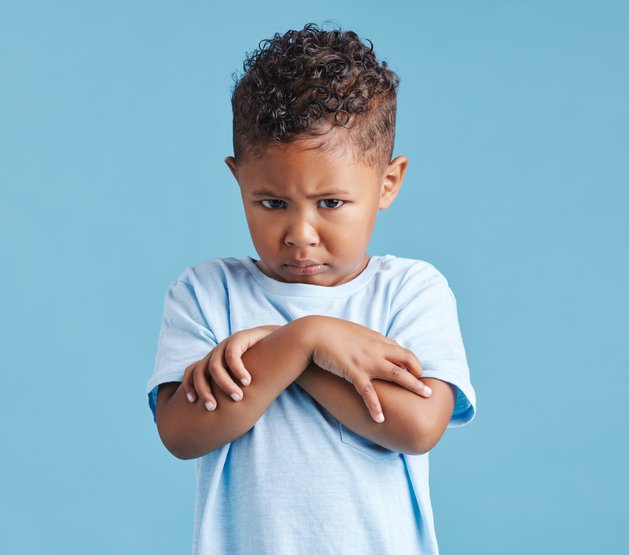
If you’re the parent of a toddler, chances are you’ve seen your fair share of temper tantrums, dealt with hitting or biting, or gotten into power struggles with your child.
While the toddler years are a wonderful time of exploration and development, they also can be trying on parents or caregivers.
One minute your child is being oh-so-sweet and angelic and the next they’re throwing a fit in the middle of the frozen food aisle.
Let’s tackle 5 tricky (but common) toddler behaviors and gain insight into why they occur.
Why Does My Toddler Throw Temper Tantrums?
Temper tantrums are a normal part of childhood development. They’re your two- or three-year-old’s way of expressing big emotions they’re unable to regulate. Young children are not able to express frustration, anxiety, or anger the way older children or adults can because their brains are still immature.
It’s normal for toddlers to throw tantrums because they haven’t yet learned the ins and outs of:(2)
Impulse control
Communicating their needs or wants
Self-soothing
Delaying gratification
Problem solving
Navigating situations with appropriate responses
The good news is, by age three and a half, most children have few or no tantrums.(1)
There’sno such thing as a “tantrum disorder.”(2) But frequent or persistent tantrums may be an indication of a larger issue that needs to be addressed. Children with ADHD are particularly prone to outbursts or meltdowns because they struggle with poor impulse control and being bored.(2) A recent study showed that over 75% of children who had severe temper outbursts also fit the criteria for ADHD.(2) Children with autism or anxiety may struggle with unexpected changes or unfamiliar situations and have a tantrum as a result.(2) And children with sensory processing issues may have a tantrum if they are experiencing sensory overload.(2) Depression or undiagnosed learning disorders could also be contributing factors to children throwing tantrums.(2)
Emotion-regulation is a skill children need to be taught, just like problem-solving or communicating their needs.
And when a child can’t emotionally regulate, a tantrum, or two other common toddler behaviors, may ensue.
Why Does My Toddler Bite and Hit?
It may surprise you to learn that biting is a common behavior among toddlers. It typically happens when a child is trying to communicate a need or cope with a difficult emotion. For example, your toddler may become frustrated or mad when a sibling takes his toy. He needs to self-regulate and cope with the anger and frustration but doesn’t know how, so biting ensues.
A Few Reasons Toddlers May Bite or Hit:
They are still developing their impulse control skills
They don’t yet know how to delay gratification
They’re overwhelmed and don’t know how to regulate themselves
They lack the skills to communicate their strong feelings with words
They don’t understand what constitutes an appropriate response to dealing with a challenge
On episode 13 of Genius Little Minds, I give some tips for things you can do and say when your child has bitten another child. Check out the podcast episode here.
Why Does My Toddler Refuse to Share?
Sharing is tough! Even for adults, it’s sometimes difficult.
It’s not very realistic to expect your 2-year-old to be a competent sharer. They’re just too young to grasp the concept. They’re also lacking language skills to express themselves fully, so they often can’t explain why they just don’t want toshare.
So if your young toddler hasn’t yet mastered the art of sharing, don’t sweat it. This skill doesn’t develop until a child is about 3 and a half or 4 years old.(5)
Sharing is a learned skill, so talking about it (without imposing unrealistic expectation that it will happen overnight) can be helpful. Try pointing out moments in your daily life when sharing occurs, like when you share your food with your spouse or take turns using an electronic device.
Why Is My Toddler Not Seeking Independence?
You’ve probably heard that two-year-olds have a lot of opinions. After all, everyone says they love the word “no”, want to dress themselves and try new things. But what if your child doesn’t fit that description?
Of course as a parent, you play a huge role in your child’s life. Your behaviors and parenting style have a huge impact on how your child acts and interacts with the world.
Now I’m not here to shame anyone’s parenting... I know everyone is doing the best that they can with the resources available to them. But there are two parenting styles that can either encourage the development of autonomy or hinder it.
Autonomy Supporting Parenting
Also know as Autonomy Granting Parenting, Autonomy Supporting Parenting encourages independence in ways that are gentle and appropriate.(4)
Children with Autonomy Supporting parents are allowed to explore new, non-threatening situations without interference. (4) This teaches them independence and the idea that it’s OK to be themselves.
Protective Parenting
Protective Parenting is “the broad restriction of a child’s autonomy.”(4) And it “can increase the risk of child anxiety development.”(4)
To some degree, every parent is protective of their children. But Protective Parenting can interfere with a child’s discovery or the magical world of autonomy. It can hinder independent exploration and reduce their confidence.(4)
Interested in Learning More?
Check out this podcast episode for more information on these tricky — but common — toddler behaviors. Learn what to do when your toddler starts to hit the dog… or their sibling. Gain insight into how to handle a toddler who won’t get dressed, and what to do when your child simply won’t. stop. screaming. I also provide a few scripts for what to say to your toddler in these tough situations.
Equip yourself with knowledge and tools to help your child thrive. And be sure to subscribe to the Genius Little Minds podcast so you never miss an episode!
References
https://www.mayoclinic.org/healthy-lifestyle/infant-and-toddler-health/in-depth/tantrum/art-20047845
https://childmind.org/article/why-do-kids-have-tantrums-and-meltdowns/
https://link.springer.com/content/pdf/10.1007/s10802-019-00522-9.pdf
https://www.zerotothree.org/resources/1964-helping-young-children-with-sharing
https://www.todaysparent.com/toddler/toddler-behaviour/how-to-discipline-a-toddler/
https://www.brighthorizons.com/family-resources/articles/e-news/autonomy-supported-parenting
https://www.sciencedirect.com/science/article/pii/S0022096513002440
https://www.babycentre.co.uk/a1021960/how-to-teach-your-child-to-share
https://www.greatkidsinc.org/sharing-is-caringand-a-developmental-milestone/