

The Do’s and Don’ts of Feeding a Preschooler
You’re tired of the fights at mealtime. You don’t feel good about serving plain pasta with butter for dinner again. But you also don’t want to argue every time you sit down to eat. You just want your child to eat a nutritious meal without all the theatrics and protests.
Mealtimes with young children can be incredibly frustrating. They have short attention spans, they reject the food you’re serving, and they won’t eat much (or at all, for that matter!)
Sound familiar?
Many parents go through difficult phases with their young children rejecting food. Could sensory differences be one reason why?

You’re tired of the fights at mealtime. You don’t feel good about serving plain pasta with butter for dinner again. But you also don’t want to argue every time you sit down to eat. You just want your child to eat a nutritious meal without all the theatrics and protests.
Mealtimes with young children can be incredibly frustrating. They have short attention spans, they reject the food you’re serving, and they won’t eat much (or at all, for that matter!)
Sound familiar?
Many parents go through difficult phases with their young children rejecting food. Could sensory differences be one reason why?
We all Have Foods we Like and Dislike
You may not like to hear it, but your child may process sensory information differently than you.(1) Food that is the right temperature for you might be too hot for them.(1) Or a dish that smells delicious to you may smell gross to them.(1) The same thing goes for texture. Your child might prefer hard, crunchy foods and loathe eating soft, squishy foods, or vice versa. And since food changes as we chew it --- oranges, for example, leak juice when we chew them --- sometimes children struggle with that.(1)
I’m sure you have foods you love and foods you hate. And I’m sure your preferences have changed over time! Maybe you used to loathe Brussels sprouts, but once you tried them with bacon, your mind changed. Or maybe you used to be unable to tolerate spicy foods, but now you love them. I promise, your child won’t only eat beige foods, forever.
Culture Plays a Huge Role in Feeding Practices
Feeding practices will undoubtedly vary from culture to culture, and you hold food-related beliefs whether you’re conscious of them or not. Some families have food restrictions due to religious affiliations. Others observe fasting rituals.(5) Culture plays a huge role in when and what we feed our families.(5)
French schools serve four courses at lunch, for example, even for young kids who start school at age three!(2) A school lunch in France will consist of a vegetable starter, a warm main course, usually with a side of veggies or grains, a cheese course, and a piece of fresh fruit for dessert.(2) Of course fresh baguette is also served --- no surprises there. Kids drink water with their meals --- no juice boxes or chocolate milks. French schools have a national ban on junk food and vending machines.(2) In Japan, students are typically served a meat or fish dish with rice, soup and a salad. American school lunches might be a slice of pizza or a sandwich.
Food is so deeply intertwined into culture that what you feed your children varies greatly depending on where you live.
But Here Are Some Tips You Can Try no Matter Where You Are in the World.
Do be patient with your child about trying new foods.
Research shows that it may take a dozen tries before children accept a new food.(4) Continue to offer foods your child has rejected in the past. Put the new, unfamiliar food on the table so they see you serving it to yourself and enjoying it. Over time, they’ll get used to seeing this food in your meal rotation, and they should be more likely to try it.
Don’t force your child to eat something they don’t want to eat.
It’s your job to prepare and provide healthy food for your child. It’s not your job to force them to eat it.
Do encourage your child to touch and taste new foods.
Once they’re comfortable with that, encourage them to chew and swallow it.
Don’t be discouraged by rejections.
You child isn’t rejecting you or your cooking, even though it may feel like that. Often it just takes children a while to warm up to a new food.
Do allow your child to help with meal prep and cooking from time to time.
Yes, it may take longer, and yes, it will probably require more clean up. But children are more likely to try a new food if they’re involved in the process. (1) Let them tear the lettuce to make the salad or put shredded carrots in a bowl, for example.(9)
Don’t force your child to eat when they aren’t hungry.
Children should learn to eat when they are hungry and stop when they are full.(5) If your child doesn’t want to eat their dinner, let them know they can eat at the next regular snack or meal time.(9) It might be counterintuitive to let your child have control over how much they’re eating, but it’s important they learn to recognize their bodily cues of being hungry or full.(9)
Do talk about the sensory experience of eating.
Use words like, “this food is crunchy,” or “this food is chewy.”(1) This lends language to your child’s experience and helps them understand what’s going on when they’re eating different foods.(1)
Don’t use food as a reward.
You can offer other kinds of rewards that don’t relate to food if you want to reinforce good behavior. Try offering an extra bedtime story or a play date with a friend instead of offering dessert as a reward. You don’t want to teach your children that veggies are a nasty punishment while sweets are given only when they’re good!(3)
Do stick to a schedule as best you can so your child knows when to expect to eat.
Whether or not you believe in snacking throughout the day is also largely based on culture --- French children rarely snack, for example, but that may be partially because they’re served such a large, nutritious lunch. American children may be used to grazing throughout the day or having one or two scheduled daily snacks.
Don’t allow your child to run or lie down while eating.
They should sit while they eat to reduce the risk of choking.
Do your best to fill half of your child’s plate with colorful fruits and veggies.
The other half should be split between protein and whole grains. (6) Whole grains can still spike blood sugar, so be mindful of how much bread, pizza or pasta you and your child are eating.(6)
Don’t worry if your preschooler’s appetite varies day to day.
Discuss any weight or dietary concerns with your child’s pediatrician. But it is common for preschoolers’ appetites to vary. Try to make sure they’re getting the nutrition they need across the entire week as opposed to worrying about every single meal.
A note on food refusal:
I know that food refusal is incredibly frustrating. It’s such a waste --- of your money, your time, not to mention the food itself. And food insecurity is a real issue many families face.
But if your child is refusing to eat at mealtimes, do your best to stay calm. Try not to engage in a power struggle. It’s your job to do your best to prepare and provide healthy food for your child. It’s not your job to force them to eat it. In general we want to avoid forcing a child to eat a food or ‘clean their plate’ before they leave the table.(5) This puts pressure on your child and makes mealtimes stressful.
Interested in Learning More?
Check out this podcast episode for more information on what and how to feed your preschooler! We also talk about what to do if your child won’t eat at preschool and whether it’s normal if they’re completely fixated on sweets.
Equip yourself with knowledge and tools to help your child thrive. And be sure to subscribe to the Genius Little Minds podcast so you never miss an episode!
References
https://www.nhsggc.org.uk/kids/resources/ot-activityinformation-sheets/fussy-eaters/
https://www.bbcgoodfood.com/howto/guide/karen-le-billion-french-children-eat-anything
https://www.nhs.uk/conditions/baby/weaning-and-feeding/fussy-eaters/
https://extensionpublications.unl.edu/assets/html/g2303/build/g2303.htm
https://www.hsph.harvard.edu/nutritionsource/kids-healthy-eating-plate/
https://www.dietdoctor.com/stunning-saturated-fat-and-the-european-paradox
https://health.clevelandclinic.org/what-should-my-preschooler-be-eating/
https://savvytokyo.com/japanese-school-lunches-more-than-just-a-meal/
https://www.urmc.rochester.edu/encyclopedia/content.aspx?ContentTypeID=160&ContentID=32

Is My Child Learning in Preschool? Yes, Your Child is Learning When They Play
Children learn many valuable skills during the preschool years. They’re learning how to communicate with and listen to others and how to follow directions. They’re developing fine and gross motor skills, and engaging with other children in cooperative play.
The point of preschool is to teach children important skills that will lay the groundwork for their future success. Skills like reading, writing, school readiness, and social skills like how to cooperate with others are all explored in preschool.(1)
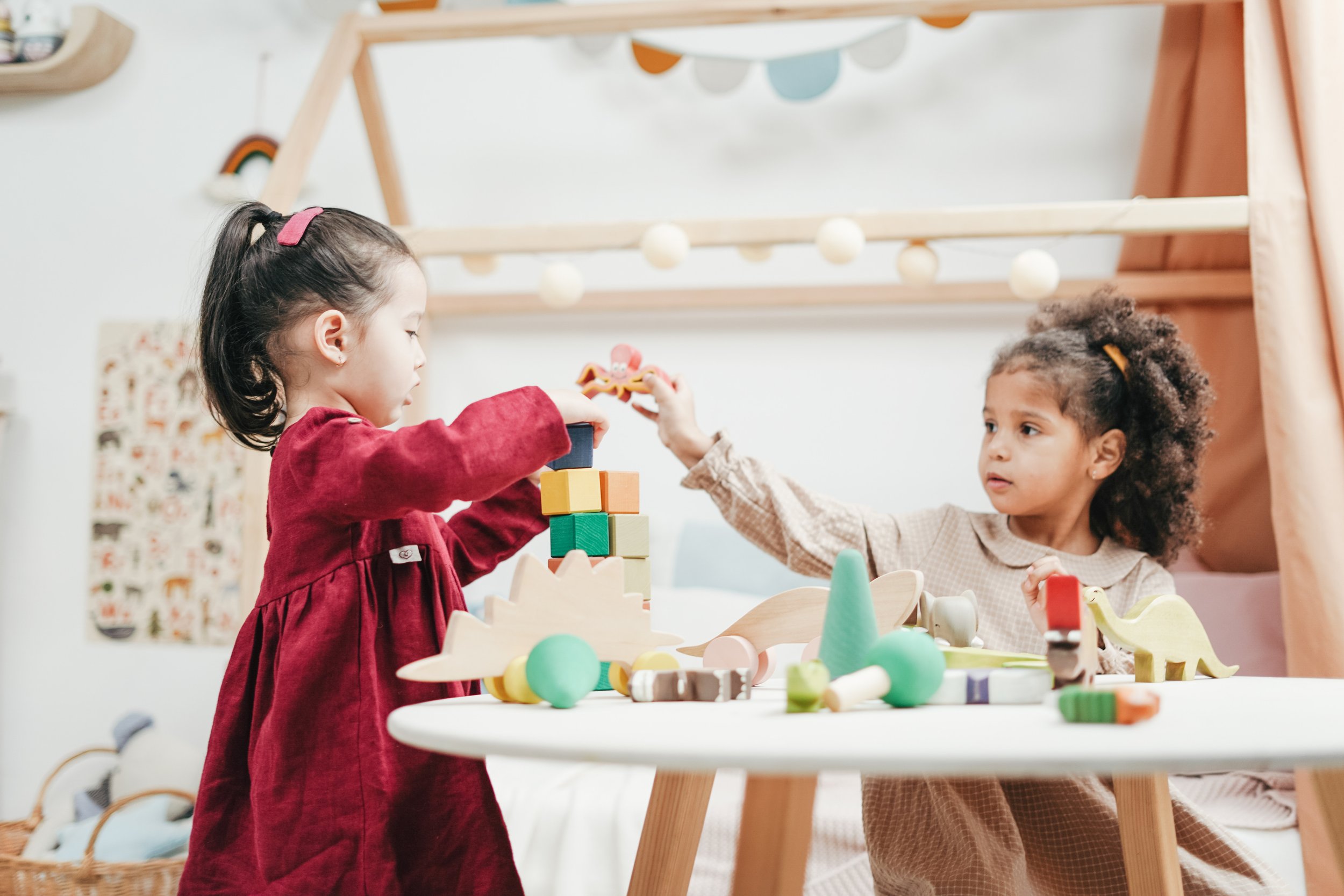
Children learn many valuable skills during the preschool years. They’re learning how to communicate with and listen to others and how to follow directions. They’re developing fine and gross motor skills, and engaging with other children in cooperative play.
The point of preschool is to teach children important skills that will lay the groundwork for their future success. Skills like reading, writing, school readiness, and social skills like how to cooperate with others are all explored in preschool.(1)
4 Types of Play in Early Childhood
Play is absolutely essential to your child’s learning and development!(18)
Preschoolers learn through fun and games! When children play, they are developing their cognitive, linguistic, physical, social and emotional skills.(18)
There Are Several Different Types of Play, but They Often Overlap(6)
1. Dramatic Play involves dressing up in costumes, playing pretend, and acting out stories. It helps children explore self-empowerment, make choices and express their feelings.(10)
2. Manipulative Play involves building something (e.g. with Legos), putting a puzzle together, or stringing beads to create a necklace.(6) It teaches children about sequencing, patterns, order, colors and textures, and how to make comparisons.(7) It also helps children to practice their decision-making skills, analyze and solve problems, and learn about cause and effect.(7)
3. Physical Play involves being physically active and developing gross motor skills. Preschoolers should get at least 3 hours of physical activity per day.(9)
4. Creative Play involves using art supplies to create while developing fine motor skills. Holding writing utensils takes strength and coordination! Through creative play, your child will practice holding writing utensils and writing their letters and their name.(1)
Play is so vital to early childhood development that sustained, moderate to severe play deprivation in childhood (between the ages of 0 and 10) has been shown to have serious negative consequences. (19) Depression, fragile and shallower relationships, reduced self-control, a propensity for addiction and difficulty adapting to change later in life are linked to play deprivation in the early years.(19)
2 Stages of Play: Cooperative Play vs. Associative Play
You may remember from this blog post that there are 6 stages of play. Preschoolers move from associative play into cooperative play between the ages of 4 and 6.(20)
Associative play, which is stage 5 of 6, is when children play with each other but aren’t working together to reach a common goal.(14) Cooperative play, the last and final stage, is when your child is interested not just in playing, but in cooperating with other children to accomplish a goal. There will likely be a division of labor, rules, assigned roles and organization as they work together toward that goal.(14)
So what does this look like in practice? It’s the difference between playing side by side in a sandbox, talking with other children while working on their own sandcastles (associative play), and working together to build one magnificent sandcastle (cooperative play).
Cooperative play is a learned skill requiring self-regulation and the ability to balance individual needs and wants with the needs and wants of the group.(14) Preschool is a great place for your child to practice and build his or her cooperative play skills.
Learning Happens Inside and Outside the Classroom
Literacy and Language Skills for Preschoolers
Have you ever noticed how your preschooler’s classroom is filled with simple images with the object name displayed? You might notice a bus icon, a cat, the sun, a ball — this is to help your child make connections between the object and the letters and words.(1) Every day your preschooler is becoming aware of letters, numbers, shapes and symbols. Whether they’re sitting on the alphabet rug for circle time, singing songs or reciting rhymes, your child’s literacy skills are growing.(1)
Math Skills for Preschoolers
Your preschooler is also practicing their basic math skills by learning to count, identify patterns, and group similar objects together. Older preschoolers will be able to answer questions like, “How many toy cars are on the floor?” and group objects that go together, like books or blocks. (13) To nurture counting skills, ask your preschooler questions like, “How many apple slices are on your plate?” or “How many steps is it from here to the car?” To grow their sorting skills, have your preschooler help you sort laundry, putting all the red clothes in a pile or matching each family member’s socks.(13)
Science Skills for Preschoolers
Science skills are also introduced at this age, and your preschooler is probably already a natural scientist, curious about the world and eager to explore. Encourage your child to interact with and learn about nature, ask questions and conduct experiments, and even talk with them about scientific concepts.
Cooking is a great example of how to incorporate scientific exploration into play. If you invite your child to help you bake something, let them practice skills like measuring and mixing ingredients.
Tricky Preschooler Behaviors
Preschool isn’t all fun and games. And preschoolers can present some challenging behaviors. This is to be expected! All preschoolers act out sometimes.
Tantrums
In a perfect world, the tantrums will have stopped by the time your child is 4-years-old. Typically, tantrums do decline with age. If your preschooler is having frequent tantrums, they have not quite learned how to cope with frustration and regulate their feelings.(17) Talk to your pediatrician if you suspect underlying causes of tantrums in your older child, such as a sensory processing issue, a speech delay or an underlying mental health disorder.(17)
Fighting
If you notice your child is about to start fighting with a sibling over a toy, try diverting their attention before the fighting starts, or offer choices so your children can proactively be involved in the decision-making of what happens next. (4)
Lying
If you catch your preschooler lying, you may be worried you’re raising a devious child. But the truth is — pun intended — that between the ages of 4 and 5, what’s real versus fantasy is still a bit blurry.(15) Preschoolers’ memories are short. Your child may have forgotten she’s done something wrong. Or she’s convinced herself she didn’t do the “bad” thing (like accidentally break mommy’s vase).(15)
Interested in Learning More?
Check out this podcast episode for more information on preschooler play, learning and behavior! We also talk about what to do if your child is potty trained but too shy to use the toilet at school and how to handle lying, bossiness, and playground aggression.
Equip yourself with knowledge and tools to help your child thrive. And be sure to subscribe to the Genius Little Minds podcast so you never miss an episode!
References
https://www.scholastic.com/parents/school-success/school-success-guides/guide-to-preschool.html
https://raisingchildren.net.au/preschoolers/behaviour/understanding-behaviour/preschooler-behaviour
https://www.first5california.com/en-us/articles/developmentally-appropriate-behavior-preschooler/
https://www.scholastic.com/parents/family-life/parent-child/preschool-struggles.html
https://childmind.org/article/can-help-kids-self-regulation/
https://www.wgu.edu/blog/dramatic-play-what-is-why-important2111.html#close
https://raisingchildren.net.au/preschoolers/play-learning/getting-play-started/preschoolers-at-play
https://rainforestlearningcentre.ca/teaching-useful-calendar-concepts-in-preschool-and-daycare/
https://www.kidcentraltn.com/development/4-5-years/brain-development--preschool-3-5-years.html
https://www.parentingforbrain.com/extreme-tantrums-in-4-year-olds/
https://www.psychologytoday.com/us/blog/optimized/202104/the-impact-play-deprivation

Early Childhood: Your Creative and Playful 3 Year Old
Three-year-olds are such curious, playful, imaginative individuals!
Seeing your child grow right before your very eyes is wonderful and exciting. And watching them interact with you and others is such a gift.
Conversations have started to feel more interesting as your preschooler can say longer sentences and have more back-and-forth interaction with you. They also continue to come into their own, engaging in problem-solving and imaginative play.

Three-year-olds are such curious, playful, imaginative individuals!
Seeing your child grow right before your very eyes is wonderful and exciting. And watching them interact with you and others is such a gift.
Conversations have started to feel more interesting as your preschooler can say longer sentences and have more back-and-forth interaction with you. They also continue to come into their own, engaging in problem-solving and imaginative play.
Early Childhood Development: Your Young Preschooler at 3 Years Old
Vocabulary Development
Speech is yet another thing that children develop at their own pace. But a child between the ages of 3 and 4 will typically be able to say between 500 and 900 words!(2) By now, they’ll be able to talk in longer sentences of roughly 4 to 5 words, leading to real conversations with you.(4)
In preschool, your 3-year-old will be building reading and vocabulary skills. They’ll learn simple rhymes, poems, or songs and name colors and objects in their classroom.(3) They’ll also build fine motor skills as they create arts and craft projects and practice writing letters and their name.(3)
Your 3-year-old will also begin to understand the size differences between “little” and “big,” understand long sentences, and even know prepositions such as “on,” “under,” and behind!(2) Discuss what they did yesterday versus what they are doing today to encourage their grasp on the past tense.
Growing Imagination
As your child’s imagination is growing and expanding, they’ll go on many wonderful adventures! They might sail the high seas in a cardboard box, or traverse a jungle across your kitchen. And while your preschooler’s growing imagination brings many wonderful moments of joy and play, it can also spark some fears.
Don’t be alarmed if your child also begins to display a fear of the dark or monsters under the bed as their imagination expands.(10) Because your child has likely seen television, movies, and been in the care of others by this age, their imagination will take flight sometimes. This can activate anxiety or fear. The best thing to do is acknowledge your child’s very real fear, but reassure them that the monsters are not real.
Early Childhood Development: 3-Year-Old Milestones
Social/Emotional Checklist(1)
Quickly calms (within 10 minutes) after you leave (such as for preschool drop-off)
Is interested in playing with other children
With support, can problem solve
Displays affection and concern for others without being prompted(7)
Copies others (e.g., runs when friends or other children run)(7)
Displays a wide range of feelings(7)
Enjoys routines (and may get upset with a major change in routine)(7)
Language/Communication Checklist(1)
Asks questions such as, “who,” “what,” “where,” “why,” and “how”
Can name the action they see in a picture when asked (such as “sleeping”)
Can say their first name when asked
Is able to have short conversations with you (at least two back-and-forth exchanges)
Speaks well enough that other people understand them (most of the time)
After you read a book to them, they can retell the story(4)
Movement and Physical Development Checklist(2)
Can run, jump, and walk up stairs without help
Can ride a tricycle
Is able to wash and dry their hands
Is able to use a fork and spoon well(1)
Can dress himself or herself(1)
Can string items together (like macaroni)(1)
Able to hold a pencil, marker or crayon to color and draw(4)
Cognitive Checklist(1)
Can draw a circle when shown how
Doesn’t touch a hot stove when warned not to
Uses imagination to play and create stories(7)
May be afraid of monsters under the bed or the dark(9)
What You Can Do to Encourage Healthy Development in Your 3-Year-Old
Encourage Problem Solving
Offer support, but don’t solve every problem for your child. Instead, encourage problem-solving and a can-do attitude. Ask questions to help your 3-year-old not only comprehend the problem or situation they’re facing, but also to help them think of solutions to try.(1)
For example, if you have a little extra time on a grocery run with your child, use the opportunity to engage in problem solving.(5) Try saying something like, “To bake cookies we need to buy butter, sugar, and flour. We have butter and flour in the cart. What are we missing?”
Model Problem Solving
You have the opportunity to be a wonderful role model for your child. Show them how you problem solve to encourage them to do it in their own lives as they grow up.
For example, perhaps you accidentally knock over a glass of milk, and it spills onto the floor. Do your best to remain calm. Take a deep breath. If your child is nearby, you could say something like, “Oops! I spilled some milk. How should I clean it up?”(5)
Don’t expect yourself to be perfect. Accidents happen. Some teachable moments will be missed opportunities. But try to give yourself the space (at least some of the time) to make and acknowledge your mistakes out loud to model problem solving in action.(5)
Ask Your Child Open-Ended Questions
Asking open-ended questions is a wonderful way to stimulate your child’s creativity, stretch their reasoning abilities, and foster independence and curiosity.(6) Questions that have a one word answer, such as, “What animal is that?” certainly have their place in your child’s development. But make space for more open-ended questions too, like, “Can you tell me about your stuffed animal?”(6)
Open-ended questions may be met with a pause as your child mulls things over. Be patient and give them time to respond. You might just be delighted by what they tell you!
Here are some other examples of open-ended questions you can ask:(6)
Can you tell me about what you saw?
What did you see happening at the park/zoo/grocery store/mall?
Do you have any other ideas?
Can you help me think of a new way to do this?
What happened at the beginning of the story? What about the middle or end?
Create Space for Imaginative Play
Imaginative play is such a beautiful part of childhood. When your preschooler is playing pretend, creating stories about made up characters, turning everyday objects into parts of their magical world, or imagining themselves as an astronaut or a wizard, anything feels possible. And the freedom that comes with imaginative play allows them to explore emotions, develop empathy, learn negotiation and problem-solving skills, and develop their language and abstract thinking capabilities.(8)
If space allows, offer a place for a small stash of props or safe objects your child can play with such as empty boxes, clothes, stuffed animals, household utensils or plastic tools, markers, construction paper and tape. Then step back and watch your child’s imagination come to life.
Every Stage Comes With Joys and Challenges
Each step of the way, you have the opportunity to help your child learn and grow. Subscribe to my newsletter for more helpful parenting tips, and don’t miss the other blogs in the infant and early childhood development series!
References
https://www.cdc.gov/ncbddd/actearly/milestones/milestones-3yr.html
https://www.stanfordchildrens.org/en/topic/default?id=the-growing-child-3-year-olds-90-P02296
https://www.scholastic.com/parents/school-success/school-success-guides/guide-to-preschool.html
https://www.verywellfamily.com/3-year-old-developmental-milestones-2764712
https://www.rasmussen.edu/degrees/education/blog/problem-solving-for-preschoolers/
https://www.decal.ga.gov/documents/attachments/Questions_Children_Think.pdf
https://helpmegrowmn.org/HMG/DevelopMilestone/3Years/index.html
https://www.babycenter.com/child/3-years-old/your-3-3-4-year-old-pretend-play_10329670
https://www.healthywa.wa.gov.au/Articles/A_E/Child-development-3-4-years
https://www.firstfiveyears.org.au/child-development/when-your-child-has-a-fear-of-the-dark