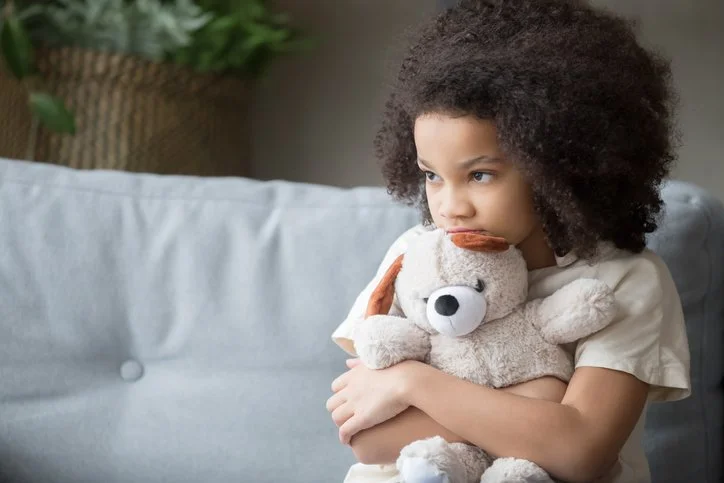
Understanding Generalized Anxiety Disorder: What It Is, Why It Happens, and How to Help Your Child
“What if everyone stands up and leaves when it’s my turn to sing on stage?”
“What if I trip on the playground and no one ever wants to be my friend again?”
“What if all the walls of my bedroom fall in on me?”
These may sound like normal childhood fears; every child experiences fears at some point. However, it is important to be able to spot when normal childhood fear has become overwhelming anxiety.
Generalized anxiety disorder sounds like a scary term, but breaking it down and understanding it will give you insight into how to cope with your child’s fears. So what is generalized anxiety disorder, what triggers it, and how is it treated? Let’s dive in.

“What if everyone stands up and leaves when it’s my turn to sing on stage?”
“What if I trip on the playground and no one ever wants to be my friend again?”
“What if all the walls of my bedroom fall in on me?”
These may sound like normal childhood fears; every child experiences fears at some point. However, it is important to be able to spot when normal childhood fear has become overwhelming anxiety.
Generalized anxiety disorder sounds like a scary term, but breaking it down and understanding it will give you insight into how to cope with your child’s fears. So what is generalized anxiety disorder, what triggers it, and how is it treated? Let’s dive in.
What is Generalized Anxiety Disorder?
Generalized anxiety disorder (GAD) is exactly what the name suggests. A person suffering from this disease doesn’t feel anxiety about one particular thing or situation in their life but instead feels excessive anxiety throughout their daily activities.
They are always worried about what could go wrong, but their fears seem irrational or out of proportion to the situation. The intense worry that they feel about everything often makes it difficult for them to go about their daily life in a normal way.
Other symptoms can include:
Difficulty making decisions
Restlessness or trouble concentrating
Fatigue or trouble sleeping
Crankiness or irritability
Muscle tensions and aches
Stomach upset, including nausea and diarrhoea
Headaches
About 2% of American adults suffer from generalized anxiety disorder; most of these individuals begin experiencing symptoms in childhood or adolescence.(2) The prevalence of GAD in children is estimated to be similar to adults at 2-4%.(4)
Worry and nervousness are a part of life. Every child will feel these emotions at some point. When the anxiety seems out of control or disproportionate to the situation is when there may be something more going on. You have the power to get them the help they need to manage their anxiety and fears.
What Triggers Child Anxiety?
Oftentimes, anxiety disorders are not caused for reason alone. The risk factors can include environmental factors, genetic influences, and biological factors. Someone with GAD may experience any number or combination of these risk factors.
Environmental factors that may trigger episodes of anxiety include:
Parental divorce or separation
Loss of a family member or friend
Living with an ill or disabled family member
Living with someone with an anxiety disorder
Living in a volatile home
Moving
Changing schools
Experiencing a traumatic event
Genes often play a role in the likelihood of a child developing an anxiety disorder. Many mental health professionals will assess the parents’ mental health when diagnosing a child, but family members beyond the parents could also be considered. Children can be predisposed to anxiety disorders if there is a history of anxiety disorders in their family.
Biological factors can also influence childhood anxiety. Imbalances of certain chemicals in the brain, such as serotonin and dopamine, can lead to feelings of anxiety and depression.(4)
How Can I Help My Child with Generalized Anxiety Disorder?
When your child is suffering from generalized anxiety disorder, it’s easy to feel helpless. Luckily there are many things that you can do to help your child.
Use Cognitive Behavioral Therapy Strategies
Cognitive Behavioral therapy (CBT) is often the first strategy employed by mental health professionals when treating children with generalized anxiety disorder.
CBT works on helping children identify what their thought patterns are and how those thought patterns help or hurt them. They learn to recognize that how they think influences how they feel. CBT can be a useful tool to give children the power back over their anxiety.
Check Out My Upcoming Book
Priscillia Puppy Is Afraid of Everything! uses a specific technique in CBT, called Graded Exposure, to help your child manage their anxiety.
Graded Exposure helps children slowly and systematically face their fears and anxieties. The end goal is to help children learn to manage their anxiety and experience reduced symptoms.
As you read this story with your child, you will see Priscilla Puppy recognize her anxiety, use Graded Exposure, and be successful in managing her fears. Your child will learn how Graded Exposure could be applied to their fears and help them manage their anxiety.
Other Treatment Options
Treatment of generalized anxiety disorder should always be overseen by a mental health professional. Mental health treatment is not one size fits all. Having a professional on your child’s side is invaluable.
Cognitive Behavioral Therapy is the gold standard for treatment of generalized anxiety disorder. Especially, Graded Exposure Therapy, part of CBT, is a very effective treatment to reduce anxiety symptoms. CBT includes some of the following techniques and strategies:
Psychoeducation – Learning about their symptoms and the pattern they follow.(8)
Somatic management skills – Progressive muscle relaxation or diaphragmatic breathing to control the physical symptoms of anxiety.(5)
Cognitive restructuring – Learning to reshape maladaptive thoughts or cognitive distortions.(8)
The mental health professional will continue to use tools and methods to help your child until they find the ones that work best. Alternative treatment options for your child are Mindfulness-Based Psychotherapy or Psychodynamic Psychotherapy.(6)
Your child’s mental health professional may suggest anti-anxiety medications if all other routes have not improved their symptoms as much as is needed. SSRIs and SSNRIs can be an effective form of treatment for generalized anxiety disorder but should only be used as a last resort and under the careful watch of a psychiatrist or psychologist.(7) Oftentimes, medication will be used in tandem with therapy to give a child all the tools they need to overcome their anxiety.(6)
Generalized anxiety disorder can feel difficult to overcome as it permeates every part of a sufferer's day-to-day life. However, there are many effective treatments. Your child can learn to cope with their anxiety and live a normal life.
Pre-order Priscillia Puppy Is Afraid of Everything! here. To check out other books in the I’M AFRAID anxiety disorder series, visit: www.DrMadeleineVieira.com/books/imafraid
Would you like more information on childhood anxiety? Listen to my Genius Little Minds two-part podcast series on childhood anxiety disorders now! Click here for part 1 and click here for part 2.
And don’t forget to sign up for my monthly newsletter to stay up-to-date on the latest blogs and podcasts!
Resources
https://www.drmadeleinevieira.com/books/imafraid/generalizedanxietydisorder
https://www.med.upenn.edu/ctsa/general_anxiety_symptoms.html
https://www.childrenshospital.org/conditions/generalized-anxiety-disorder-gad
https://www.heretohelp.bc.ca/infosheet/strategies-for-children-with-generalized-anxiety-disorder
Wehry, A. M., Beesdo-Baum, K., Hennelly, M. M., Connolly, S. D., & Strawn, J. R. (2015). Assessment and treatment of anxiety disorders in children and adolescents. Current psychiatry reports, 17(7), 52. https://doi.org/10.1007/s11920-015-0591-z
Kodish, I., Rockhill, C., & Varley, C. (2011). Pharmacotherapy for anxiety disorders in children and adolescents. Dialogues in clinical neuroscience, 13(4), 439–452. https://doi.org/10.31887/DCNS.2011.13.4/ikodish
https://www.uptodate.com/contents/psychotherapy-for-anxiety-disorders-in-children-and-adolescents

How Do I know if It’s ADHD or Developmentally Appropriate Behavior?
Children can be tiresome—no matter their age. But oh, they are charming! The wit, the spontaneity, the unadulterated joy—it’s enough to make you crack up, but also drive you mad, isn’t it? Especially when you can’t get them to sit still, follow directions, wait their turn, or listen carefully! And for a child with ADHD, these types of requests or expectations are even harder to meet.
All children will be inattentive, impulsive, or hyperactive sometimes. That’s just part of being a kid. Preschoolers in particular struggle to stay focused on one activity for a sustained amount of time. It’s not unusual for preschoolers to have short attention spans. Plus, isn’t it cute when they get sidetracked by a bug or a pile of rocks with no particularly interesting quality except that they exist?
In school-aged children and teens, it’s not uncommon for their attention spans to depend on their interest in what’s at hand.(1) Pursuing their passion for basketball, reading, or collecting sneakers trumps doing boring stuff like homework any day.

Children can be tiresome—no matter their age. But oh, they are charming! The wit, the spontaneity, the unadulterated joy—it’s enough to make you crack up, but also drive you mad, isn’t it? Especially when you can’t get them to sit still, follow directions, wait their turn, or listen carefully! And for a child with ADHD, these types of requests or expectations are even harder to meet.
All children will be inattentive, impulsive, or hyperactive sometimes. That’s just part of being a kid. Preschoolers in particular struggle to stay focused on one activity for a sustained amount of time. It’s not unusual for preschoolers to have short attention spans. Plus, isn’t it cute when they get sidetracked by a bug or a pile of rocks with no particularly interesting quality except that they exist?
In school-aged children and teens, it’s not uncommon for their attention spans to depend on their interest in what’s at hand.(1) Pursuing their passion for basketball, reading, or collecting sneakers trumps doing boring stuff like homework any day.
But for children with ADHD, symptoms of inattention or hyperactivity are severe, persistent over time, and significantly impair their functioning. (2) And they aren’t able to “will” themselves to focus or pay attention.(9)
ADHD Symptoms
There are 2 behavioral symptoms associated with ADHD(3):
· Inattentiveness
· Hyperactivity/impulsiveness
Boys are more likely to be diagnosed due to hyperactive behavior, whereas girls are more likely to display inattentiveness. Many girls go undiagnosed because of this, and do not get the help or treatment they need.(3)
There are 3 types of ADHD(4):
· Inattentive (This is called attention deficit disorder, or ADD)
· Hyperactive/impulsive
· Combined
If you child has inattentive ADHD (or ADD), you might notice they(4):
· Have trouble focusing
· Get distracted easily
· Have a short attention span(3)
· Seem like they aren’t listening
· Struggle with following through on instructions
· Make careless mistakes (like on homework) or don’t pay attention to details
· Struggle with organization
· Fail to complete chores or homework
· Avoid tasks they dislike or that require sustained mental effort and focus (like homework)
· Can be forgetful or lose things frequently(3)
· Change tasks or activities often(3)
If your child has hyperactive/impulsive ADHD, you might notice they(4):
· Fidget, tap their hands or feet, squirm when seated
· Have trouble staying seated (like in the classroom)
· Seem to be in constant motion, are always on the go
· Run or climb when not appropriate
· Struggle to play or do an activity quietly
· Blurt out answers, speak out of turn, talk a lot
· Interrupt other people’s conversations, activities or games
· Struggle to wait their turn
· Act without thinking(3)
· Don’t have a good sense of danger(3)
If your child has combined ADHD, you might notice they(7):
· Display symptoms related to both inattention and hyperactivity/impulsivity
Combined ADHD is the most common subtype.
Behavioral Presentation of ADHD
Often children with ADHD will struggle to get organized. Their backpack may be a mess. They may lose their homework frequently. They often have trouble getting started on, prioritizing, or staying committed to tasks. They may leave things to the last minute because they can’t get started on a project unless it feels like an emergency. Others will have trouble managing their time. Finishing things within a reasonable timeframe can seem impossible to a child with ADHD. And they may struggle to regulate their sleep, often staying up later than they should and having a hard time waking up. You may hear a child with ADHD say, “I can’t sleep because I can’t shut off my brain.”(9)
Children with ADHD also tend have difficulty managing their emotions. A small frustration will set them off, and then, just as quickly, they’ll be over it.(9) They can struggle with impulsivity and moderating their actions, too. A child with ADHD is likely to jump into something without thinking about the risks or consequences.
Difficulty with short-term memory recall is another symptom. They may study for a test and know all the answers, but then not be able to retrieve that information when taking the test.
Many people will struggle with one or more of these symptoms at some point in their life due to the normal stresses and pressures of daily living. But it’s a question of how severe the symptoms are and how much they interfere with a child’s daily life.
What Causes Childhood ADHD?
Genetics, environmental factors, and brain chemistry all contribute to the development of ADHD. It’s a neurobiological disorder linked to an imbalance of dopamine and noradrenaline in the brain.(2)
Out of every 4 people diagnosed with ADHD, one of them has a biological parent with ADHD, though the parent may not be diagnosed. The other 3 usually have another family member who struggle with it.(9)
Risk Factors for ADHD(1):
· If you or a blood relative has ADHD, it’s more likely your child will develop it
· Exposure to environmental toxins such as lead pipes or paint
· Alcohol, drug or tobacco use during pregnancy
· Premature birth
Comorbidity:
Approximately two-thirds of children and adolescents with ADHD have a comorbid disorder, meaning they have another disorder present simultaneously.(2)
Children with ADHD may also struggle with one or more of the following(3):
· Anxiety disorders
· Oppositional defiant disorder
· Conduct disorder
· Depression
· Autism spectrum disorder
· Tourette’s syndrome
· Dyspraxia
· Epilepsy
· Sleep issues
· Learning disorders
I Think My Child Has ADHD. What Do I Do?
In the UK, approximately 2-5% of school-aged children have ADHD(2) and approximately 6 million children in the US have been diagnosed with ADHD.(6) If you or someone else in your child’s life thinks they may be struggling with ADHD, here are some steps you can take.
Connect with your child’s teacher(s)
Learn what’s happening at school. Explain what types of things you’re seeing and hearing at home, and ask if similar things are presenting in class.
Seek out resources
Educate yourself about ADHD and its treatments. Learn about the symptoms but also the myths associated with this disorder. Connect with other families whose children or teens struggle with ADHD.
Work with an ADHD specialist
There isn’t a cure for ADHD, but treatment can help children manage their symptoms so their lives (and yours) don’t spin out of control. Early intervention and diagnosis can help improve outcome.(7) Working with a therapist or care provider who specializes in ADHD will help your child learn non-pharmacological coping strategies, though treatment for ADHD typically involves both behavior therapy and medication. Talk to your child’s doctor about the risks and side effects associated with medication.(8)
Be patient
It may take time for your child to get a handle on his or her ADHD. If medication is prescribed, it may take a while to find the correct dose. Medication doses may need to be adjusted as your child matures, or if they experience significant side effects.(8)
Look for (and praise) successes
Children with ADHD often have difficulty with low self-esteem on top of their ADHD symptoms. This may be partially due to their receiving criticism more often than other children. Try to notice your child’s strengths. Praise big and small wins. Observe what strengths helped your child succeed and then name them.(8)
Take action
Your child’s ADHD may not go away, but with treatment, they can learn to manage their symptoms and thrive despite the challenges that living with ADHD can present. Seek professional intervention and get help from a doctor, psychiatrist, or mental health provider who specializes in ADHD diagnosis and treatment.
Interested in learning more?
Check out this podcast episode on childhood ADHD. You’ll get information on how a brain with ADHD works, what behaviors you’ll see in the home or at school, comorbidity or the prevalence ADHD is occurring with other disorders, and so much more. If your child does have ADHD, you’ve probably encountered many behavioral challenges. At the end of the podcast, hear from other parents whose children may be struggling with ADHD for tips on behavior management and next steps.
Equip yourself with knowledge and tools to help your child thrive. Subscribe here to the Genius Little Minds podcast so you never miss an episode!
References
https://www.mayoclinic.org/diseases-conditions/adhd/symptoms-causes/syc-20350889
https://www.england.nhs.uk/north-west/wp-content/uploads/sites/48/2019/03/GM-wide-ADHD-guidance.pdf
https://www.nhs.uk/conditions/attention-deficit-hyperactivity-disorder-adhd/symptoms/
https://www.mayoclinic.org/diseases-conditions/adhd/symptoms-causes/syc-20350889
https://www.mayoclinic.org/diseases-conditions/adhd/diagnosis-treatment/drc-20350895
ADD/ADHD | What Is Attention Deficit Hyperactivity Disorder? (2016, May 4). [Video]. YouTube. https://youtu.be/ouZrZa5pLXk

Infant Development: Cruising, First Words, and Your 10 to 12 Month Old
How is it possible that your precious child is already a year old? Doesn’t it seem like they were born just yesterday?
The 12-month mark will be here before you know it. And between the ages of 10 and 12 months, your baby’s curiosity is expanding at a rapid pace.
Around their first birthday, they’ll likely say their very first word! You’ll melt at the cuteness when your baby says “dada” or “mama” for the first time. And soon the baby babbling will transform into even more real words you can recognize.
With this exciting stage comes crawling, standing, and eventually… walking! Your baby’s newfound independence is sure to keep you on your toes.
You’ll watch your little one learn, grow, and change every single day!

How is it possible that your precious child is already a year old? Doesn’t it seem like they were born just yesterday?
The 12-month mark will be here before you know it. And between the ages of 10 and 12 months, your baby’s curiosity is expanding at a rapid pace.
Around their first birthday, they’ll likely say their very first word! You’ll melt at the cuteness when your baby says “dada” or “mama” for the first time. And soon the baby babbling will transform into even more real words you can recognize.
With this exciting stage comes crawling, standing, and eventually… walking! Your baby’s newfound independence is sure to keep you on your toes.
You’ll watch your little one learn, grow, and change every single day!
Infant Development: Your Baby From 10 to 12 Months
Important language and movement milestones occur between the ages of 10 and 12 months, and they’re oh so much fun to enjoy with your child!
Crawling, Cruising, Walking
All babies develop, grow, and reach milestones at their own pace. But it’s natural to wonder when your child may start to crawl. Typically babies learn to crawl between 7 and 10 months old.(2) The more your child can move around, the more they’ll want to explore on their own. Rolling, scooting, creeping on their belly or full on crawling—your little one will be learning, growing, and changing every single day. And it’s so much fun to watch!
At every chance your child gets, they’ll be showing off new skills and interacting with the wonderful world around them. Your child may enjoy “cruising” or walking around without adult help while holding onto furniture for support. Typically by 10 months, your baby will be able to walk slowly while holding your hands. Around 11 months, they’ll be standing up by themselves, climbing up stairs, and cruising the living room. And they may even take their first unsupported steps by their first birthday!(3)
Baby’s First Words! How to Communicate With Your 10- to 12-Month-Old
Every child will say their first word in their own time. “Mama” or “dada” may become part of their vocabulary by the time they’re 10 months old. And one additional word may be in the mix by 11 months.(4) By their first birthday, two other words besides “mama” and “dad” could be in your child’s vocabulary. And how exciting that will be!(4) Whether it’s “bus,” “ball,” “hi,” or “dog,” hearing your child say their first word will be an experience you’ll remember for the rest of your life.
Your 10- to 12-month-old will start to understand short phrases like “hand me the toy” and wave when you say “bye bye!”(1) Short, “baby talk” sentences may creep into your child’s vocabulary. Each day brings a new way to interact with the world, as shaking their head “no” or asking for something by gesturing or pointing becomes the norm.
Play a Game
“Copycat” is a great game to play with your child to encourage the development of their social skills and ability to mimic others.(5) To play, sit across from your child and show them something they can easily copy, like covering their eyes, sticking out their tongue, or scrunching up their nose. Offer praise when they copy your gesture—you’ll both be sure to end up in fits of giggles by the game’s end!
Infant Development: Milestones From 10 to 12 Months
There are a few important milestones to watch out for at this age, though please remember every child develops at his or her own pace! Here are some things your child will likely do within this age range:
Social/Emotional Checklist(8):
May display shyness , nervousness, or fear with strangers
Shows facial expressions (happy, sad, surprised, angry)
Has a reaction when you leave (cries, reaches for you, or simply looks)
When you call their name, looks to you
Smiles and laughs during peek-a-boo
Enjoys games like pat-a-cake or copycat
Language/Communication Checklist(6):
Does simple gestures (shakes head “no” or waves)
Follows simple verbal requests or instructions
Imitates the words you say
Changes tone when making sounds to imitate speech
Can say “mama” or “dada” and exclamations like “oh no!”
Movement and Physical Development Checklist(6):
Sits without assistance
Can pull himself up to stand and walk by holding on to furniture (“cruising”)
May take a couple of steps without holding on
May stand without support
By 12 months, may take first unsupported steps
Can use thumb and pointer finger to pick things up (begins to finger-feed themselves)
Passes things from one hand to the other
Points and pokes with pointer finger
Copies gestures
Cognitive Checklist(6):
Is able to put things in and take things out of a container
Locates hidden objects easily
Can identify objects when named (8)
Drops or places things without assistance
Explores objects by shaking, throwing or banging (especially by banging two things together)
Imitates you (may “talk” on the phone like you do, or brush their hair)
What You Can Do at This Stage to Encourage Healthy Development in Your 10- to 12-Month-Old
Model Healthy Self-Expression
Being a child can be frustrating. Babies and children don’t have access to the language they need to express themselves. And because they’re still learning, they often don’t understand what it is they’re experiencing when they feel big emotions. Your baby might display frustration or the desire to gain control of a situation by throwing things or screaming. If your baby throws a toy out of frustration, remain calm. Say, “You’re frustrated. Let’s try again together.” Then demonstrate what they need to do to succeed. Afterward, give them the chance to try again. You might say, “The triangle block goes here. Now, why don’t you try?”
Keep Reading and Singing
By this age, books with textures, flaps, activities or other interactive features will captivate your baby’s attention. Keep age-appropriate books nearby so your baby can pick them up and interact with them even if you’re not reading aloud. It’s likely your baby will enjoy music at this age and move and groove to certain tunes. When you encourage humming and sing to your child, you’re stimulating them while also helping develop their language, motor skills, and rhythmic capabilities.(9)
Initiate Conversations
Even if your baby hasn’t yet said her first word, encouraging conversation and pausing for her to respond is still helpful and promotes the development of healthy language and communication skills. If your child says, “baba” and points to a bottle, you can say, “Yes, you want the bottle.” If she points to a dog while you’re reading a picture book, you could say, “You found the dog. What noise does a dog make?” Pause, giving your baby a chance to respond. (Even if it’s just with a sound.) Then offer the correct answer to your question. (“Woof!”) Continue to ask your baby questions throughout the day about her environment. You don’t have to limit yourself to yes or no questions! Even though you might want an adult to talk to by the end of the day, engaging with your baby in this way helps boost her development.(6)
Encourage Curiosity
Continue to encourage your child’s curiosity. Maybe they’re curious about the zipper on your coat, the bubbles at the park, or the colorful blocks they have at home. Teaching your child to stack blocks or sort toys by color and shape helps build their motor, concentration, memory, and problem-solving skills.(9)
Don’t have a 1-year-old yet? Check out the other blogs in the infant development series for more information on your baby’s development and how to help them grow and learn! For more info on newborns, click here . For 7- 9-month-olds, click here .
References
(2019, July). Learning, Play, and Your 8- to 12- Month-Old. Kids Health. https://kidshealth.org/en/parents/learn812m.html
(2020, March). When Do Babies Start Crawling? Pamperse. https://www.pampers.com/en-us/baby/development/article/when-do-babies-crawl
(2021, March). When Does a Baby Start Walking? Grow by WebMD https://www.webmd.com/baby/when-does-a-baby-start-walking
Ages 8 to 12 Months—5 Months of Magical Milestones. Similac. https://www.similac.com/baby-feeding/milestones-development/8-9-10-11-12-month-old.html
(2021, September). 9 Fun Activities for 10-Month-Old Babies. Peanut. https://www.peanut-app.io/blog/activities-for-10-month-old
(2020, June). Infant development: Milestones from 10 to 12 months. Mayo Clinic. https://www.mayoclinic.org/healthy-lifestyle/infant-and-toddler-health/in-depth/infant-development/art-20047380
(2022, March). Important Milestones: Your Baby By Nine Months. Centers for Disease Control and Prevention. https://www.cdc.gov/ncbddd/actearly/milestones/milestones-9mo.html
(2022, March). Important Milestones: Your Child By One Year. Centers for Disease Control and Prevention. https://www.cdc.gov/ncbddd/actearly/milestones/milestones-1yr.html
At 8 – 12 months your baby should… Healthy Children. https://www.healthychildren.org/english/ages-stages/baby/Pages/default.aspx
(2020, October). 10-Month-Old Baby Activities: 8 Things to Do With Your Child. Flo Health. https://flo.health/being-a-mom/your-baby/growth-and-development/activities-for-a-10-month-old-baby

Is My Child Depressed? Warning Signs and Resources for Childhood Depression
Growing up is often described as an emotional rollercoaster. There are so many highs and lows that come with the experiences of childhood and adolescence—riding a bike for the first time, finding a best friend, going through puberty and exploring sexuality. School, friends, family, hormonal changes—all of these different parts of a child’s life can contribute to intense feelings.
But if your child has more ‘lows’ than ‘highs’—low moods, sadness, low self-esteem—they may be suffering from depression.
As a parent, it may be hard to accept that even children can become depressed. What do they have to be depressed about, after all? They don’t have to pay taxes, go to work, or navigate the complexities of adult relationships. Childhood is often described wistfully by adults as carefree—longed for by nostalgic memory of a time when recess was the best part of a day, meals were cooked and paid for, and someone— a parent or caregiver—was watching out for you.

Growing up is often described as an emotional rollercoaster. There are so many highs and lows that come with the experiences of childhood and adolescence—riding a bike for the first time, finding a best friend, going through puberty and exploring sexuality. School, friends, family, hormonal changes—all of these different parts of a child’s life can contribute to intense feelings.
But if your child has more ‘lows’ than ‘highs’—low moods, sadness, low self-esteem—they may be suffering from depression.
As a parent, it may be hard to accept that even children can become depressed. What do they have to be depressed about, after all? They don’t have to pay taxes, go to work, or navigate the complexities of adult relationships. Childhood is often described wistfully by adults as carefree—longed for by nostalgic memory of a time when recess was the best part of a day, meals were cooked and paid for, and someone— a parent or caregiver—was watching out for you.
It may be hard to remember the painful parts of childhood or adolescence. The pain that comes with growing up. Navigating social situations at school. Doing homework. Struggling with test anxiety. Trying to fit in with peers. Experiencing romantic rejection for the first time. Dealing with intense feelings that are hard to regulate.
Growing up isn’t always a walk in the park.
And sometimes, children become depressed.
Let’s talk about it so you know the signs of childhood depression and how to help.
Warning Signs of Childhood Depression
Depression can look different in preschoolers, school-aged children and teens.
If your preschooler is depressed, you might notice they(1):
Seem to be regressing to younger behavior, like sucking their thumb or using baby talk
Have daily tantrums(5)
Are aggressive
Have separation anxiety again (after having grown out of it)
Don’t enjoy playing anymore and don’t want to play with other children
Aren’t following their regular sleep schedule anymore
Are lethargic during the day
Have lost weight and aren’t interested in the foods they used to love
If your grade school child is depressed, you might notice they(1):
Complain frequently about stomachaches and headaches
Talk frequently about being sad or lonely, even if they have friends, or hint they’re being bullied
Have a gloomy or pessimistic outlook on life
Are doing worse in school or extracurriculars
Say things are “boring” and they aren’t interested in doing the things they used to love
Watch more TV than usual and spend a lot of time on the couch
No longer seem to care about doing well in school, sports, or other activities
Aren’t gaining weight at the rate expected for their age group
If your tween or teen is depressed, you might notice they(1):
Have closed off emotionally to friends and family, are withdrawn and distant
Seem grumpy, irritable or angry a lot of the time
Lash out
Engage in risky behavior or self-harm
Abuse alcohol or drugs
Get set off by little things
Express that they feel worthless, guilty, empty or numb
Feel hopeless about the future
Think one bad thing happening means nothing in their life is good
Lack confidence and obsess over their shortcomings
Have dramatically changed their habits
If your child is depressed, you might also notice they(2):
Cry frequently, are often tearful, feel sad more often than not(3)
Try to run away from home (or talk about doing so)(3)
Have trouble concentrating on or remembering things
Find it difficult to make decisions
Are highly sensitive to rejection, criticism, or bad news
Say negative things about themselves
Lack confidence
Have trouble fitting in and getting along with others
Frequently miss school(3)
Have suicidal thoughts or impulses*
*If you’re in the U.K. and seeking resources or support because you’re worried about your child’s mental health, you can call the YoungMinds' free parents' helpline for advice on 0808 802 5544 from Monday to Friday, 9.30am to 4pm. If you’re in the United States, you can reach the National Suicide Prevention Lifeline at 1-800-273-8255 for free and confidential support 24/7.
*If your child or teen is feeling suicidal and is thinking about hurting themselves, call 911 if you’re in the US or 999 if you’re in the UK, or take them to the nearest Emergency Room.
It’s important to listen closely to your child in addition to noticing any behavioral changes.
Things you might hear your depressed child say(6,7):
“I’m bored.”
“I’m not good at anything”
“It’s always my fault.”
“I don’t have any real friends.”
“Nobody likes me.”
“I suck at ______.”
“I wish I had never been born.”
“My tummy/head hurts.”
“I’m so tired.”
Of course not all children who say these things are depressed, but keep these phrases and their frequency in mind.
What Causes Childhood Depression?
It may be hard to accept that even children and adolescents can become depressed. But it’s so important that adults realize the signs. Otherwise, children or teens can go undiagnosed and untreated. And the outcome can be much worse for children who don’t receive timely treatment.
About 3% of children in the US and 1-3% of children in the UK are depressed.(4) There are a number of contributing factors, including(4):
A family history of depression
Chronic illness
Psychiatric, learning, developmental or conduct disorders
Trauma, abuse or neglect
Chronic or excessive stress
Stressful events such as a parents’ divorce or the loss of a loved one
If you or someone else in your family has depression, your child is more likely to develop it. A stressful home life or school environment can contribute to a child developing depression, especially if they feel helpless and unable to make any changes to their environment or experiences. Children with depression are thought to have a different brain structure and functioning than children without depression.
Risk factors
When a child has a depressive episode, they are at risk for developing another within the next 5 years. Childhood depression is linked to more severe depression in adulthood. And depressed children or adolescents are more at risk for suicidal behavior.(3)
I Think My Child Is Depressed. What Do I Do?
If you or someone else in your child’s life thinks they might be suffering from depression, here are some steps you can take.
Support and listen to them
Ask your child how they’re feeling, what’s bothering them, and try to find out what is causing any changes in their behavior or mood. If your child is closed off and uncomfortable talking to you, see if they’ll talk to another trusted adult.
Know the warning signs
Jot down some notes about how severe your child’s symptoms are, how long they’ve been going on, and how they present so you’re armed with information when you see a mental health professional or pediatrician. Consider contacting your child’s teachers to see if they’ve noticed any behavioral changes at school. Take any suicidal signs seriously.
Meet with a professional
Get a referral to a psychiatrist, psychologist or pediatrician who can diagnose depression in children. Empathize with your child and continue to provide emotional support. They might feel freaked out about going to the doctor or “talking to someone,” so continue to be non-judgmental and acknowledge how they’re feeling. Assure your child they are not alone.
Seek out resources
Educate yourself about childhood depression and its treatments. Reach out to other families whose children or teens struggle with depression. Create a network so you feel supported and less alone. Consider counseling for yourself if you’re struggling with shame or other strong emotional reactions to your child’s depression.
Take action
Ultimately, childhood depression is treatable, but it’s important it’s diagnosed and treated early. Depression doesn’t just go away on its own. It requires professional intervention. Comprehensive treatment may include individual and family therapy as well as medication.
Interested in learning more? Check out this podcast episode on childhood depression. You’ll get even more information on risk factors, how COVID-19 has impacted rates of depression in children, comorbidity with other disorders, and more. You’ll also get to hear from parents from all over the world whose children are also struggling. In each podcast episode, I answer questions from parents just like you who are trying their best and seeking additional support.
Equip yourself with knowledge and tools to help your child thrive. Subscribe here to the Genius Little Minds podcast so you never miss an episode!
References
Rosen, Peg. Signs of depression at different ages. Understood. https://www.understood.org/articles/en/signs-of-depression-at-different-ages-a-printable-checklist
Is my child depressed? Priory Group. https://www.priorygroup.com/blog/is-my-child-depressed
(2018, November). Child depression ages 6 -12. The Whole Child. https://www.thewholechild.org/parent-resources/age-6-12/child-depression-ages-6-12/
Childhood depression. How to help your child. Healthline. https://www.healthline.com/health/mental-health/childhood-depression
Klass, Perri. (2021, September). How to spot depression in young children. The New York Times. https://www.nytimes.com/2021/04/01/well/family/depression-young-children.html
Depression in children 5-8 years. Raising Children. https://raisingchildren.net.au/school-age/health-daily-care/school-age-mental-health-concerns/depression-5-8-years
Typical sadness or depression? How to tell the difference in your child. Understood. https://www.understood.org/articles/en/sadness-vs-depression-in-kids

Spring Cleaning: Involving Your Children in Maintaining Their Spaces
The smell of fresh spring air can be rejuvenating. The trees are beginning to bloom again and school is in its final stages of the year. With all those signs of the changing seasons, many of us feel an urge to clean our houses from top to bottom.
Spring cleaning, though, can feel like a momentum task when you have children. The mess can seem bigger and harder to tackle. In reality, though, your children can be great helpers to get your house cleaned.
The advantages of children learning how to clean are massive. One study found that children who completed regular household chores had a sense of mastery, self-reliance, and responsibility.(1) The children of this study started doing chores as early as 3 or 4 years old, and they saw lifelong benefits from it. Some of these benefits included good relationships with friends and family and success in academics and later in their careers.

The smell of fresh spring air can be rejuvenating. The trees are beginning to bloom again and school is in its final stages of the year. With all those signs of the changing seasons, many of us feel an urge to clean our houses from top to bottom.
Spring cleaning, though, can feel like a momentum task when you have children. The mess can seem bigger and harder to tackle. In reality, though, your children can be great helpers to get your house cleaned.
The advantages of children learning how to clean are massive. One study found that children who completed regular household chores had a sense of mastery, self-reliance, and responsibility.(1) The children of this study started doing chores as early as 3 or 4 years old, and they saw lifelong benefits from it. Some of these benefits included good relationships with friends and family and success in academics and later in their careers.
It’s easy to know that your child should be doing chores, but how do you actually encourage them to complete cleaning tasks? Don’t worry, I’ve got some tips for you.
Consider What Tasks Are Age-Appropriate
It is important to consider your child’s capabilities when assigning cleaning tasks. Think about their fine and gross motor skills. Think about their cognitive skills and ability to remember and complete a certain number of tasks at one time.
Then, assign tasks that you know they are able to complete on their own or modify tasks so that they are easier to complete. An example of this could be sweeping the kitchen. You could make this task easier for your child to complete by purchasing a small broom that is easier to maneuver. You could also mark out a big square that they need to debris in instead of expecting them to sweep into a dustpan.
Explain the ‘Why’
Explaining why anything is being done is often very useful with children. They don’t always think through the reasons why they might be asked to do a task. When those reasons are explained to them, though, they will often understand and be more willing to participate.
Be careful with your language to make it clear that cleaning is not a punishment. Cleaning is simply something that everyone must do to keep the house functional. You can talk about germs, and how they make us sick but cleaning gets rid of them.
If you’re decluttering as a part of your spring cleaning, explain this as well. Discuss how more toys and clothes mean more cleaning that needs to happen. Talk about how other children could play with the toys that they no longer do. Consider letting them pick where their toys will be donated to. Discuss different charities and what they do. Or you can host a garage sale and let them keep the money they earn from selling their extra things.
Provide Clear Instructions and Expectations
For younger children, be clear with what tasks need to be completed, how those tasks should be done, and how they can know when the task is done. For example, the playroom needs to be picked up. Your child needs to put all the toys back where they belong. They will know the task is done when there are no more toys on the floor.
The level of explanation prevents you from having to send your child back over and over when you don’t think that the task is completed but they do.
Give opportunities for independence where it is appropriate. If possible, let your children have choices. One possibility would be giving them the list of tasks that need completed and letting them pick the order in which they want to complete them.
Break It Into Small Steps
Especially with younger children, you will likely not be able to give a long list of chores that your child will remember. Your child may not even be able to remember the multiple steps that go into a cleaning task. For example, you may explain how to sweep the kitchen and clean up the dirt pile. By the time they finish sweeping, though, they forget what they were supposed to use to clean up the dirt pile.
This is totally normal. Have patience and remember that you are teaching valuable skills that will take time for your child to master. Remind them of the next step in the process if they forget and provide help where necessary.
Clean With Them
Everything is more fun with a friend by your side!
Your child may find it easier to stay on task and enjoy that work that they’re doing if they get to do it with you. This also reinforces the idea that everyone is a team working together to keep the house clean and functional.
You can do this by both doing the same task, like you both vacuuming at the same time, or splitting a task in half so that you have your job and your child has their job. One task that you could do this with is you spraying water on the windows and your child wiping it off.
Make Cleaning Fun
The more fun cleaning feels, the more willing your child is going to be to participate.
Make the chores into a game. You can set a timer and encourage your child to race to finish before the timer goes off; this will work better with shorter tasks. Or you can both pretend to be a detective looking for something, like expired spices in the cabinet or all the lego pieces in the playroom.
Maintain Cleaning Routines Year-Round
Involving your children in cleaning tasks should not be something that happens just once a year. Consistency will help your child hone their cleaning skills and keep your household functioning well.
Some families find it easier to have daily tasks assigned to a certain person that are completed whenever they have time. Other families spend a big chunk of time cleaning together as one unit. Whichever way works best for your family is fine. Maybe you even devise a mixture of both strategies.
Cleaning skills will serve your child for the rest of their life. Starting early sets them up for success.
Subscribe to my newsletter for all the latest updates on my blogs and podcasts!
References
How To Set Boundaries During School Breaks - 4 Steps to Success
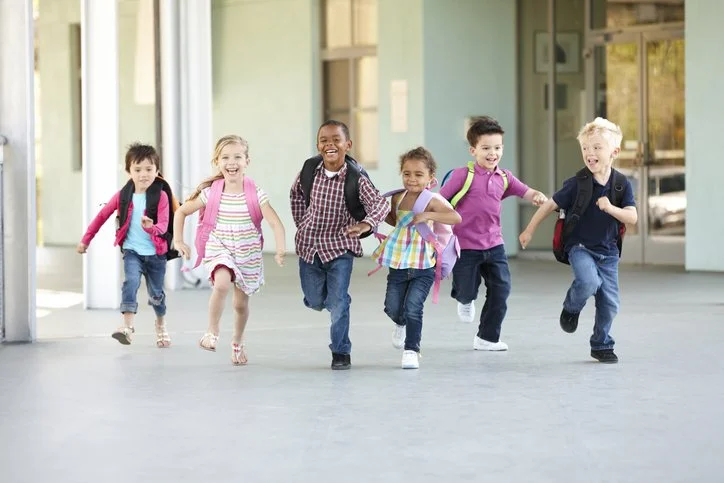
School breaks can be a time that students look forward to for weeks. Maybe it means a vacation or special trip to see family. Maybe they just look forward to getting to sleep in, stay home, and relax.
Sometimes, though, all the extra time spent together can put strain on the relationship between you and your child. Setting healthy boundaries can help keep the break fun and enjoyable for everyone.
If you’re thinking, “I know that setting boundaries would be great, but I just don’t know how to get started.” Don’t worry! I’ve outlined four steps to help you through the process and included four more tips to help make your child’s upcoming school break a success.

School breaks can be a time that students look forward to for weeks. Maybe it means a vacation or special trip to see family. Maybe they just look forward to getting to sleep in, stay home, and relax.
Sometimes, though, all the extra time spent together can put strain on the relationship between you and your child. Setting healthy boundaries can help keep the break fun and enjoyable for everyone.
If you’re thinking, “I know that setting boundaries would be great, but I just don’t know how to get started.” Don’t worry! I’ve outlined four steps to help you through the process and included four more tips to help make your child’s upcoming school break a success.
Acknowledge the Adjustment Period
Before we get into the four steps, it’s important to acknowledge that there will be an adjustment period when your child is home full time instead of at school. The length and intensity to with which this adjustment period is experienced will vary from child to child.
If your child struggles with an anxiety disorder or another mental health issue, they will likely have more difficulty with the change in their routine. To read more tips about raising an anxious child, check out my article here.
For most children, the adjustment period will be quick, or you may not even notice it at all. If your child seems to be quite anxious, though, try to ask questions that help you understand where the anxiety is stemming from. These questions could be, “Are you missing someone or something at school?” or “Is something at home making you feel uncomfortable?”
How to Establish Rules and Boundaries
1. Start the Conversation When Everyone Is Calm and Happy
It is best to have a conversation about rules and boundaries before they are necessary or need to be in place. Children are more likely to see the logic in rules if they are not upset or angry. They will be thinking clearly and can ask any questions they may have. They can also formulate their opinions on the rule and share those thoughts in a more constructive way when they are calm.
2. Explain Expectations and Consequences Thoroughly
Walk through the rules (bonus points if they are written out) and the consequences. Give examples of when the rule would apply. For example, the rule might be that everyone stays in their own room until 7 a.m. Explain that your child may wake up early, and that’s okay, but they need to stay in their room until the designated time. Then give them alternate activities that don’t break the rule. They can read, play quietly, or color in their room instead of coming out into the common areas.
If you have written the rules out, hang them up in a place that they can easily be referred to. When you are redirecting your child’s behavior, it can be helpful to be able to give your child a visual reminder as well as a verbal one.
3. Provide the “Why”
Children are much more likely to follow rules if they understand why the rule is in place. An example using our rule from before would be explaining that we stay in our rooms until 7 a.m. because it allows everyone time to sleep and wake up rested and in a good mood. Another example might be explaining that we don’t run through the house loudly because mom and dad still have work to get done.
4. Follow Through
While it’s not fun to follow through with consequences on a vacation or during fun days at home, it’s important to stick to the rules that you laid out. Remember that addressing a behavior will help to prevent it in the future. If it is not addressed, it may continue to happen and could continue to put a damper on the break.
4 Tips to Help Make Your Time with Your Children During a School Break Fun and Memorable!
1. Develop a Structure or Routine for the Day
Children thrive when they have a schedule and routine. Especially children with ADHD, anxiety, and autism spectrum disorder need structure in order to feel secure and stable.(4)
The schedule does not have to be overly rigid, meaning it doesn’t have to be a minute-by-minute plan. Have a time set to wake up and an order for activities such as outside time and crafts. Plan meals and snacks to be eaten at times similar to when they would be at school. Now, this schedule doesn’t have to be set in stone. Certain days, what you are doing will make it difficult to stay right on schedule. But the closer you stick to the schedule, the easier and quicker it will be for your child to adjust.
2. Plan Activities Ahead of Time
Fun activities are much less stressful for everyone involved if there is a plan. A spontaneous trip to the zoo or to the water park that’s an hour-long drive away can sound daunting to even the most seasoned parent.
Planning out the logistics and who’s responsible for what can make big activities feel more manageable. Time spent planning allows everyone to enjoy the activity more.
3. Prioritize Social Interactions
Your children may miss the everyday interaction they usually have with their peers. Planning out time for them to see their friends or other children their own age can help fill their social needs. If it’s difficult to coordinate with their friends, you could also look for story times at your local library or other activities happening in your community.
4. Seek Out Support
Remember that you don’t have to do it alone! Support may look like enlisting the help of grandparents or paying for a babysitter to come give you a break for a few hours. There’s no shame in needing a bit of time to regroup and take care of yourself.
Did you know that my Genius Little Minds podcast dives into childhood mental health? You can check out the latest episode here.
References

3 Things to Do if You're Raising an Anxious Child
The past couple of years have been hard on all of us. But if you’re a parent, you’re a real hero. Working and parenting from home—all while tackling crippling pandemic anxiety—has become the new norm for many people.
And your children are likely feeling anxious too. They may not use the exact phrase “I’m anxious,” but the pandemic hasn’t been easy on anyone. And they probably don’t even have the words to describe exactly what they’re feeling.

The past couple of years have been hard on all of us. But if you’re a parent, you’re a real hero. Working and parenting from home—all while tackling crippling pandemic anxiety—has become the new norm for many people.
And your children are likely feeling anxious too. They may not use the exact phrase “I’m anxious,” but the pandemic hasn’t been easy on anyone. And they probably don’t even have the words to describe exactly what they’re feeling.
So it’s up to you to notice and tackle the issue head on.
Is the question, “Mom, what if…?” followed by the disaster of the day on repeat in your household?
No matter how many ways you assure them they’re safe—does their brain still get on an anxiety loop of worst-case scenarios?
And are you struggling to soothe them when their fear or worry becomes overwhelming?
Navigating a childhood anxiety disorder can be really taxing.
There are only so many ways you can assure your child they’re okay. When their brain gets on an anxiety loop of “what if… what if… what if…” it can feel impossible to flip the switch.
So how do you help them cope when you’re hanging on by a thread yourself?
You start with learning the signs and symptoms.
Signs of Anxiety in Children
Anxiety in children can look and sound different than anxiety in adults.
So What Does Childhood Anxiety Actually Look Like?
Crying spells
Frequent stomachaches and/or headaches
Being unwilling to go to school or attend social events with peers
Being afraid that something bad will happen to you or other loved ones
Changes in mood, sleeping and eating habits or behavior
Symptoms vary from disorder to disorder. That’s why seeking professional evaluation and treatment is so necessary and important.
Should I Be Worried About My Child’s Anxiety?
It’s completely normal for children to be anxious or worried sometimes. They are human, after all! Just like you and me, sometimes they get scared or nervous when facing a new challenge, meeting new people, or being in an unfamiliar environment.
But when a child has an anxiety disorder, they feel extreme fear and worry. And the anxiety they feel is disproportionate to the situation at hand. It might feel impossible for them to relax because their worry is so pervasive. Their “fight or flight” response is activated even when there isn’t any real danger present. And they might have symptoms that show they aren’t coping with their fear and stress very well.
Your child may try to hide their anxiety from you due to shame, fear, or just not knowing what’s going on inside their own body and brain. Try to cultivate a sense of safety so they share their feelings and experiences with you.
If your child’s anxiety is so severe they feel physically ill, don’t want to go to school, have trouble focusing on schoolwork, and you’re unable to soothe them, then you may want to seek professional help.
Anxiety disorders in children and teens are actually quite common. It’s estimated that 1 in 8 children in the US (1) and between 5 and 19% of children and adolescents in the UK have an anxiety disorder. (2)
If you suspect your child has an anxiety disorder, try not to stress yourself out. “Disorder” is not a dirty word! And even if your child has a diagnosable anxiety disorder, it doesn’t mean they’re doomed.
What Causes Childhood Anxiety?
There are a number of factors that contribute to children developing anxiety disorders.
Genetics
This may be hard to hear, but just like your child might have inherited your hair and eye color, they might have also inherited your anxiety. Children of parents with an anxiety disorder can be as much as seven times more likely to develop an anxiety disorder themselves. (8)
Not all children with anxious family members will develop anxiety.
But a 2016 literature review found that panic disorder, generalized anxiety disorder and social anxiety disorder are linked to specific genes. (5)
And predispositions to neuroticism, shyness, conscientiousness and low extraversion also tend to be associated with anxiety. (6)
Most researchers will tell you that genes play a part in a child developing clinical anxiety. But remember, you’re also a hero and role model! When your child sees you coping and using healthy strategies to deal with your anxiety, they learn that anxiety is manageable. Together, you can reduce worries, implement self-care routines, and make healthy choices.
Biology and Brain Chemistry
Biology can also play a role—sometimes children’s dopamine and serotonin neurotransmitters can get out of whack. Consulting with your child’s healthcare provider can help rule out or hone in on any imbalances that need to be addressed.
Anxiety and depression often present simultaneously, so be sure to keep an eye out for depressive symptoms in your child as well. In children and teens, depression may present as irritability. (7) Stay tuned for the upcoming podcast episode with more information on childhood depression and how you can help your child overcome it.
Environmental Factors
A child’s environment also plays a role in how anxious they are. Stressful living situations, major life changes, the death of a loved one, or family problems can make a child’s anxiety skyrocket.
Life can be stressful—that’s just a reality we all have to face. But do your best to come up with a plan with your child before a stressful event so they know what to expect.
And the more you can cope with your own stress and show support as your child learns age-appropriate ways to manage their anxiety, the better.
How Can I Help My Anxious Child?
Calming an anxious child is no easy feat.
Finding a therapist who specializes in anxiety disorders can be extremely helpful. Early detection and intervention can help reduce the severity of symptoms and improve your child’s quality of life. (3)
The best thing you can do is seek out professional help sooner rather than later. Licensed mental health professionals specializing in Cognitive Behavioral Therapy (CBT) and Graded Exposure Therapy are a great place to start. They can also provide training on what you as a parent or caretaker can do to help your child take small steps toward conquering their fears.
Here are 3 steps you can take to help your anxious child today.
1. Seek Out Professional Help
Therapy is safe and non-invasive. But it does require a medium to long-term commitment of weekly sessions. And those can range from a few months to over a year of treatment, depending on the severity of symptoms.
Cognitive Behavioral Therapy (CBT) is usually the first line of treatment for anxiety disorders, though in some cases medication is also useful. CBT is a form of talk therapy based on the idea that unhelpful thought patterns and behaviors can be changed into more realistic thoughts—which in turn has a positive effect on feelings and behavior. (4)
Under the CBT umbrella there are two therapeutic interventions that are particularly useful for treating anxiety:
Graded Exposure Therapy: With a stepladder approach, children are slowly and systematically exposed to the thing they fear, reducing their anxiety symptoms.
Exposure Response Prevention Therapy: This is the CBT-based therapy of choice for Obsessive-Compulsive Disorder (OCD). It helps children with OCD face their fears while refraining from engaging in compulsive behaviors.
2. Read Therapeutic Books Together
In addition to therapy, reading therapeutic books together can help your child understand their anxiety. Through storytelling and beautiful illustrations, your child will learn to overcome their fear-based behaviors.
The book series I’m Afraid, which is based on Graded Exposure Therapy, demonstrates that it is possible for children to manage their anxiety.
They’ll find themselves identifying with Sophia Swan Who’s Afraid of Water, Charlie Cub Who’s Afraid to Leave His Mother, or Khloe Kitten Who’s Afraid of Germs. These beautiful stories bring your child’s lived experience to the page. At the end of each story, they’ll see fears are conquerable. Pre-order my therapeutic book series about childhood anxiety disorders today!
3. Learn More About Childhood Anxiety Disorders
By learning about what your child is going through, you’ll be better equipped to help them cope. Children often have a hard time finding the words to express their anxiety. So being cognizant of the physical signs and behaviors is so important.
Listen to my two-part Childhood Anxiety Disorders series on my podcast, Genius Little Minds, where I unpack 8 anxiety disorders and how they present in children.
Listen here:
Childhood Anxiety Disorders: Part Two – My Child is Afraid of Messes! And Other Anxious Tendencies
And don’t forget to subscribe to stay up to date with the latest in children’s mental health!
References
Anxiety and Depression Association of America. Facts & Statistics. 2014. http://www.adaa.org/about-adaa/press-room/facts-statistics.
(2020, September). Anxiety Disorders in Children. NHS Inform. https://www.nhsinform.scot/illnesses-and-conditions/mental-health/anxiety-disorders-in-children
Generalized Anxiety Disorder. Boston Children’s Hospital. https://www.childrenshospital.org/conditions-and-treatments/conditions/g/generalized-anxiety-disorder-gad
(2017, July). What is Cognitive Behavioral Therapy. American Psychological Association https://www.apa.org/ptsd-guideline/patients-and-families/cognitive-behavioral
(2019, June). Is Anxiety Genetic? Healthline. https://www.healthline.com/health/mental-health/is-anxiety-genetic#symptoms
Personality Traits Associated With Anxiety. Brainsway. https://www.brainsway.com/knowledge-center/personality-traits-associated-with-anxiety/
The Relationship Between Anxiety and Depression. Hartgrove Behavioral Health System. https://www.hartgrovehospital.com/relationship-anxiety-depression/
(2020, August). Does Anxiety Run in Families? UNC Healthtalk. https://healthtalk.unchealthcare.org/does-anxiety-run-in-families/

How To Handle Separation Anxiety Disorder In Your Child: 3 Practical Tips and Strategies
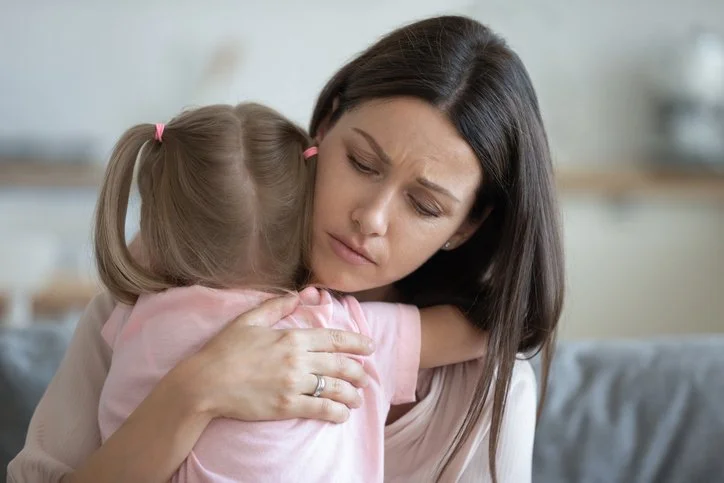
For some children and parents, the drop-off at daycare or school is the worst part of the day. Every. Single. Day.
There are even children that struggle with their parents or caregivers leaving the room or being out of eyesight.
This level of separation anxiety can be mentally and emotionally for both parties.
For some children and parents, the drop-off at daycare or school is the worst part of the day. Every. Single. Day.
There are even children that struggle with their parents or caregivers leaving the room or being out of eyesight.
This level of separation anxiety can be mentally and emotionally for both parties.
If this is you, take a deep breath. I’m here to tell you that there are ways to help your child gain a sense of security and be more comfortable. Let’s walk through the signs, causes, and treatments of separation anxiety disorder together. You can do this!
What Is Separation Anxiety Disorder?
Separation anxiety disorder (SAD) most often presents itself as an intense fear of being physically separated from family or loved ones.(1)
Other symptoms of separation anxiety disorder include:
● Temper tantrums or panic attacks at times of separation(1)
● Refusal to go to school or daycare
● Refusal to sleep alone
● Intense nightmare about separation
● Excessive worry about losing family members
● Frequent headaches, stomachaches, and muscle aches
● Being very clingy when with caregiver
● Refusal to leave home
SAD is diagnosable when a child is experiencing the above symptoms for 4 weeks or longer and the symptoms significantly impact their daily life.(4) Approximately 4 to 5% of children have clinical SAD.(5) Around 65% of children with SAD also suffer from another psychological disorder.(6)
To listen to my Genius Little Minds podcast episode about separation anxiety disorder and other anxiety disorders that children can experience, click here.
What Causes Childhood Separation Anxiety?
You may find yourself asking, ”Does that mean that some separation anxiety is normal?”
Yes! Separation anxiety is often developmentally typical for infants, toddlers, and young children. Infants typically go through a phase between seven and ten months in which separation from the primary caregiver is difficult. During this time, and even into toddlerhood, simply focusing on forming a secure attachment in your child is all the treatment separation anxiety needs. Even up to the age of three, separation anxiety is normal.(2)
Clinical separation anxiety disorder is likely caused by both environmental factors and an imbalance of norepinephrine and serotonin in the brain. The most common time for a child to start exhibiting symptoms of SAD is between the age of seven and ten years old.(1) It can start, though, at any time, even through the teenage years and into adulthood.(2)
It often shows up after a long break from school due to holidays, vacations, or an illness. Significant life events, such as death of a loved one, parents getting divorced, or moving, can also cause SAD.
Separation anxiety disorder has not been found to affect one gender more than the other.(5) A parent having an anxiety disorder does make the child more likely to experience SAD.(1)
How Do You Help a Child With Separation Anxiety?
There are many ways that you can help your child cope with typical childhood separation anxiety.
1. Read Books About Separation Anxiety
Many books have been written on childhood separation anxiety. There is, however, a great need for a therapeutic book that helps the child overcome separation anxiety disorder. Coming out soon is Charlie Cub Is Afraid To Leave His Mother, which uses cognitive behavioral therapy techniques to address this exact issue.
Cognitive Behavioral Therapy (CBT) helps children recognize their thought patterns and identify where and when those patterns help and where they hurt. In other words, how we think and act affects how we feel. My book uses Graded Exposure, which is a stepladder approach, as part of CBT. The child slowly and systematically faces his fears and reduces the symptoms of his anxiety.
In Charlie Cub Is Afraid To Leave His Mother, Charlie Cub wants to go to sleepovers, but he’s afraid to leave his mother. To overcome his fear, he uses a stepladder process to gradually expose himself to being away from his mother. With patience and courage, Charlie manages his anxiety and reaches his goal of going to a pajama party.
Through storytelling, my I’M AFRAID Anxiety Disorder Series teaches children to manage their anxiety symptoms. This book focuses on Separation Anxiety and includes an About Anxiety page along with a Coping Strategies page and a Stepladder page. Parents and mental health professionals will appreciate this series aimed at relieving children’s anxiety symptoms.
Charlie Cub Is Afraid To Leave His Mother can be pre-ordered by clickinghere.
Other good book options for more age-appropriate, non-clinical separation anxiety are:
● The Kissing Hand by Audrey Penn
● Llama Llama Misses Mama by Anna Dewdney
● I Love You All Day Long by Francesca Rusackas
● The Invisible String by Patrice Karst
Social stories
Social stories are stories that show a child exactly what is about to happen. To treat separation anxiety, the social story would show the child getting ready, heading to daycare (or wherever your child goes), getting dropped off, processing their feelings, and then being okay playing. The story could be tweaked and modified to show exactly what your child will be experiencing.
These stories help your child know what’s going to happen, what they may be feeling, and how to handle those emotions.
Many parents and teachers simply draw pictures and bind them together in a book to make a social story catered to one specific child. I know what you’re thinking…I’m no artist! Trust me; your child will love seeing your art as much you love seeing theirs. And the personal, handmade aspect will pique their interest in what the book has to say.
2. Set Expectations, Prepare Them for What Will Happen
Even if you choose not to use social stories or your child is too old for them, just talking about what to expect can serve the same purpose. Try to anticipate what new situations may be stressful to them and have a conversation with them beforehand. Discuss what they may feel in the situation and how they can handle those feelings.
For older children, it can be very helpful to talk about past events. Talk about how every time that you have left them, you have come back to them safe and sound. This often will not work the first time and definitely will not calm a child that is very upset. But reminding them of this often may eventually decrease their anxiety.
3. Get Them Help from a Professional
It can be difficult to determine when your child is just wanting to spend more time with you and when they are truly struggling with separation anxiety. To read more about how to tell when your child is just going through a phase and when they need mental health help, check out my article here.
Knowing that seeking outside help is the next step you need to take can be scary. But your pediatrician can help guide you. Oftentimes your child will be evaluated to rule out any physical problems.
Then your child’s doctor may suggest different treatment options, such as cognitive-behavioral therapy, medication, family therapy, or interventions at school. It is important to get your child the proper treatment as untreated SAD can lead to panic disorder or another anxiety disorders in adulthood.(3)
Separation anxiety can feel like an insurmountable issue when your child is experiencing it. But rest assured! There are paths to getting your child happy and healthy again.
Pre-order Charlie Cub Is Afraid To Leave His Mother HERE. To check out other books in the I’M AFRAID anxiety disorder series, visit: www.DrMadeleineVieira.com/books/imafraid
To stay up-to-date on all my articles on childhood mental health, be sure to subscribe to my newsletter!
References
https://childmind.org/guide/quick-guide-to-separation-anxiety-disorder/
Masi, G., Mucci, M. & Millepiedi, S. Separation Anxiety Disorder in Children and Adolescents. Mol Diag Ther 15, 93–104 (2001). https://doi.org/10.2165/00023210-200115020-00002
Francis, G., Last, C.G. & Strauss, C.C. Expression of separation anxiety disorder: The roles of age and gender. Child Psych Hum Dev 18, 82–89 (1987). https://doi.org/10.1007/BF00709952
Mohammadi MR, Badrfam R, Khaleghi A, Hooshyari Z, Ahmadi N, Zandifar A. Prevalence, Comorbidity and Predictor of Separation Anxiety Disorder in Children and Adolescents. Psychiatr Q. 2020 Dec;91(4):1415-1429. doi: 10.1007/s11126-020-09778-7. PMID: 32418141.

Infant Development: 7 to 9 Month Old Milestones and How to Support Your Child's Development
And just like that, your baby is 7 months old and already more than halfway to his first birthday! Gone are the days where you could introduce him to strangers without much of a fuss—you may find he’s clingier than you’re used to and doesn’t like to be separated from you. 7 months also marks a more mobile and inquisitive time—say goodbye to letting him play quietly in one spot while you go about your day.

And just like that, your baby is 7 months old and already more than halfway to his first birthday! Gone are the days where you could introduce him to strangers without much of a fuss—you may find he’s clingier than you’re used to and doesn’t like to be separated from you. 7 months also marks a more mobile and inquisitive time—say goodbye to letting him play quietly in one spot while you go about your day. Baby proofing the house becomes a must at this stage if you haven’t already. Pro tip: get on your hands and knees to see things from the baby’s vantage point to make your home as safe as possible for your little one.
Infant Development: Your Baby From 7 to 9 Months
Fostering an environment that encourages safe, age-appropriate learning and play is vital for your infant’s development.
The Joys of Exploration (and How to Do It Safely!)
Baby is on the move! Around this age, they might scoot, crawl, or roll to get from point A to point B and it will be fun to witness. Make sure to babyproof sharp corners and cabinets within reach (especially ones with toxic cleaners or other chemicals), secure furniture, cover electrical outlets, and use a baby gate to block off stairs.
At this age, your baby will sit on their own, reach for toys (and other objects they shouldn’t grab, like your dangly earrings or the kitty cat’s tail!) and want to explore the world. All things colorful and textured will capture their attention as their eyesight continues to improve.
Around 8 months old, your baby will start to comprehend object permanence—meaning if you hide a toy under a blanket, he will know to look for it. He may even try to pull the toy out of its hiding place! Another exciting thing to look out for is when baby passes a toy from one hand to the other. What a beautiful display of hand-eye coordination! Make sure to not leave small objects around as baby’s ability to pick them up and put them in his mouth is improving.
Is It Normal for My Baby to Cry Around Strangers?
Your in-laws or beloved babysitter used to come over all the time with no protests from your infant. But now your 7-month-old cries and screams when you try to do the hand off—and you’re starting to wonder if date night will ever be possible again.
Sound familiar?
Around this time, your baby may start to display anxiety or wariness of strangers. As distressing as this is (for both you and baby,) this is actually a normal part of their development!
You may be wondering, but why now?
Because your 7-month-old is now able to recognize faces. And they strongly prefer their parents’ or caregivers’ faces over anyone else’s.
Anxiety around strangers is common and expected in children this age. (It’s common through age 2!) This is not a sign of emotional issues. It’s part of your child’s cognitive development—and a normal part, at that!
Here are some tips for dealing with stranger anxiety:
Allow your baby to meet strangers in a safe and familiar environment, such as your own home. This will help them feel more comfortable and secure.
Hold and comfort your baby when introducing them to someone new.
Act friendly and calm. This sends a message to your baby that the person they’re meeting is safe and trustworthy.
Distance yourself temporarily from a visitor if your baby becomes upset around them. Comfort and soothe your baby and when they’ve calmed down, you can try the introduction again by engaging in an activity together.
If you’re going somewhere unfamiliar where you’ll be around a lot of new people, bring a transitional object such as a favorite toy or blanket to offer extra comfort.
Infant Development: Milestones From 7 to 9 Months
According to the CDC, there are a few milestones to watch out for at this age:
Social/Emotional Checklist:
May display anxiety or fear around strangers and be clingy with adults they know
Has favorite toys
Language/Communication Checklist:
Understands what the word “no” means
Babbles with varying sounds
Points to things
Copies the gestures or sounds others’ make
Movement and Physical Development Checklist:
Stands up by themselves while holding on to something
Pulls themselves up to stand
Sits down by themselves without support
Crawls
Cognitive Checklist:
Able to track an object
After seeing you hide something, looks for it
Plays peek-a-boo
Can transfer an object from one hand to the other
Picks things up between index finger and thumb
What You Can Do to Encourage Healthy Development in Your 7 to 9-Month-Old
Encourage Crawling
Play and movement continues to be vital for your baby’s development. Continue to do supervised tummy time, and position toys out of reach so he’s encouraged to army crawl or creep toward them.
Babyproof Your Home
Children are naturally curious, and as your child becomes more mobile, it’s important to keep him safe. You’ll want to encourage exploration in an environment that is properly babyproofed. He’ll be tempted to explore and get into just about everything, so creating a safe environment free from choking hazards and other dangers is key.
Explore Cause and Effect
Your baby’s confidence will grow as he discovers he has an influence on his environment. Build a short tower of blocks and then push it over. Play with toys together to show your baby that his actions can cause a reaction.
Read Often
Reading aloud for a few minutes every day is an effective way to positively influence your baby’s language development. Use sound effects, make facial expressions, and read from colorful picture books to keep your child engaged.
Keep Talking
Narrate parts of your day to your baby! Say something and then give him time to respond by repeating sounds. Ask him questions. Even though he isn’t using words to respond back to you, the imitation of a back-and-forth conversation is crucial for his language development.
Don’t have a 7-month-old yet? Don’t miss the post on infants from 0 to 6 months!
References
(2021, October). Important Milestones: Your Baby By Nine Months. Centers for Disease Control and Prevention.https://www.cdc.gov/ncbddd/actearly/milestones/milestones-9mo.html
Bielecki, C. (2019, October). Baby Growth and Development: 4-7 Month Milestones. Parents. https://www.parents.com/baby/development/growth/4-7month-milestones/?slide=slide_596033b9-b18b-4905-aa79-c02590b1ab64#slide_596033b9-b18b-4905-aa79-c02590b1ab64
Parents’ Guide to Crawling. Pathways.org. https://pathways.org/watch/parents-guide-to-crawling/
(2020, June). Infant development: Milestones From 7 to 9 Months. Mayo Clinic. https://www.mayoclinic.org/healthy-lifestyle/infant-and-toddler-health/in-depth/infant-development/art-20047086
Bowers, E. (2014, July). 10 Ways to promote baby development. Everyday Health. https://www.everydayhealth.com/hs/your-developing-baby/ways-to-promote-baby-development/

Mental Illness in Children: Is It Just a Phase or Something More?
When you hear the phrase “mental illness” what comes to mind? If you think about managing your own mental health or the psychological issues other adults in your life are navigating, you’re not alone.
Often mental health—and on the flipside, mental illness—are seen as things only adults have to manage. But the truth is, one in six children will experience a mental health disorder in any given year.1
The number of children and teens battling mental health issues without proper treatment is staggering.

When you hear the phrase “mental illness” what comes to mind? If you think about managing your own mental health or the psychological issues other adults in your life are navigating, you’re not alone.
Often mental health—and on the flipside, mental illness—are seen as things only adults have to manage. But the truth is, one in six children will experience a mental health disorder in any given year.(1)
The number of children and teens battling mental health issues without proper treatment is staggering.
The teenage years are hard enough as it is—on both teens and parents. What with the raging hormones, the increased importance of friends over family, and the pressures to perform well in school—it’s easy to chalk up mood swings or changes in behavior to growing up.
Every day, I see families just like you, struggling to understand the challenges their children are going through. You may be wondering whether your child or adolescent is exhibiting signs of a larger issue or is just “being a child” or just “going through a phase.” Educating yourself on the signs and symptoms of childhood mental health concerns is a helpful first step.
How Do I Know if My Child Has a Disorder?
Half of all mental illnesses begin by the time a child turns 14. And 1 in 10 children between the ages of 5 and 16 meets the criteria for mental illness but only 30% receive appropriate early intervention.(2)
I’m not sharing these statistics to scare you.
I firmly believe that with this knowledge, you can better serve your family.
“Mental illness” or “mental health disorder” can sound really scary. But with proper management and treatment, children with these challenges can overcome them or learn to manage them over time.
Many children with mental health diagnoses go on to live happy, healthy lives when given the appropriate treatment, support, and early interventions. (Doesn’t that make you want to run, not walk, to next available therapy appointment?)
If your family is going through a tough time right now, know that you are not alone. It can be hard on parents and children to navigate an undiagnosed mental health disorder. (And parenting is a really tough job to begin with!)
But as a parent, you play a vital role in getting your child the help they need. If your child is displaying difficulties in school, with friends, or at home, there are signs and symptoms of potential mental health concerns to watch out for. Consider keeping a record or journal so you can describe your child’s behaviors to a professional if and when you decide intervention and treatment is necessary.
4 Common Diagnoses Children Receive: ADHD, Anxiety, Depression, and ASD
Childhood ADHD, anxiety, depression, and autism spectrum disorder may present differently than adult diagnoses. It’s important to recognize the signs and understand treatment options to get your child the best care possible.
By being aware of the signs and symptoms, you can be your child’s biggest cheerleader on the road to mental health.
ADHD
Are you tired of repeating the same directions to your child over and over again, only to have them forget what you just said or simply not follow instructions? Is it impossible to get your child out the door on time? And do you get calls from school because they’ve forgotten their homework again?
Often children with ADHD get labeled as naughty or lazy. But the truth is, ADHD is a chronic condition that children need help managing. A mental health diagnosis like ADHD is neither something you (the parent) caused, nor is it your child’s fault.
Attention Deficit Hyperactivity Disorder, or ADHD, is one of the most commonly diagnosed mental health disorders in children. In the UK it’s estimated that 3.6% of boys and around 1% of girls between the ages of 5 and 15 meet the criteria for ADHD,(3) and in the US, 12% of boys and 5.6% of girls between the ages of 2 and 17 have been diagnosed with ADHD.(4)
Children with ADHD may struggle in school and have trouble making friends. ADHD can impact every area of your child’s life—from social situations to academics to home life.
Thankfully, ADHD, like other mental health concerns, can be managed. With the right treatment, interventions, and support at home, your child can manage the symptoms of their ADHD so they don’t impede performance in school or work or their ability to maintain close relationships.
Understanding your child’s difficulties will help grow your bond and cultivate a climate of support and empathy within the family system.
Anxiety
Does your child have frequent nightmares, headaches, or cry easily and often? Are you always taking them to the doctor, trying to figure out why they feel sick to their stomach all the time? Or does your child want to retract into their shell like a turtle every time a stranger talks to them?
These are all signs your child could suffer from anxiety.
(Feeling anxious just reading this? Stop. Take a deep breath in, and exhale slowly. Unlock your jaw and roll your shoulders back. Feel a bit better? With the right tools, you can become a calming guide for your child and tackle the anxiety together.)
Anxiety disorders are a range of mental health conditions causing intense feelings of worry and fear. It's normal for children to feel worried from time to time, but when a child has an anxiety disorder, their worry and fear is pervasive and difficult to manage without proper guidance.
Many children will develop some kind of anxiety. In the UK, anxiety affects anywhere from 5 to 19% of children and adolescents.(12) And in the US, approximately 7% of children between the ages of 3 and 17 have been diagnosed with anxiety.(13)
As a parent, it can be difficult to figure out how serious a problem is, especially because children do get afraid from time to time and often struggle to verbalize how they’re feeling. If the anxiety and worry causes your child significant distress and makes it difficult for them to engage in everyday activities then it’s likely they need treatment.
Depression
Is your child no longer interested in doing the things they love the most? Is Eeyore the character they identify with from Winnie the Pooh?
As hard as it may be to believe, children as young as 3 years old can suffer from depression.(14)
But depression in children looks slightly different than depression in adults, which is why it’s so important to be aware of the differences. Some of the symptoms overlap, such as feeling sad for most days or feeling worthless. But in children, depression can also display as temper tantrums or difficulties in school.
If your child is no longer interested in participating in activities they once enjoyed, like sports or music lessons, you may be thinking, “aren’t they just growing up?” But reduced interest in activities and withdrawal from friends could indicate a larger problem, especially if coupled with other symptoms like changes in sleep patterns.
It’s normal for children to get sad or feel down sometimes. But depression is a serious mental illness that, if not treated, can result in devastating consequences. If symptoms last for two weeks or more, it may be time to seek treatment.
Like other mood disorders and mental health issues, getting your child the support they need will help them feel better faster and reduce the risk of developing depression that lasts into adulthood. If your child repeatedly says or thinks negative things about themselves, or tells you they feel sad, hopeless, or helpless, they might be depressed and professional help should be sought out. By having this information in the back of your mind, you’ll be better equipped to help your child when they are struggling with depression. And there’s nothing more satisfying than getting your child on the road to health and seeing them smile again.
Autism Spectrum Disorder
Have you spent countless hours listening to your child talk obsessively about a single topic, like the migratory birds of North America? Or does your child just know when you’ve changed the brand of peanut butter on them? Maybe you wish your child would look you in the eye with those baby blues you love so much?
Children with autism spectrum disorder may have very focused interests, struggle to interact with others, display repetitive or restrictive behaviors, or have sensory sensitivities.
Often children with ASD have trouble managing their emotions and have a comorbid, coexisting disorder like anxiety. They can also be wildly fun, creative, interesting and joyful. By understanding your child with autism spectrum disorder, you won’t be putting them in a single box. You’ll be advocating for them so they have the full range of experiences other children have.
It is estimated that 1 in 100 children in the UK have autism spectrum disorder (ASD).(15) Like ADHD, autism spectrum disorder is a chronic condition, meaning it lasts throughout a person’s lifetime, but with the right treatment and interventions, it too can be managed.
As a “spectrum” disorder, ASD can be difficult to identify because the type and severity of symptoms varies so widely.
There are so many resources for children with ASD these days. You don’t have to navigate this (or any diagnosis) alone.
What Should I Do if I Suspect My Child Has a Mental Health Disorder?
There’s no shame in thinking your child has an undiagnosed mental health condition requiring treatment. The most helpful thing you can do as a parent is support your child through their difficulties—not shaming or blaming them (or yourself!) and seek professional help from a licensed therapist or mental health counselor.
Is It Time to Seek Out Treatment for My Child?
Many families struggle with childhood mental health issues. You haven’t failed as a parent if your child has anxiety or depression or other difficulties requiring treatment. If your child displays any of the symptoms outlined above or has other symptoms which cause significant distress and disrupt their ability to engage in everyday activities—then it's likely time to seek treatment.
Children don’t grow out of mental health issues. And symptoms can get worse over time if they aren’t treated.With the right treatment and intervention from a professional, however, the issues your child is facing may not become a life-long mental illness.
Coming to terms with the fact that your child could have a mental health disorder can feel daunting. But seeing your child benefit from treatment—managing their mental health concerns, overcoming their fears, regulating their emotions, and interacting differently with the world—will make it all worthwhile.
It can be overwhelming to navigate these issues alone. The good news is, help is available. I’m Dr. Madeleine Vieira, a licensed clinical child psychologist, and I talk about these 4 mental health diagnoses—ADHD, anxiety, depression and ASD—and how they present in children, in more detail, in the first episode of my podcast, Genius Little Minds.
Listen to the podcast here to get more in-depth information on symptoms and treatment options, and subscribe to stay up to date with the latest in children’s mental health.
Make the space to educate yourself on childhood mental health. You and your family will be glad you did!
References
(2021, August). Children and Young People. Mental Health Foundation. https://www.mentalhealth.org.uk/a-to-z/c/children-and-young-people
Mental Health Statistics: Children and Young People. Mental Health Foundation. https://www.mentalhealth.org.uk/statistics/mental-health-statistics-children-and-young-people
Holden, S. E., Jenkins-Jones, S., Poole, C. D., Morgan, C. L., Coghill, D., & Currie, C. J. (2013). The prevalence and incidence, resource use and financial costs of treating people with attention deficit/hyperactivity disorder (ADHD) in the United Kingdom (1998 to 2010). Child and adolescent psychiatry and mental health, 7(1), 34. https://doi.org/10.1186/1753-2000-7-34
(2021, September). Data and Statistics About ADHD. Centers for Disease Control and Prevention. https://www.cdc.gov/ncbddd/adhd/data.html
Rucklidge J. J. (2010). Gender differences in attention-deficit/hyperactivity disorder. The Psychiatric clinics of North America, 33(2), 357–373. https://doi.org/10.1016/j.psc.2010.01.006
Sayal, K., Prasad, V., Daley, D., Ford, T., & Coghill, D. (2018). ADHD in children and young people: prevalence, care pathways, and service provision. The lancet. Psychiatry, 5(2), 175–186. https://doi.org/10.1016/S2215-0366(17)30167-0
Faraone, S. V., Sergeant, J., Gillberg, C., & Biederman, J. (2003). The worldwide prevalence of ADHD: is it an American condition? World psychiatry : official journal of the World Psychiatric Association (WPA), 2(2), 104–113.
(2021, September). Research on ADHD. Centers for Disease Control and Prevention. https://www.cdc.gov/ncbddd/adhd/research.html
(2021, March). Attention Deficit Hyperactivity Disorder: Causes of ADHD. WebMD. https://www.webmd.com/add-adhd/adhd-causes
(2021, December). Attention Deficit Hyperactivity Disorder: ADHD. NHS. https://www.nhs.uk/conditions/attention-deficit-hyperactivity-disorder-adhd/
Oudin, A., Frondelius, K., Haglund, N., Kallen, K., Forsberg, B., Gustafsson, P., & Malmqvist, E. (2019). Prenatal exposure to air pollution as a potential risk factor for autism and ADHD. Environment International, (133),1-7.
(2020, September). Anxiety disorders in children. NHS. https://www.nhsinform.scot/illnesses-and-conditions/mental-health/anxiety-disorders-in-children
(2021, March). Data and Statistics on Children’s Mental Health. Centers for Disease Control and Prevention. https://www.cdc.gov/childrensmentalhealth/data.html
Doheny, K. Depression Affects Kids as Young as 3. Medicine Net. https://www.medicinenet.com/script/main/art.asp?articlekey=116548
(2021, September). Autism Spectrum Disorder. BMA. https://www.bma.org.uk/what-we-do/population-health/improving-the-health-of-specific-groups/autism-spectrum-disorder

The Winter Blues: How Seasonal Affective Disorder Can Affect Children
Winter. The days are shorter. It gets dark before dinner is finished. It’s hard to get outside. There are so many dreary, overcast, no-sunshine-in-sight days.
Winter also contains some of the most fun activities of the year. Building snowmen and drinking hot cocoa to warm up afterwards. Enjoying holiday traditions and seeing your child’s face light up as they open gifts. The list could go on and on.

Winter. The days are shorter. It gets dark before dinner is finished. It’s hard to get outside. There are so many dreary, overcast, no-sunshine-in-sight days.
Winter also contains some of the most fun activities of the year. Building snowmen and drinking hot cocoa to warm up afterwards. Enjoying holiday traditions and seeing your child’s face light up as they open gifts. The list could go on and on.
Many people, though, find the weather and darkness of winter to be a difficult time of year. Even children can struggle with the changing of the seasons. But when sadness in winter becomes severe, the person may be suffering from seasonal affective disorder, or SAD.
What is Seasonal Affective Disorder?
Seasonal affective disorder is characterized by the following symptoms:
● Intense sadness(1)
● Irritability
● Feelings of tiredness
● Decreased performance at work or school
● Lack of interest in previously enjoyed activities
● Change in appetite
● Lower self-esteem(2)
● Feelings of loneliness or disappointment
● Isolating from friends and family
● Suicidal ideation(3)
While SAD has all the same symptoms of major depressive disorder, the symptoms of SAD are only felt during certain months of the year.(3) It is most common for people to experience SAD during the fall and winter months. However, it is possible for people to experience summer-pattern SAD that presents as the same symptoms but in spring and summer.(5)(6)
Many people struggle with the lack of sunlight and the limited amount of time that can be spent outdoors during the winter. But if a person is experiencing many of the symptoms above in an intense way and for longer than two weeks, they may have SAD.
Mild SAD may be cured simply by the arrival of spring. But severe SAD, left untreated, can become so debilitating that the person has trouble functioning.
What Causes Seasonal Affective Disorder?
While we don’t know the exact cause of seasonal affective disorder, it is likely related to the levels of serotonin and melatonin in our brains.(1) The lack of daylight can disrupt the balance of serotonin, which regulates moods, and melatonin, which regulates sleep.(2)
How Does Seasonal Affective Disorder Differ In Adults and Children?
Seasonal affective disorder presents with the same symptoms in children as adults. One place that we may see symptoms in children that we don't see in adults is at school. Children may have difficulty focusing in the classroom or may be acting out more often. It can be difficult to understand why children are acting this way, but it is important to consider a SAD diagnosis if the behaviors begin in the winter months or the parents have expressed other concerns.(4)
Children are at a higher risk of developing seasonal affective disorder if:
● They live at a higher altitude or far from the equator, as those places experience more extreme shifts in weather and the length of daylight.(1)
● Their family has a history of depression or mental illness.(1)
● They are female as women are more likely to be affected than men.(3)
● They have low levels of Vitamin D.(5)
Recognizing the signs of depression in your child is crucial. Every child has bad days. We all know that sometimes it can be as simple as them not getting their favorite color plate at lunch or having to wear their coat to go out in the freezing weather. There can be so many intense emotions in their little bodies.
So it is important to look for patterns in your child’s behavior and changes to those patterns that are unusual.(3)You know your child best. Signs of sadness or any of the other symptoms that last longer than two weeks need to be addressed.
Most times a child will not know why they are feeling this way. They won’t know to reach out for help and may not even know how to put their feelings into words. However, they may comment that they feel like a character in a book or movie. Oftentimes, children will find it easier to draw how they are feeling instead of verbalizing it. Whatever way your child chooses to show you how they feel, be ready to see and listen.
How To Help Your Child
The easiest way to help your child is the same way that you would help them prevent any illness.
Help them practice healthy habits. Try to get outside in the sunshine if at all possible. Even if you can’t get outside, make sure they are getting at least one hour of exercise each day. Maintain a sleep routine that gives them enough hours of sleep every night. Keep them well hydrated and eating a balanced diet.(1)
Talk with your child often about how they are feeling. The more in tune you are with them, the quicker you will identify signs of SAD. Encourage your child to connect with their friends and other family members.
If you think that your child’s case is severe, it is important to consult your pediatrician. Your pediatrician should check to make sure that there is not some other physical reason why your child is tired or having changes in appetite.(2)
If there are no other problems present, they may then suggest other methods of treatment, such as light therapy, antidepressants, cognitive behavioral therapy, or Vitamin D supplements.(3)(6) Light therapy is well studied in adults and has proven to be an effective form of treatment for SAD. While there is not as much research with children, preliminary studies have shown that light therapy can be helpful to children as well.(4) Many factors, such as their age and the length and severity of their symptoms, will be considered as a treatment plan is formulated.
Oftentimes, SAD will get better in the spring as the days get longer. But it may return again in the fall or winter.(1) So, it is important to have professionals in your corner to help you navigate getting your child healthy again and working to keep them healthy.
If you find that your child is prone to sadness in winter, it is best to be proactive each fall. Set up good routines and stick to them, even through the holidays. Keep them involved in activities they enjoy. Discuss with your pediatrician about proactively starting treatments each fall or winter to prevent your child’s SAD from worsening.
SAD is entirely manageable when you find what works for your child and your family. You got this!
For more articles on childhood mental health, be sure to subscribe to my newsletter!
References
https://www.parents.com/health/mental/does-your-child-have-seasonal-affective-disorder/
Rosenthal NE, Carpenter CJ, James SP, Parry BL, Rogers SL, Wehr TA. Seasonal affective disorder in children and adolescents. Am J Psychiatry. 1986 Mar;143(3):356-8. doi: 10.1176/ajp.143.3.356. PMID: 3953872.
https://www.nimh.nih.gov/health/publications/seasonal-affective-disorder

Infant Development: 0 to 6 Month Old Milestones and How to Support Development as a Parent
If you’re a parent or caregiver, you’ve probably heard about childhood developmental milestones from doctors and teachers or other professionals who work with kids. Everyone who spends time with young children on a regular basis is looking for evidence that their development is on track.
Maybe you’ve already spent a lot of time reading about infant and early childhood development. Or maybe the idea of age-appropriate milestones is new to you.

If you’re a parent or caregiver, you’ve probably heard about childhood developmental milestones from doctors and teachers or other professionals who work with kids. Everyone who spends time with young children on a regular basis is looking for evidence that their development is on track.
Maybe you’ve already spent a lot of time reading about infant and early childhood development. Or maybe the idea of age-appropriate milestones is new to you. Keeping track of milestones—when there are so many of them to look out for—can feel overwhelming. But monitoring your child’s development—and engaging with them in ways that contribute to their learning and growth—is so important.
The 4 Important Areas of Early Childhood Development to Look Out For
Children are truly amazing learners. They absorb so much from the interesting world around them. (And they grow up so fast!) You as a parent or caregiver play a vital role in your child’s emotional, language, physical, and cognitive development.
I’m here to demystify the developmental stages babies and young children go through so you know:
What developmental milestones to look for at what age
Specific things you as a parent can do to help your child learn and grow
Developmental milestones refer to the skill sets most children demonstrate competency in within a certain age range. The US Centers for Disease Control and Prevention (CDC) separates milestones into four primary areas (1):
Social/emotional
Language/communication
Movement/physical development
Cognitive (learning, thinking, problem-solving)
All children develop at their own pace. But each age range comes with important milestones to look for. As parents, there are developmentally appropriate things you can do to help your child engage with the world around them. By understanding your infant or toddler’s development, you can provide the type of environment your child needs to grow and thrive. Every parent wants to support their child to the best of their ability. Being equipped with the knowledge of what your child is going through every step of the way as they grow and learn will help you do that.
Infant Development: Your Baby From 0 to 3 Months
Let’s talk about newborns! You’ve just had a baby. They’re—quite literally—a bundle of joy. When your baby is first born, their body will continue to fold slightly. Their fingers and feet naturally curl inward and their arms and legs fold toward their body, mimicking the position they held in the womb (2). Over time their body will begin to unfold and lengthen.
The One Major Thing to Help Your Newborn Develop
(Hint: you’ve probably already heard of it.)
Tummy time—or the time your baby spends on his or her stomach while awake and supervised—is a vital exercise for your newborn to develop motor, visual, and sensory skills as well as strong neck and shoulder muscles. (3) The muscles your newborn develops during tummy time will (eventually) help them sit up, roll over, crawl, and (ultimately) walk! (3) Tummy time also helps prevent positional plagiocephaly—flat spots on the baby’s head—which results from too much time spent on their back. (4)
Infant Development: Milestones From 0 to 3 Months
According to the CDC, there are a few milestones to watch for in your newborn.
Social/Emotional Checklist:
Tries to look at parent
Shows an interest in faces and begins to smile at people
Can briefly calm him or herself (i.e. by sucking on their hand)
Language/Communication Checklist:
Makes gurgling sounds, coos
Turns their head toward a sound or voice
Cries differently to express different needs
Smiles or quiets down in response to a sound or voice
Movement/Physical Development Checklist:
Lifts and holds up their head
Begins to push up when lying on their tummy
Cognitive Checklist:
Pays attention to people’s faces
Begins to recognize people or objects from a distance
Begins to follow moving things with their eyes
Acts bored (cries, fussy) if the activity doesn’t change
What You Can Do to Encourage Healthy Development in Your 0 to 3 Month Old
Take Time For Snuggles
Babies need a lot of physical touch to feel safe and secure. Cuddling and holding your baby not only makes him or her feel loved, but also regulates the baby’s heartbeat and breathing. Skin-to-skin contact is important as it releases oxytocin, relaxing both you and the baby. Develop a strong bond with your newborn and nurture his development by cuddling, playing with, and talking to him.
Talk to Your Baby Often
Whether you’re feeding, changing, bathing, or dressing your baby, talk to him. Even though your newborn can’t talk back, talking to your child is so important. It not only helps him get to know the sound of your voice, which can be soothing, it also helps with language development over time. Reading or singing to him are also great ways to bond with your newborn.
Answer Cries and Soothe Him
Answering your baby when he’s crying isn’t going to spoil him. It’s going to teach him that he can rely on you to get his needs met, and help you develop a strong bond. Attend to your baby when he’s crying and attempt to soothe him so he knows you’re there for him.
Mirror His Smiles by Smiling Back at Him
Mirroring conveys to your baby that he is heard and understood. Babies need psychological mirroring in order to understand that they exist in the world and have valid, real experiences. Mirroring your baby’s behavior is crucial for you and your infant to develop a strong bond.
Infant Development: Your Baby From 4 to 6 Months
And just like that, you no longer have a newborn. You now have an infant! In this stage, your baby will begin to understand the concept of action and reaction. When your baby does something like smile at you—and you smile back—he begins to understand that he can influence his environment. Because of this, a 4 to 6 month old will begin to model the facial expressions or behavior of the people around him.
Infant Development: Milestones From 4 to 6 Months
Around 5 months, your baby will probably have developed color vision. (5) Prior to this, babies only see in black and white! It’s easier for your infant to see bright colors, so it’s useful to introduce colorful toys as opposed to muted shades.
Around 6 months, your baby will probably sit on his own. And when you hold him upright, he’ll be able to start putting weight on both of his legs (an important pre-walking milestone.) And around 6 or 7 months, your baby will probably be able to roll both ways instead of favoring one direction. (5)
According to the CDC, here are some other milestones to watch for in your infant.
Social/Emotional Checklist:
Smiles at people
Begins to recognize familiar faces and knows if someone is a stranger
Likes to play with people, especially parents, and may cry when playing stops
Copies and responds to other people’s emotions by smiling or frowning
Language/Communication Checklist:
Babbles
Starts stringing vowels together while babbling, may begin to make consonant sounds
Copies sounds and enjoys taking turns “talking” with parent
Shows displeasure or joy with sounds
Responds to own name
Movement and Physical Development Checklist:
Lifts and holds head steady without support
Supports weight on legs to stand by pushing down when feet are on a hard surface
Rolls from tummy to back and back to tummy
Pushes up to elbows from prone position
Can bring hands to mouth and hold and shake a toy
Begins to sit up without support (pillows may be useful)
Cognitive Checklist:
Communicates happiness or sadness, responds to affection
Shows curiosity, looks around, tries to grasp out-of-reach toys with one hand
Passes things from hand to mouth or from hand to hand
Watches faces, recognizes people or objects from a distance
Moves eyes side to side to follow moving objects
What You Can Do to Encourage Healthy Development in Your 4 to 6 Month Old
Keep Talking to Your Baby and Repeat Words
Talking to your infant is important for language and communication development. Read colorful picture books, point to and name objects, and say the names of family members, friends, or pets to encourage growth and curiosity in this area. (6)
Around this time, your baby may start to recognize her own name as well. Keep repeating words to and speaking to your child—she’ll likely respond with babbling, and eventually will string a few vowels together. (6)
Make Time to Play Together
Try playing peek-a-boo! Though your baby won’t yet understand the concept of object permanence—the ability for something to exist even if she can’t see it—peek-a-boo can assist with your baby’s visual tracking and communication skills development. (7)
Your baby may also like looking at herself in the mirror! She won’t yet know it’s her own reflection, but she’ll likely be curious and enjoy having a baby-safe mirror around to interact with.
Continue playing and cuddling together and introducing her to trusted friends and family members.
Encourage Different Types of Movement
While doing supervised tummy time, put a colorful toy just out of your baby’s grasp to encourage her to turn her head and reach for it. Change positions often, helping your baby move from tummy time to standing to sitting up (pillows can be useful to offer back support).
Support Your Child Through All Stages of Development
You are your child’s first and greatest teacher. Contact with you—whether that’s snuggling, singing, speaking, reading, or some combination of all of those—is what promotes and supports your baby’s development. By responding reliably to your child’s cries, and other signs of distress, your baby learns that he or she can depend on you. Consistent (not perfect!) caregiving and routines help children develop into secure, independent people.
To read more articles like this with helpful parenting tips, subscribe to my newsletter!
References
(2021, August). Important Milestones: Your Baby By Two Months. Centers for Disease Control and Prevention. https://www.cdc.gov/ncbddd/actearly/milestones/milestones-2mo.html
(2021, December). How Your Newborn Behaves. HealthyChildren.org. https://www.healthychildren.org/English/ages-stages/baby/Pages/How-Your-Newborn-Behaves.aspx
Gavin, M. (2019, October). Tummy Time. Kids Health. https://kidshealth.org/en/parents/tummy-time.html
Hoecker, J. (2020, August). What’s the importance of tummy time for a baby? Mayo Clinic. https://www.mayoclinic.org/healthy-lifestyle/infant-and-toddler-health/expert-answers/tummy-time/faq-20057755
Bielecki, C. (2019, October). Baby Growth and Development: 4-7 Month Milestones. Parents. https://www.parents.com/baby/development/growth/4-7month-milestones/?slide=slide_596033b9-b18b-4905-aa79-c02590b1ab64#slide_596033b9-b18b-4905-aa79-c02590b1ab64
(2021, August). Important Milestones: Your Baby By Six Months. Centers for Disease Control and Prevention. https://www.cdc.gov/ncbddd/actearly/milestones/milestones-6mo.html
4-6 Month Milestones. Pathways.org. https://pathways.org/growth-development/4-6-months/overview/

Children’s Mental Health Week Empowers Growth and Reflection On Your Child’s Mental Health Journey
Mental health can often feel like a topic that is hard to tackle. And it can feel especially difficult to discuss with children.
It’s hard to know what terms to use, how to make the conversation developmentally appropriate, and how to not overwhelm them with information.
But we know that it is so important to have conversations on mental health. We know that approximately one in six children between the ages of two and eight have a mental, behavioral, or developmental disorder (1).

Mental health can often feel like a topic that is hard to tackle. And it can feel especially difficult to discuss with children.
It’s hard to know what terms to use, how to make the conversation developmentally appropriate, and how to not overwhelm them with information.
But we know that it is so important to have conversations on mental health. We know that approximately one in six children between the ages of two and eight have a mental, behavioral, or developmental disorder (1).
But you don’t have to be an expert to help your kids. There are many practical ways to discuss mental health and provide the guidance that your kids need.
Growing Together
The theme that was selected this year for Children’s Mental Health Week is ‘Growing Together.’
This theme is reflective of the idea that mental health is a journey. We can go through periods of quick, intense growth, but then at other times, we can feel stuck and stagnant. There are highs and lows in the journey. There will be triumphs and setbacks.
In those hard times, we need to lean on each other to continue to grow and stay healthy.
Children and adults alike should always be working on bettering their mental health. Events like Children’s Mental Health Week remind us of that.
3 Ways To Start A Conversation About Mental Health
Especially with young children, it can be intimidating to know how to broach the topic of mental health. It can be more productive to simply talk about ‘feelings.’
Helping children identify and name their feelings is a crucial part of emotional health.
There are a variety of ways you can talk about feelings in a way that seems more concrete.
Reading Books On Feelings and Mental Health
There are so many great books out there that help explain difficult feelings and situations. Some that I would recommend include:
● The Very Cranky Bear by Nick Bland
● The Way I Feel by Janan Cain
● Can I Catch It Like A Cold? by The Center For Addiction and Mental Health
● Listening To My Body by Gabi Garcia
For children with anxiety, my books Sophie Swan Is Afraid Of Water!, Charlie Cub Is Afraid To Leave His Mother!, and Priscilla Puppy Is Afraid Of Everything! will be available soon. You can read more about them here.
Playing Games That Teach About Feelings
Games could include matching tiles that show different expressions or identifying feelings on flash cards.
Talk of feelings could also be involved in any game like Go Fish or UNO. You can talk about being excited when you draw the card you need or being frustrated when you lose. Talking in the moment about how you and your child are feeling will help them begin to name their emotions.
Make Art About How They Are Feeling
Providing a safe space for children to make art can let them express feelings that they may not be able to put into words.
Even if children do not yet have the fine motor skills to draw faces or people, the colors and way in which they create art may help you understand what they are feeling. Do they choose happy colors or sad colors? Do they show joy or frustration when creating? It’s easy to see what is most pressing on their mind when you see what they choose to paint or color.
Key Tips to Remember
You don’t have to have professional training to help your children with their mental health, but there are a few key things to keep in mind.
Listen Intently
Let them know that their feelings are valid. Give them plenty of time to formulate their thoughts and put their feelings into words. If they need a break before returning to the conversation, give them that space.
Let Them Ask Questions
How specific their questions are depends largely on how old they are. But it is important to be as honest as is developmentally appropriate. If they are old enough to formulate the question, they are often old enough to hear the answer. Be a source of quality, unbiased information.
Talk About Mental Health Often
Having conservations often about mental health will keep the line of communication open between you and your child.
Talk about mental health at the dinner table and in the car on the way to sports practice. Make the conversation commonplace, and your children will be more likely to come to you for help when they need it.
Brainstorm Ideas For Self-care
Self-care looks different for everyone, your child included. Self-care can involve any activity that makes them happy and helps them relax. Your child may know exactly what they like to do, or they may need your help to think of ideas. Additionally, they may need your push to do those self-care activities when they’re feeling down.
Celebrate Children’s Mental Health Week With Others
All of us could use more time to reflect and work on our mental health. Children’s Mental Health Week provides just that opportunity.
It also opens the door to having conversations with fellow teachers or parents about how to tackle mental health challenges with kids. It can show you who you can turn to for help and provide invaluable support to lean on. You may find yourself needing a sounding board after having these sometimes difficult conversations.
This journey is not a solo one. It is much better to do it together.
Parents and caregivers are such an important part of a child’s mental health. Your involvement can make this week life-changing for your child.
Continuing The Event All Year Long
Children’s Mental Health Week should not be the one time a year that schools, educators, and parents focus on their children’s mental health.
It is so important to be well-informed and constantly on the lookout for mental health struggles in our kids.
Working on our mental health together is not always easy, but it is a rewarding journey. It gives us the opportunity to grow closer to our children as we teach them about feelings, emotions, and mental health.
These conversations and activities will build an unbreakable bond between you and your children. And that is truly worth all the work that this journey requires.
To get more tools and resources on children’s mental health in your inbox, be sure to sign up for my newsletter.
References

Childhood Anxiety vs. Adult Anxiety: How Anxiety in Children Looks Different
Anxiety disorders are some of the most common mental health conditions today.
7.1% of children aged 3-17 years have an anxiety diagnosis.(1) And it's estimated that 30% of children and adolescents will have an anxiety disorder at some point in their lives.(2)
Anxiety disorders can develop at any age, though we know that half of mental health disorders begin in childhood. While both children and adults can struggle with an anxiety disorder, there are some key differences in how these disorders present themselves.

Anxiety disorders are some of the most common mental health conditions today.
7.1% of children aged 3-17 years have an anxiety diagnosis.(1) And it's estimated that 30% of children and adolescents will have an anxiety disorder at some point in their lives.(2)
Anxiety disorders can develop at any age, though we know that half of mental health disorders begin in childhood. While both children and adults can struggle with an anxiety disorder, there are some key differences in how these disorders present themselves.
Read on for the distinctions.
What Are The Similarities Between Anxiety Disorders in Children and Adults?
First, let’s look at the similarities between childhood and adult anxiety.
Both children and adults with an anxiety disorder often experience: (3)
· Excessive worrying
· Feeling restless, irritable, or uneasy
· Physical symptoms like a racing heart, headaches, or stomach aches
· Trouble sleeping
· Difficulty focusing
Each individual will have different symptoms, and some people may experience only a few of these symptoms while others may experience many. Anxiety symptoms also differ across the various types of anxiety disorders.
What Are The Different Types of Anxiety Disorders?
Anxiety disorders are generally characterized by excessive fear or worry. Here are some of the most common disorders: (4)
· Generalized Anxiety Disorder
· Phobias
· Panic Disorder
· Social Anxiety Disorder
· Separation Anxiety Disorder
· Obsessive-Compulsive Disorder
· Post-Traumatic Stress Disorder
Adults and children can both develop these types of anxiety disorders. So how does anxiety manifest itself in children?
What Does Childhood Anxiety Look Like?
There are a few key distinctions between adults and children when it comes to anxiety disorders.
Childhood anxiety vs. adult anxiety involves differences in:
· How children process their anxiety
· Diagnostic criteria
· The symptoms children exhibit
· The prevalence of certain disorders at specific ages
What Are The Developmental Differences?
Perhaps the biggest difference between adults and children is that children have not finished developing. Unlike adult brains, children's brains are still growing and thus, children are still learning how to process the world around them.
Because children's cognitive functioning has not completely developed, children may not be able to identify or understand the source of their anxiety. They just know that they feel scared or uncomfortable. They can also have a difficult time communicating how they feel to others.
How Does Diagnosis of Anxiety Differ in Children?
The DSM-5 includes diagnostic criteria for the different anxiety disorders. Children must meet different diagnostic criteria than adults to be diagnosed with an anxiety disorder.
For example, to be diagnosed with generalized anxiety disorder, children only need to meet one of the six symptoms listed below, whereas adults need three of the six: (5)
· Restlessness
· Easily fatigued
· Difficulty concentrating
· Irritability
· Muscle aches
· Trouble sleeping
What Are The Signs of Anxiety in Children?
Some signs of an anxiety disorder in children include: (6)
· Frequent crying
· Emotional outbursts and tantrums
· Having difficulty concentrating in school
· Nightmares
Some of these symptoms may also be present in adults, but are more often seen among children. Because children have a harder time communicating and managing their emotions, they can become overwhelmed, angry, and emotionally dysregulated more easily than adults.
You know how children can get when you tell them, "no?" It's like someone swapped your sweet, well-behaved child for a pint-sized crocodile.
When it comes to anxiety, the same thing can happen. One second, they're fine, the next they're melting down because they can't find their favorite toy.
They may lack the skills to identify how they feel, the words to express their anxiety, and the coping strategies to deal with these uncomfortable feelings. Thus, they may act out in anger or defiance. A child who seems to be exhibiting disruptive behavior in school may actually be struggling with an undiagnosed anxiety disorder.
A child with obsessive-compulsive disorder, who has to complete certain rituals to alleviate their intense anxiety, may have their behavior misconstrued as being disobedient or oppositional.
Anxiety in children can manifest in a multitude of ways, which is why an evaluation by a mental health professional is the best way to determine an accurate diagnosis and appropriate treatment.
Are There Differences Among Disorders?
Some anxiety disorders are also more common among children than adults.
For instance, while some adults may be diagnosed with separation anxiety disorder, it is more often seen in young children. Separation anxiety is actually a normal part of development until about the age of three. (7) After three years old, if a child continues to struggle with separating from caregivers, they may have separation anxiety disorder.
A child with separation anxiety can have a lot of trouble being away from their parents, even at school. They may cry and cling to their parents when it's time to go, have nightmares about being separated from them, or repeatedly ask if they are going to be okay.
What Does Adult Anxiety Look Like?
Unlike children, adults are more likely to be able to identify the source of their anxiety. Adults are generally aware of their anxious thoughts and feelings and can put them into words.
Additionally, because adult brains have fully developed, adults are better able to recognize cognitive distortions and regulate their emotions.
Well, at least most of the time. Adults can get emotionally dysregulated too—otherwise road rage wouldn't exist.
But in general, adults are better at understanding and managing their emotions.
Summarizing Key Differences Between Anxiety in Adults and Anxiety in Children
While anxiety often looks similar across adults and children, it’s important to know when it can be different.
The major differences in anxiety disorders between children and adults are:
· Children are still learning how to process the world around them, while adults have a more developed cognitive functioning
· Children may not be able to identify the source of their anxiety, while adults are generally more aware of their anxious thoughts and feelings
· Children's symptoms may include behavior that doesn’t immediately look like anxiety, such as emotional outbursts, anger, and tantrums
· The DSM has different criteria for diagnosing anxiety disorders in children and adults.
· Some disorders are more prevalent at certain developmental stages
What Should You Do When You Think Your Child Needs Anxiety Treatment?
If you think your child is struggling with anxiety, seeking professional help is recommended. As a chronic condition, anxiety is not likely to go away on its own.
But support is available. If you’re not sure where to start, your pediatrician can provide a referral to a therapist or psychologist who specializes in anxiety disorders.
The type of treatment depends on the specific anxiety disorder, but the first line of treatment is often cognitive-behavioral therapy (CBT). CBT helps children learn how to identify and manage their anxious thoughts and feelings. In structured sessions, children are given the tools to recognize their cognitive distortions and learn how to respond to them in a healthy way.
How I Help Children with Anxiety
As a clinical child psychologist who is an anxiety disorder specialist, I've worked with children with anxiety for years. I understand how anxious children think. And I encourage parents to seek expert guidance from a child psychologist first, before turning to medication for anxiety treatment.
My goal is to help children understand their thoughts and feelings and develop healthy coping skills that will serve them for a lifetime.
Are you looking for more information on how to support your child with anxiety? Be sure to sign up for my newsletter to get regular tips and resources, directly to your inbox.
References

5 Tips for Meeting the Emotional Needs of a Child and Helping Them Thrive
Are you a parent and sometimes unsure how to meet the emotional needs of your child?
You’re not alone.
It’s often easier to provide our little ones with clothes, food, education and a place to rest their heads than to tend to their feelings.
Because let’s be honest, buying your child ice cream is way more straightforward.
So, here are 5 tips to help you meet the emotional needs of children in a way that supports their growth…

Are you a parent and sometimes unsure how to meet the emotional needs of your child?
You’re not alone.
It’s often easier to provide our little ones with clothes, food, education and a place to rest their heads than to tend to their feelings.
Because let’s be honest, buying your child ice cream is way more straightforward.
So, here are 5 tips to help you meet the emotional needs of children in a way that supports their growth.
1. Less Fixing, More Listening
As parents we want our children to be well and safe. We are their protectors and caregivers and as such like to swoop in and save the day.
And by all means, why not? It feels satisfying to solve a problem, give advice, or take some other form of action. It makes us feel empowered and somewhat in control of life’s messiness.
No matter how good our intentions are though, when we’re stuck in this ‘fixing’ mode we can overlook our child’s need to be seen and heard.
Let’s say your child is upset because their friends didn’t want to play with them.
There are all sorts of actions you could take to solve this problem. You could call the friend’s parents and talk to them. You could take your child to the zoo to help them take their mind off their disappointment.
All these action steps are fine. After you validate your child’s experience.
What does that mean exactly?
It means listening without judgement. Saying things like "I understand why you feel this way, I would, too” instead of finding a solution to the problem right away.
By acknowledging your child’s feelings, you help them feel connected and supported despite their discomfort. This encourages the development of self-compassion and self-regulation.
I know, this might feel uncomfortable at first. Especially when we are so used to making every bad feeling and thing go away as quickly as possible.
But helping your child to sit with their emotions, feel them, and work through them, can have huge benefits.
Because once we have tended to our feelings and accepted them, we are free to move past them.
2. Set Loving Limits
It’s a misconception that the more we give in to what our children want, the happier they are.
Of course, we want to provide them with the freedom to express themselves and grow into who they want to become.
Setting boundaries doesn’t get in the way of that. Quite the contrary.
Among many things, boundaries help your child learn self-discipline and emotional regulation. They also let them know that you care.
Setting limits and following through with consequences also teaches your child to trust you and what you're saying.
I know, it’s easy to get caught up in guilt when we are saying “no” repeatedly. After all, we’re not talking about a one-off, am I right?
But when you do it in a way that is clear and loving, life becomes a lot easier. Especially when you communicate these boundaries early on and don’t wait till smoke is already coming out of your ears.
Let’s say your child is emotional and starts hitting you or someone else and you would like them to stop.
Start off by mirroring and validating your child’s feelings. You could say, for example, “I see that you’re angry and that’s okay.”
Next set the boundary you want to teach your child: “But we do not hit people even when we’re angry.”
After that, it’s important to give your child another option on what to do instead when they feel emotional. In that way, you teach them not to suppress their emotions but to express them in a healthy way. You could suggest, for example: “Would you like to punch a pillow or ask for a hug instead?”
You might be surprised how quickly their anger subsides once they feel understood.
3. Praise in the Correct Way
One emotional need of children is to be appreciated. They love to hear how great they are and how proud we are of them.
(I mean, don’t we all?)
But the words we choose have a greater impact on our children’s future performance than we think.
Many people like to praise their children for their intelligence or talent. This seems sensible at first glance. But doing so may encourage the child to cultivate a fixed mindset as opposed to a growth mindset in the long run.
What’s that, you’re asking?
Well, if your child has a fixed mindset, they believe that intelligence and talent are innate traits that they have no control over. This makes them less willing to try new things because they’re afraid to fail and look stupid. If they’re not great at something from the get-go, they get frustrated and give up.
But when equipped with a growth mindset, your child knows they can do anything if they work hard enough. This attitude helps them persevere and thrive during challenges. They know that failure is a necessary part of the process and that they can still succeed in the end.
Can you see why we need this way of thinking both inside and outside the classroom?
The great news is that there’s a lot you can do as a parent to encourage a growth mindset in your child.
First of all, start believing in them and their potential. Next, don't compliment them on outcomes or grades but on the effort and work they put in instead. It will motivate them to work harder in the future and to enjoy learning even in the face of difficulties.
4. Don’t Do Things for Your Child They Can Do Themselves
Even though your child is still dependent on your support in many ways, they also have an emotional need for autonomy and independence.
And the older they get, the greater this need.
That’s why it’s important to encourage your child to try out new activities and tasks that they realistically can do on their own.
Yes, you may have gotten used to picking up after your child when they were little. But as they mature it’s important to provide them with chores and opportunities to develop responsibility and new skills.
It doesn’t have to be something exceptional. You could include them in activities you would usually do by yourself like cooking, for example.
The main thing is that they experience themselves as capable and useful in everyday life situations. This builds confidence and self-esteem.
5. Create a Safe Environment
Another emotional need of a child is to feel safe to express themselves the way they are.
When we think of safety we quickly jump to the image of a secure place like a home where we are protected from the world’s dangers.
But emotional safety isn’t about a physical place. It’s about the freedom to show up as we are without the need to hide any part of ourselves.
To be us, unapologetically, and to be loved in all our forms.
To know that mistakes are not only tolerated, but welcomed.
By providing an emotionally safe space and meeting your child with curiosity rather than judgment, you allow them to grow, mature and thrive.
Emotional Needs of Children Deserve Your Attention
There you have it: a few simple ways to help you support your child’s emotional needs and development.
You don’t have to be super-mom or super-dad to try these out. You only have to be willing to start somewhere.
Give it a go and see how your child reacts when you become a little more curious and less reactive.
Encourage them to share their feelings and teach them how to move through them in a mature way.
Set boundaries they will benefit from and communicate them in a calm and clear way.
Acknowledge their effort and show them that mistakes can be a stepping stone to growth and success. You can also use the powerful little word “yet”. So, when your child may be upset that something didn’t work out, you say: “You don’t know how to do it, yet!”
Also, avoid doing every little thing for your child and encourage their independence.
And finally, open up the space for them to show up in all their forms and imperfections.
Your child will thank you for it later, I’m sure.
References

How to Best Handle Toddler Tantrums and Help Your Child Regulate Their Emotions
What Is a Temper Tantrum?
You’re a parent—you’ve seen it all. The arched back, the flailing fits, clenched fists, screaming, crying—toddler temper tantrums can be brutal, even though they are extremely common in kids age 1-3. They can also be embarrassing for you as a parent.
But temper tantrums are actually an opportunity for you to understand your child better and help them learn emotional regulation…

What Is a Temper Tantrum?
You’re a parent—you’ve seen it all. The arched back, the flailing fits, clenched fists, screaming, crying—toddler temper tantrums can be brutal, even though they are extremely common in kids age 1-3. They can also be embarrassing for you as a parent.
But temper tantrums are actually an opportunity for you to understand your child better and help them learn emotional regulation.
Why Do Temper Tantrums Occur?
Tantrums are (surprisingly!) a normal part of your child’s development.
Toddlers’ social and emotional skills are still developing. Their brains are immature and therefore don't yet have the ability to emotionally regulate and self-soothe. To do so, they need help from a parent/caregiver. So they resort to getting their needs met in the only way they know how—by screaming or crying.
Big emotions can be tough for adults to regulate—imagine how they feel to your young child!
The following can contribute to temper tantrums:
Overstimulation, hunger, tiredness, stress
Frustrating situations
Big emotions like shame, sadness, fear, or worry
Temperament
Toddlers (terrible twos) tend to express themselves in tantrums because their language skills are still developing.
Your two-year-old can’t clearly express what they need, want, or feel yet, and this can be incredibly frustrating for all parties involved. Emotional regulation and learning to cope with frustrating situations are skills that children develop over time. And you as a parent can help them work on these skills!
The good news? Tantrum frequency tends to decrease as your child’s ability to use language improves. Emotional identification and regulation are key in preventing and ending tantrums.
Here Are 7 Things You Can Do as a Parent to Help Prevent Tantrums:
1. Create a consistent schedule and routine.
Children thrive off of consistency. When your child knows what to expect from their day, they are much more likely to remain calm. Try giving your toddler a heads up before daily transitions, like, “In ten minutes it’s going to be time to put your toys away and get ready for bath time.”
2. Tune in to your child’s emotions and then help name those emotions.
Try phrases like, “You’re feeling disappointed right now because playtime is over, and that’s OK. But we still have to clean up.” Children, just like adults, long to feel seen, heard, and understood. When they sense that you understand what they are feeling, they are less likely to have a meltdown.
3. Identify tantrum triggers and establish boundaries.
Perhaps your toddler has a tantrum when you pay attention to your newborn. Try saying, “I need time with Ashley right now, and that makes you feel sad and worried. Can we read together after I’ve put her down for a nap?”
You aren’t rewarding the tantrum—your newborn still needs to be cared for! But you are letting your toddler know it’s OK to feel their feelings, and you are still going to do what you need to do. “Pick out the book you’d like to read together while I try to get Ashley to nap.”
4. Discuss emotions throughout the day.
Don’t wait until your child is upset to talk about emotions. Read books that explain and process feelings and ask questions that facilitate discussion. Try asking things like, “Why do you think he looks so worried? Is it because he is afraid of that dog getting so close to him?”
5. Plan ahead.
If you know tantrums are more likely to occur when your child is hungry, tired, stressed or overstimulated, do your best to plan for those types of situations.
Pack extra snacks, create a nap time routine and speak to your child about a stressful or tiring situation ahead of time. “Going to grandma’s house is really fun, but can also make you feel really tired. If you need quiet time while we’re there, let me know and we can sit quietly together. You can also take a nap in the car on the way home.”
6. Provide positive attention.
Notice when your child is being helpful, caring, or putting effort into learning something. Naming positive emotions and experiences is just as important as naming more difficult ones.
7. Give your child the ability to make small choices throughout the day.
Toddlers long to have agency, and not having it can be frustrating. Help your child foster healthy self-esteem and independence by giving them age-appropriate choices. “Would you like to wear your green or white shoes today?”
You won’t be able to prevent every tantrum, but creating a consistent routine, tuning in to your child’s emotions, identifying common tantrum triggers, and discussing emotions can help mitigate tantrum-causing stress.
And by planning ahead and providing your child with positive attention and small choices throughout the day, you’re providing them the space they need to develop healthy self-esteem, self-trust, and independence.
A Tantrum Is in Full Swing. Now What?
Tantrums happen. It’s not the end of the world, even though it might feel like it to both you and your child.
Depending on why your child is upset, you may need to alter your approach to handling the outburst. If your toddler might hurt himself or others during a tantrum, take him somewhere quiet to calm down. If he’s testing boundaries in a way that is unsafe (trying to turn on the stove, for example,) explain the dangers and remove him from the situation.
But if your toddler is simply overwhelmed, tired, or feeling big feelings they don’t know how to explain, try the following:
Help your toddler calm down by modeling appropriate behavior. Stay calm yourself (even though it might be really hard!)
Acknowledge their big feelings and again, help name those feelings. “Your little brother took your toy without asking. That makes you feel angry and upset.”
Offer to take some deep breaths together. “Let’s take some deep breaths together so we can feel calm. Then we choose what to do next.”
Be there for your toddler. At the end of the day, your job as a parent is to keep your children safe and create a space for them to express themselves. Over time, they will learn to do so in more effective, healthy ways.
Try not to judge yourself! Remember, tantrums are developmentally appropriate for toddlers. You’re not a bad parent if your kid has a tantrum. And they’re not a bad kid if they have one, either!
When Is Professional Help Advised?
Tantrums should become less frequent as your child approaches age 4 and has more self-control. But if your child has a mental health disorder, they may have more frequent, severe tantrums and professional intervention may be helpful.
For Even More Parenting Tips
Subscribe to my monthly newsletter to stay up to date with the latest news in children’s mental health.
To help other parents, make sure to share this blog with friends and family members!
References
O’Donnell, L. (2018, June). Temper Tantrums. KidsHealth Blog. https://kidshealth.org/en/parents/tantrums.html
Talking With Preschoolers About Emotions. Penn State Extension Blog. https://extension.psu.edu/programs/betterkidcare/early-care/tip-pages/all/talking-with-preschoolers-about-emotions
(2020, November). Temper tantrums in toddlers: How to keep the peace. Mayo Clinic Blog.
https://www.mayoclinic.org/healthy-lifestyle/infant-and-toddler-health/in-depth/tantrum/art-20047845
Tantrums: Why They Happen and How to Respond. The Australian Parenting Website Blog.
https://raisingchildren.net.au/toddlers/behaviour/crying-tantrums/tantrums

Infant Attachment: Understanding Your Baby’s Needs, Emotions, and Behavior
“He’s a mama’s boy.”
“She just loves her Nana.”
“She is attached to her daddy’s side as soon as he’s home.”
I’m sure you’ve heard parents say each of these phrases. Some just think we’re talking about a baby’s favorite person. But in psychology, those statements are talking about attachment. Attachment is the bond and relationship between infants and their caregivers. Positive attachment is absolutely essential to healthy development in infants and children.

“He’s a mama’s boy.”
“She just loves her Nana.”
“She is attached to her daddy’s side as soon as he’s home.”
I’m sure you’ve heard parents say each of these phrases. Some just think we’re talking about a baby’s favorite person. But in psychology, those statements are talking about attachment.
Attachment is the bond and relationship between infants and their caregivers. Positive attachment is absolutely essential to healthy development in infants and children.
But what exactly are attachment styles and how can you foster healthy attachment in your baby? Read on to find out!
Attachment Theory
Modern ideas on attachment have been shaped by many psychologists. But most of today’s ideas on attachment were developed by John Bowlby in the 1980s and 1990s (3)(4). Bowlby challenged the popular thoughts of his day that attachment was only related to feeding. Whoever fed the baby could soothe the baby. Bowlby just didn’t think that was true.
So, he dove deeper into what builds attachment. He found that meeting all of an infant’s needs is what grew attachment. This means their need for sleep, comfort, stimulation, and feeding.
Stages of Infant Attachment
Bowlby’s theory on attachment outlines four main stages that infants should progress through (5).
From birth to six weeks, infants show little preference for a specific caregiver.
From six weeks to seven months, infants should show a preference for primary and secondary caregivers. This can be mom, dad, grandma, babysitters, or daycare providers. Anyone that regularly cares for the baby can be a primary or secondary caregiver.
Around 7 months, most babies go through separation anxiety. They will often cry and be difficult to soothe if they are separated from their primary caregiver. An infant’s primary caregiver is most often the mother, but it can be whoever takes care of the baby most often.
Most babies grow out of separation anxiety on their own. From 10 months on, infants and toddlers grow their relationships and attachments to a variety of caregivers.
Learning about what stage your child is in is helpful in being able to recognize why they behave the way that they do. It can also be beneficial to understand attachment styles to further grasp how infant attachment affects behavior.
Attachment Styles
Bowlby’s work was expanded on by Mary Ainsworth, Main, and Solomon to outline four attachment styles, or ways that an infant can be positively or negatively attached to their caregivers (1)(8).
Ambivalent Attachment
Avoidant Attachment
Disorganized Attachment
Secure Attachment
A baby’s only way to communicate is through crying. How a caregiver responds to their cry is what determines what attachment style a baby has. Does a caregiver consistently come to meet their needs in a loving, compassionate way?
As their names would suggest, ambivalent, avoidant, and disorganized attachment styles are the types you want to avoid. Infants with ambivalent attachmentare inconsolable when separated from their primary caregiver but then show anger when reunited.
Avoidant attachment is shown by infants having no preference for any caregivers. They have no response to being separated from or reunited with their caregiver.
Infants with disorganized attachment show a mix of both avoidant and ambivalent attachment.
These attachment styles are often developed when a child is neglected or abused. A lack of response to their needs or even punishment for relying on a caregiver can result in an ambivalent or avoidant attachment. An association between care and pain can be a dangerous one for children’s mental health. Children with a revolving door of caregivers often develop a disorganized attachment style.
When a baby is securely attached, they look to their primary caregiver and know that they will be safe and taken care of. Time after time of receiving quick, loving care reinforces their sense of safety. They develop trust in their caregiver. And this trust gives them the confidence to explore the world around them.
Securely attached babies may cry when separated from their primary caregiver but are able to adjust relatively quickly to their situation. When reunited with their primary caregiver, they show joy and excitement.
Why Is a Secure Attachment so Important?
Secure attachment has been linked in study after study to positive outcomes throughout childhood and later in life (2)(5)(7). These positive outcomes include:
● Increased grey matter in the brain (7)
● Higher quality social and romantic relationships (9)
● Better performance in school
● Stronger self-esteem and self-reliance (5)
● Lower rates of depression and anxiety
Infant attachment also has a ripple effect as the child grows, becomes an adult, and has their own child. Adults that were securely attached as infants are better equipped to respond well to their babies, thus building a secure attachment in their babies.
It’s easy to see how attachment styles can be generational, whether good or bad.
Unfortunately, there’s an array of negative outcomes that are seen when infants have no single caregiver to become attached to, such as in an adoption scenario, or when they have an ambivalent, avoidant, or disorganized attachment style. So much of a person’s identity is shaped by the relationships they experience in those first years of life.
Oppositional defiant disorder (ODD), conduct disorder (CD), or post-traumatic stress disorder (PTSD) are often seen in children that were negatively attached as an infant.
How to Create a Secure Attachment in Your Baby
Don’t worry! It’s not a complicated 27-step process. It doesn’t take fancy training or special toys.
The most important thing for secure attachment is responding to your baby.
When your baby cries, you respond by looking for their source of discomfort. Does their diaper need change? When did they have a bottle last? Are they too warm or too cold?
In a new or stressful situation, you are your baby’s safe space. You protect them and provide comfort.
Responding to your baby doesn’t just mean going to them when they cry (though, that’s really important!). It also means mirroring them: giggling when they giggle, clapping when they clap, and repeating their newest sound with them over and over.
You probably do it every day, all day long. Playing, interacting, and taking care of your baby. You’re building a secure attachment.
The relationship between you and your baby is one that requires work just like any other relationship in your life. So nurture it; enjoy it. And know that you are setting your baby up for success throughout their life!
For more tidbits of infant development and parenting, check out my website here!
References
Ainsworth MD, Bell SM. Attachment, exploration, and separation: Illustrated by the behavior of one-year-olds in a strange situation. Child Dev. 1970;41(1):49-67. doi:10.2307/1127388
Benoit D. (2004). Infant-parent attachment: Definition, types, antecedents, measurement and outcome. Paediatrics & child health, 9(8), 541–545. https://doi.org/10.1093/pch/9.8.541
Bowlby, J. (1969). Attachment and loss. (OKS Print.) New York: Basic Books.
Bowlby J. Attachment and loss: Retrospect and prospect. Am J Orthopsychiatry. 1982;52(4):664-678. doi:10.1111/j.1939-0025.1982.tb01456.x
Cherry, K. (2019, July 17). How attachment theory works. Verywell Mind. Retrieved January 9, 2022, from https://www.verywellmind.com/what-is-attachment-theory-2795337
Colin, V. (1991, June 28). Infant attachment: What we know now. ASPE. https://aspe.hhs.gov/reports/infant-attachment-what-we-know-now-0
Leblanc, É., Dégeilh, F., Daneault, V., Beauchamp, M. H., & Bernier, A. (2017). Attachment security in infancy: A preliminary study of prospective links to brain morphometry in late childhood. Frontiers in Psychology, 8. https://doi.org/10.3389/fpsyg.2017.02141
Main, M. & Solomon, J. (1986) Discovery of a new, insecure-disorganized/disoriented attachment pattern. In T. B. Brazelton & M. Yogman (Eds), Affective development in infancy , pp. 95-124. Norwood, New Jersey: Ablex.
Nordahl, D., Rognmo, K., Bohne, A. et al. Adult attachment style and maternal-infant bonding: the indirect path of parenting stress. BMC Psychol 8, 58 (2020). https://doi.org/10.1186/s40359-020-00424-2